
EAST ENGLAND
ST. CATHARINE’S COLLEGE, CAMBRIDGE, CB2
The Main Court of St Catharine's College, Cambridge is architecturally renowned for its unique three-sided open layout, a departure from the traditionally enclosed, four-sided quadrangles of Oxbridge. Masterminded primarily by master mason Robert Grumbold (an associate of Sir Christopher Wren), the comprehensive brick rebuilding of the court commenced with a foundation stone in 1674. Work progressed symmetrically through the late 17th century, concluding with the completion of the Chapel in 1704 and the subsequent addition of the Ramsden Building on the northern wing by 1757. The original plan intended to enclose the eastern side along Trumpington Street with a library block, but this was abandoned. This spatial pivot left the fourth side open to the street, permanently orienting the college's architectural presence outward.
The open configuration is elegantly anchored by the Main Court Gates, which were commissioned from a local blacksmith named Fuller and installed around 1780. These decorative, neoclassical iron railings and gates feature a central gilded St Catharine’s breaking wheel at the cresting, a direct nod to the college’s patron saint and coat of arms.
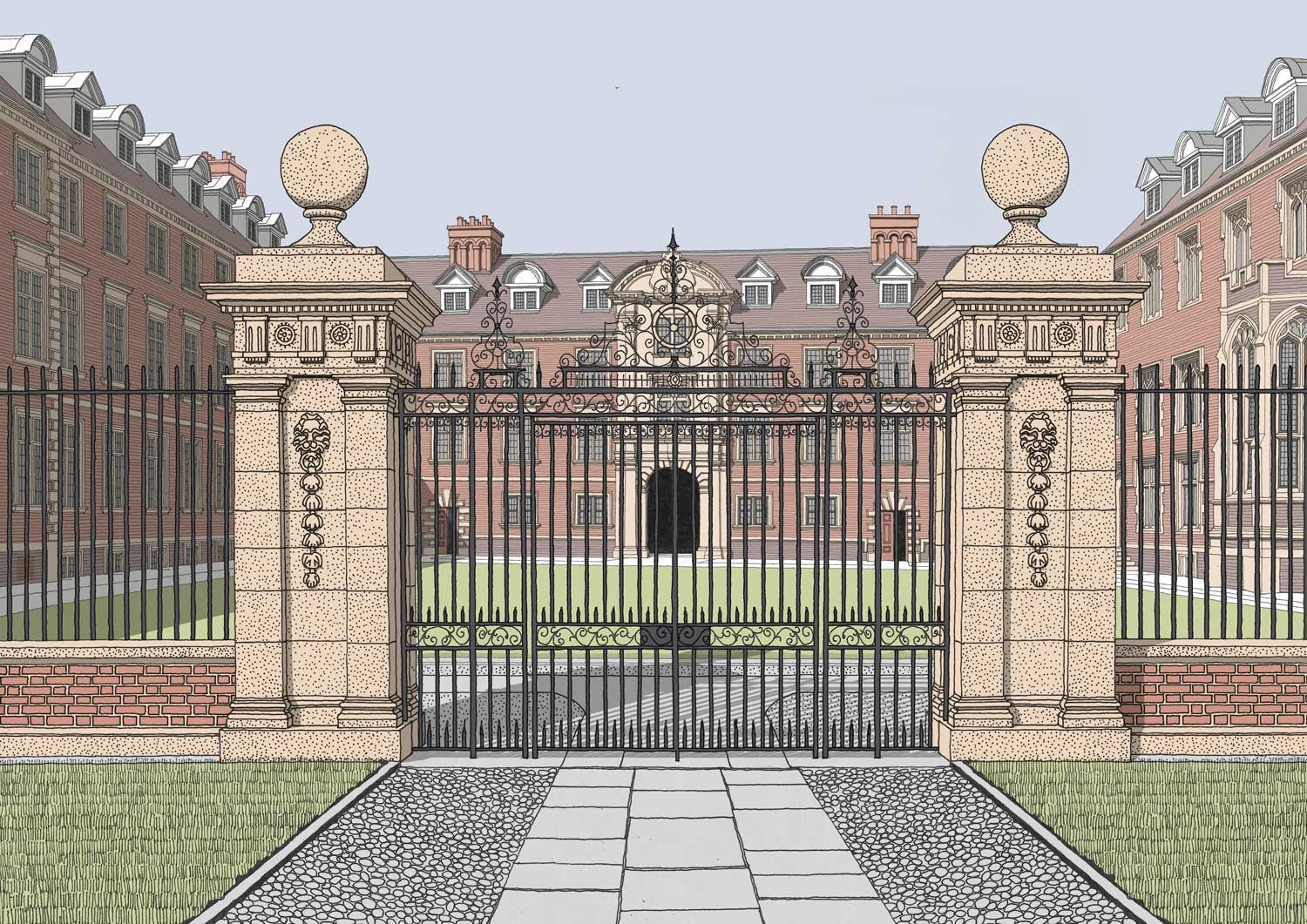
(Commissioned) St. Catharine’s College, Trumpington Street, Cambridge CB2 1RL
EMMANUEL COLLEGE CHAPEL, CAMBRIDGE, CB2
The exterior view of the Emmanuel College Chapel range in Cambridge, originally designed by Sir Christopher Wren and completed in 1677, presents a harmonious blend of classical symmetry and restrained English Baroque. The composition is anchored by a projecting temple front featuring giant-order pilasters, Corinthian capitals, and a pedimented center crowned by a cupola and lantern. This monumental core is beautifully framed by lower arcaded flanking wings that serve as the college's famous cloisters. The rhythmic interplay of the classical arches creates a strong sense of spatial depth and grounded elegance, defining the eastern edge of the college's Front Court.
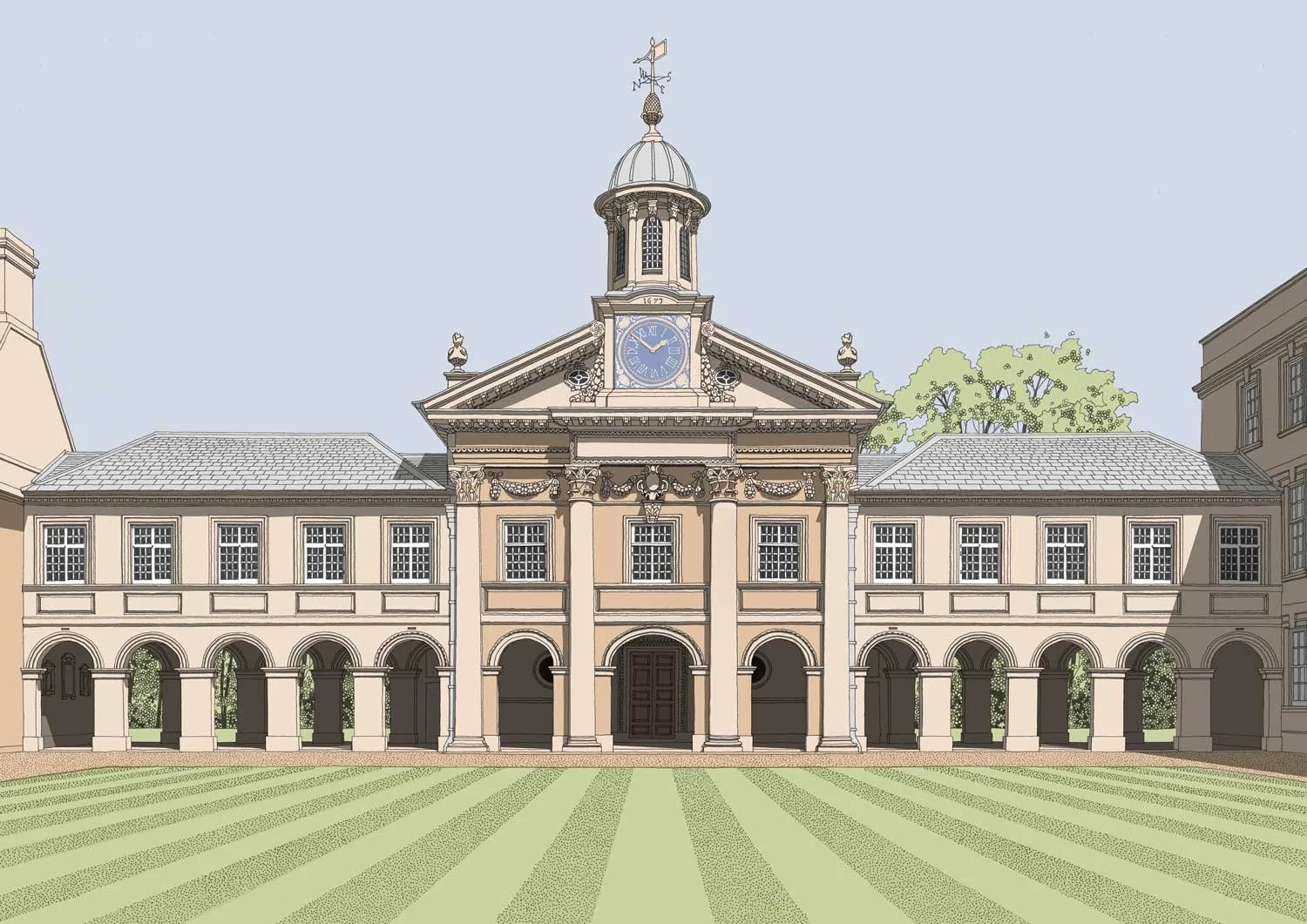
(Commissioned) Emmanuel College Chapel, St Andrew's Street, Cambridge CB2 3AP
CHRIST’S COLLEGE NEW COURT,CAMBRIDGE, CB1
Sir Denys Lasdun's New Court at Christ's College, Cambridge, completed in 1970, stands as a premier example of Modernist and Brutalist architecture. Affectionately nicknamed "The Typewriter," the building’s exterior is defined by a striking, seven-storey stepped ziggurat configuration. Constructed from sharply defined precast concrete units, the south-facing elevation cascades downward into the college grounds like a series of dramatic terraced strata. The repetitive geometric modules of the individual student study bedrooms create a rhythmic interplay of heavy horizontal lines. These blocks are starkly contrasted by vertical service and plant towers that pierce the roofline to provide strong visual anchors.
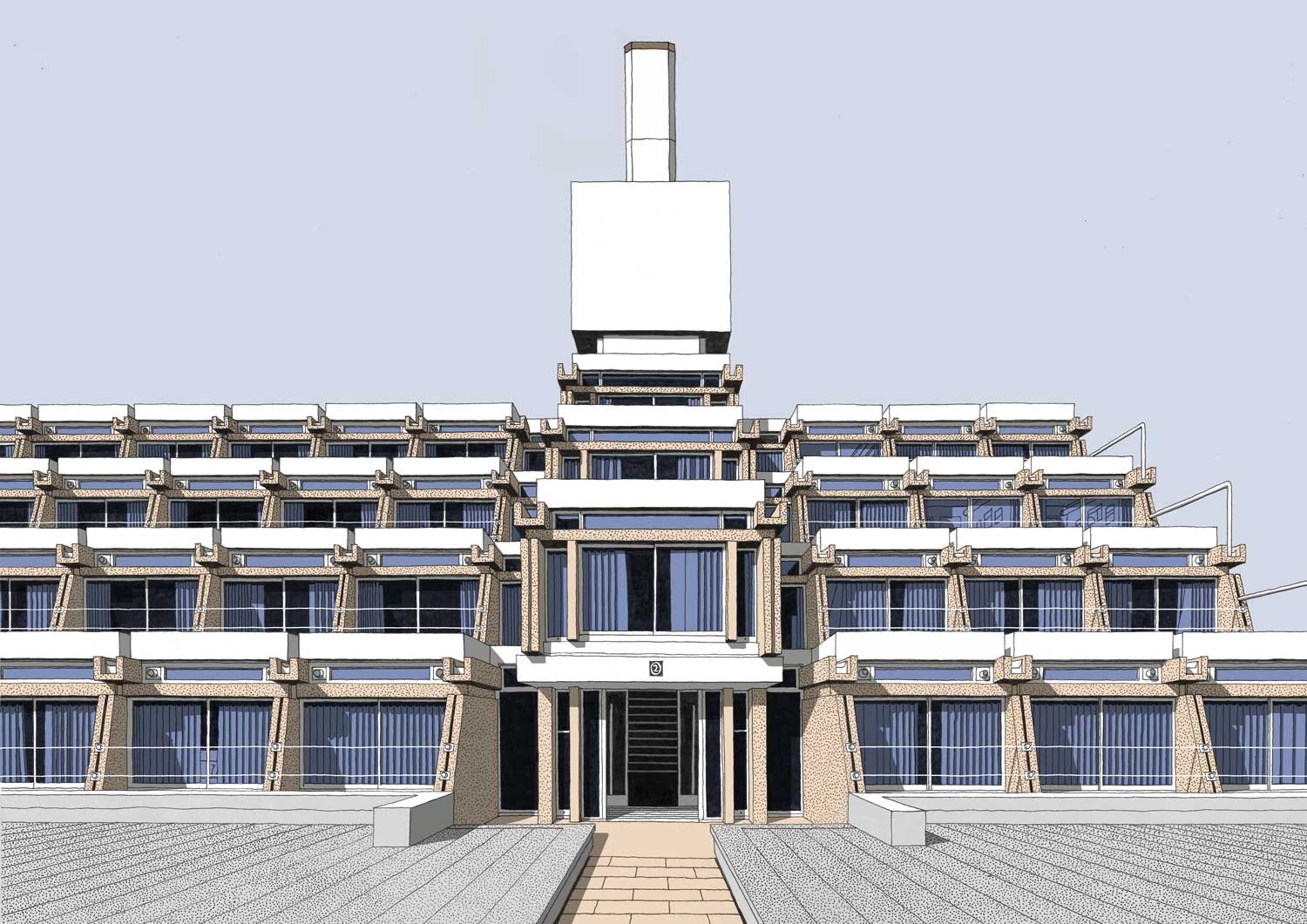
(Commissioned) Christ’s College New Court, 24-32 King Street, Cambridge CB1 1LN
ROBINSON COLLEGE , CAMBRIDGE, CB3
Robinson College was designed by the acclaimed Glasgow-based architectural practice Gillespie, Kidd & Coia(GK&C), with lead architects Isi Metzstein and Andy MacMillan. Constructed between 1977 and 1980, the college was awarded Grade II listed status* for its exceptional late-modernist megastructure.
The entrance from Grange Road to Robinson College presents a striking, monumental facade dominated by a massive, asymmetrical archway of dark red handmade bricks. This cavernous portal acts as a dramatic transitional void, deeply recessed to draw the eye inward while maintaining a formidable, fortress-like presence on the streetscape. The strict geometry of the brickwork is punctuated by small, rhythmically placed windows and sharp angular overhangs, exemplifying British Modern Brutalism. Its textured, monolithic surfaces create intense highlights and deep shadows under changing light, emphasising the building's heavy, sculptural mass.
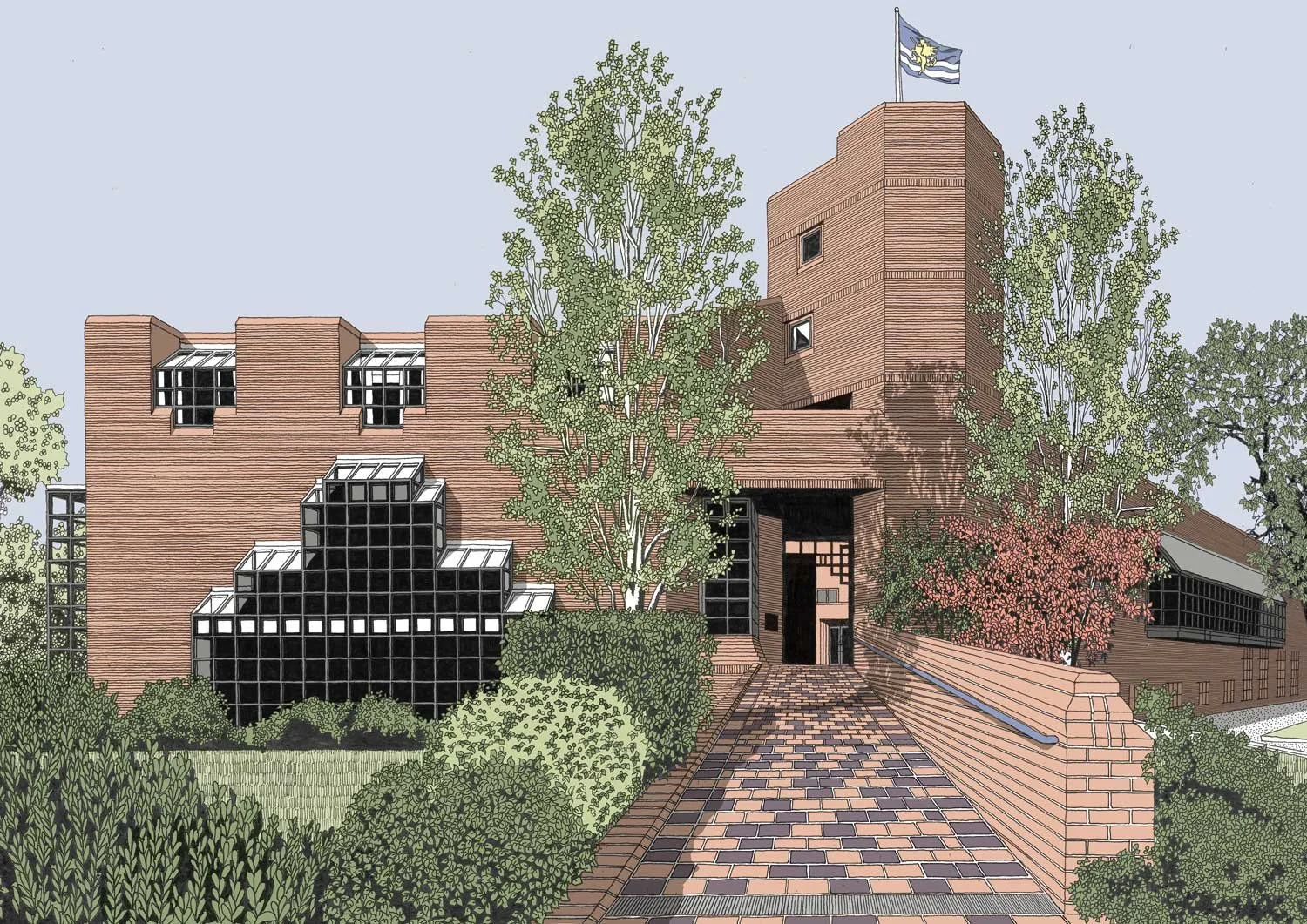
(Commissioned) Robinson College, Grange Road, Cambridge CB3 9AN
THE ROUND HOUSE, FRINTON-ON-SEA, CO13
The Frinton Park Estate was developed from 1934 onwards and was intended as a planned residential township. It was never fully realised due to lack of public support for flat- roofed modernist houses. Now interspersed with other buildings, the estate still retains the largest group of Modern Movement houses in the country.
Recently renovated, this building was the former estate and sales office design by Oliver Hill circa 1935. It demonstrated a strong architectural statement with the striking use of the circular plan, projecting 'skirt' and the position of the building as a focal point of the model estate.
Grade II listed.
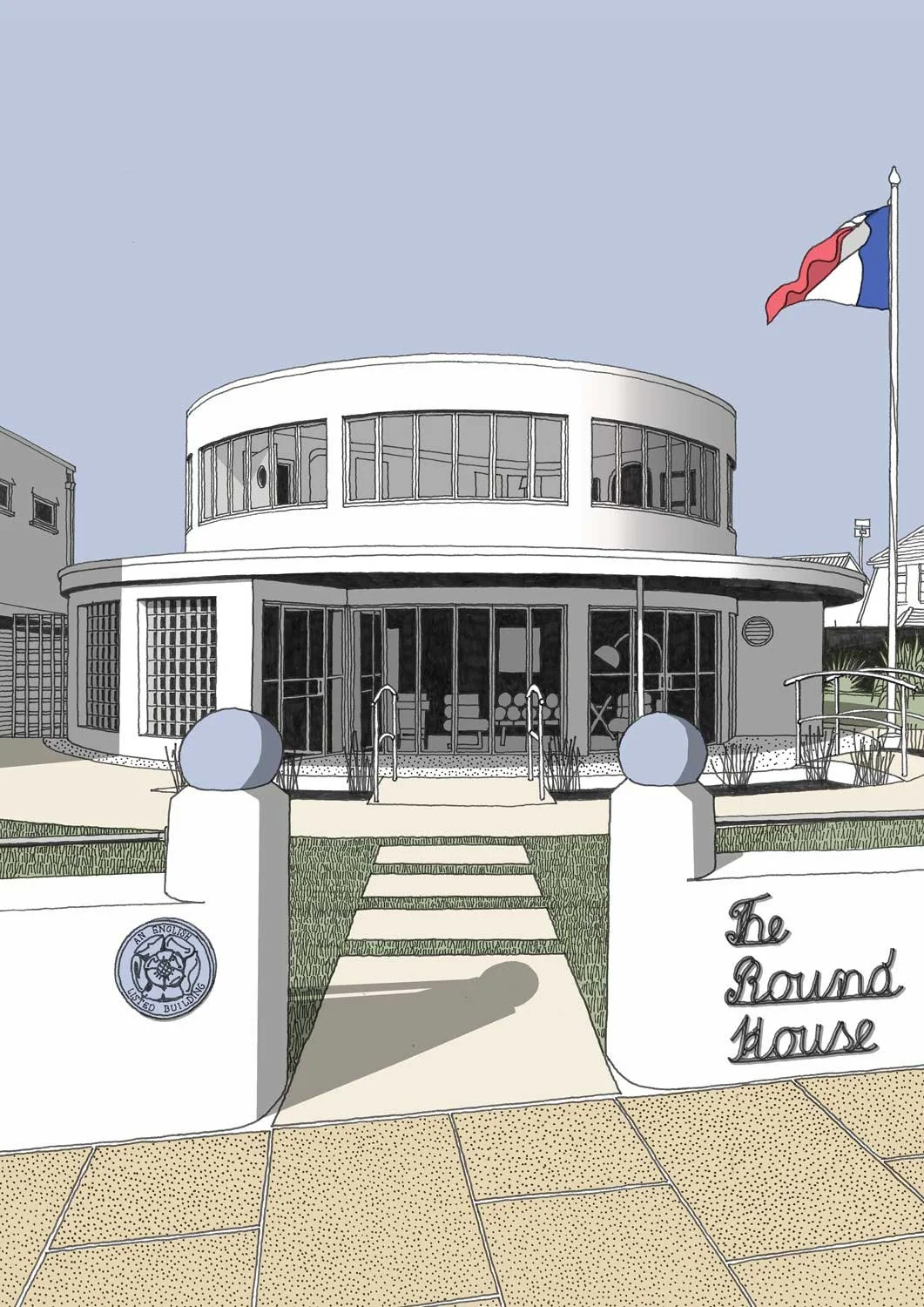
The Round House, 7 Cliff Way, Frinton-on-Sea , Essex CO13 9NL
ROYAL CORINTHIAN YACHT CLUB, BURNHAM-ON-CROUCH, CM0
With the appearance of the bridge of a modern ship breaking through the seawall, the Royal Corinthian Yacht Club was designed by architect Joseph Emberton, considered one of Britain's most significant modernist architect during the inter-war period.
It is a steel framed structure of 3 storeys carried on a reinforced concrete platform on piles rising from the river bed. The south front has continuous glazing and cantilevered balconies with iron railings, offering wide panoramic views across the River Crouch.
Built in 1931, it is now grade II* listed.
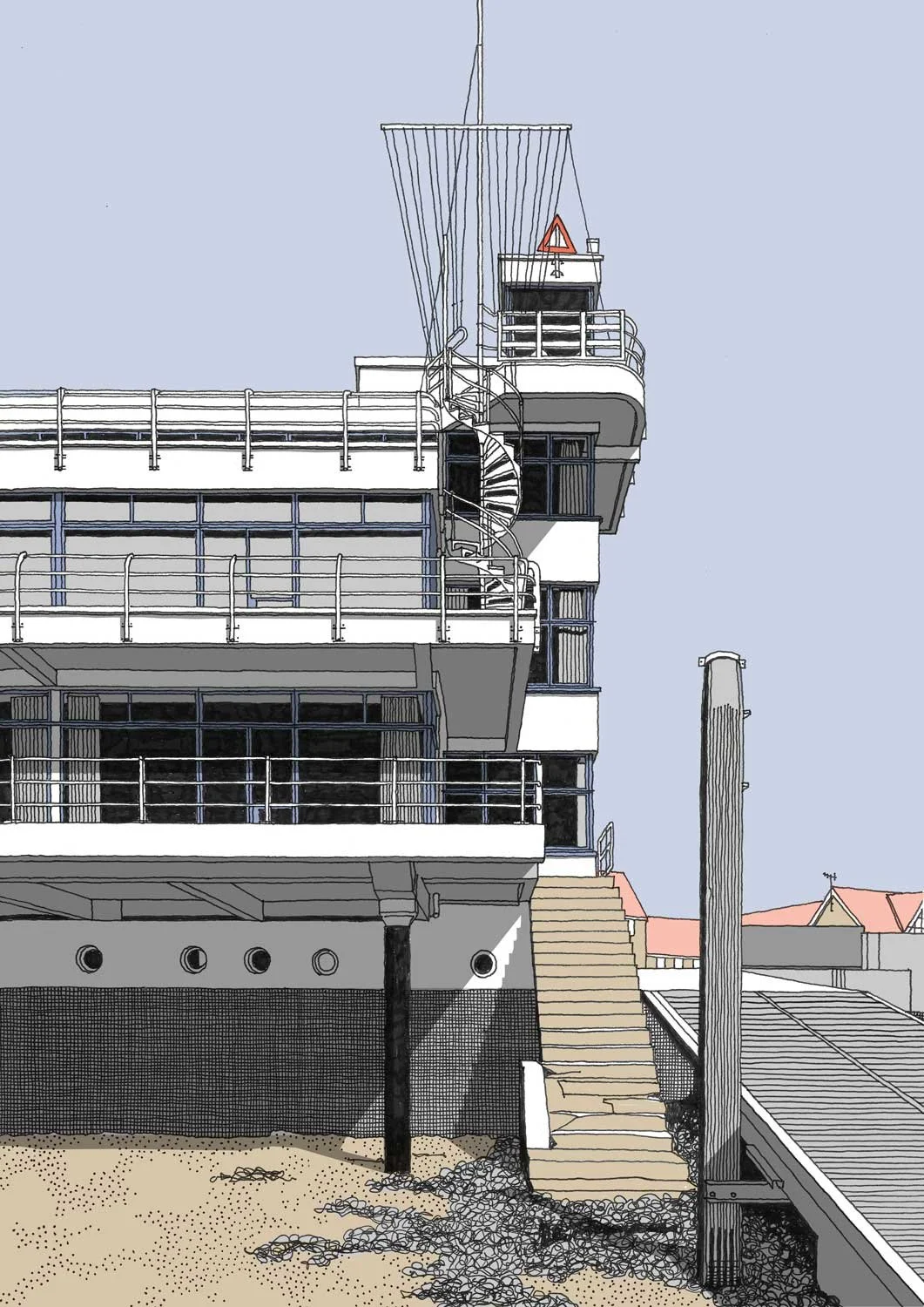
The Quay, Burnham-on-Crouch, Essex, CM0 8AX.
BROOKE HOUSE, BASILDON, SS14
Elevated on 8 massive V-shaped concrete pylons, Brooke House is a 14 storey tower block and forms the largest structure in the new town's town centre. It was chosen to have a residential function, as opposed to commercial office space, to retain life in the town centre after the shops had closed.
Dating from 1962, it was designed by Sir Basil Spence and Anthony B Davies, chief architect and planner to Basildon Development Corporation.
Grade II listed (1998)
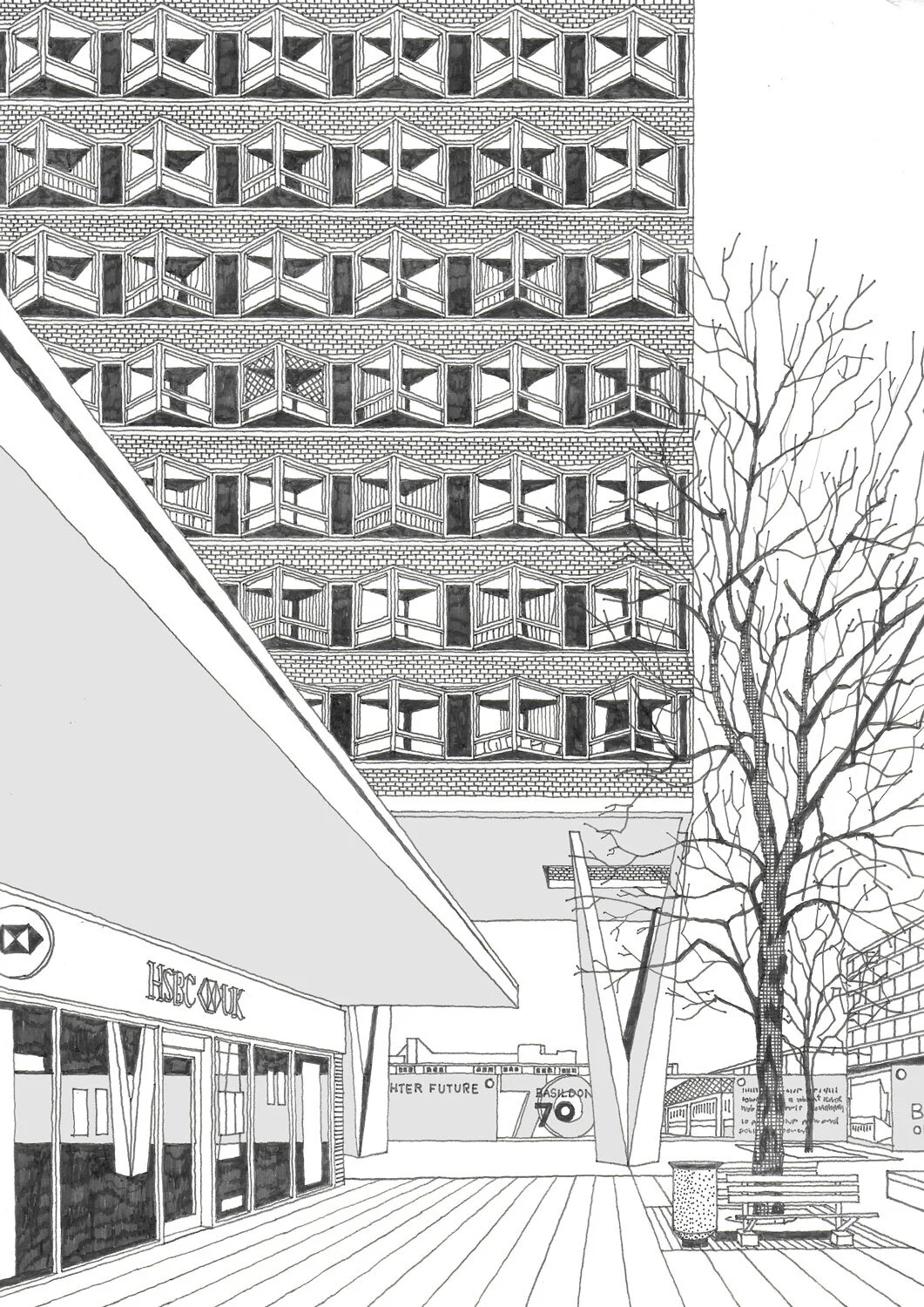
(Commissioned) Brooke House, 1-84 Town Square, Basildon, Essex SS14 1HX
FREEDOM HOUSE, BASILDON, SS14
East of Brooke House is East Square, a sunken open-air public plaza accessed from Brooke House by a monumental staircase and a curved ramp. Freedom House (shown here) fronted the east side of the square and contained shops on two levels, and the north side by the Post Office building, a 5-story structure. On a wall of Freedom House is the oldest piece of public sculpture in the new town: installed in 1957, it is a wire and aluminium relief by A. J. Poole titled 'Man Aspires'.
Freedom House was a good example of the Festival of Britain style which flourished in the 1950s. Whilst the structures which define and provide access, such as the ramps, steps and pebbled retaining walls were grade 2 listed, some of these, along with Freedom House itself, have since been demolished to make way for new development.
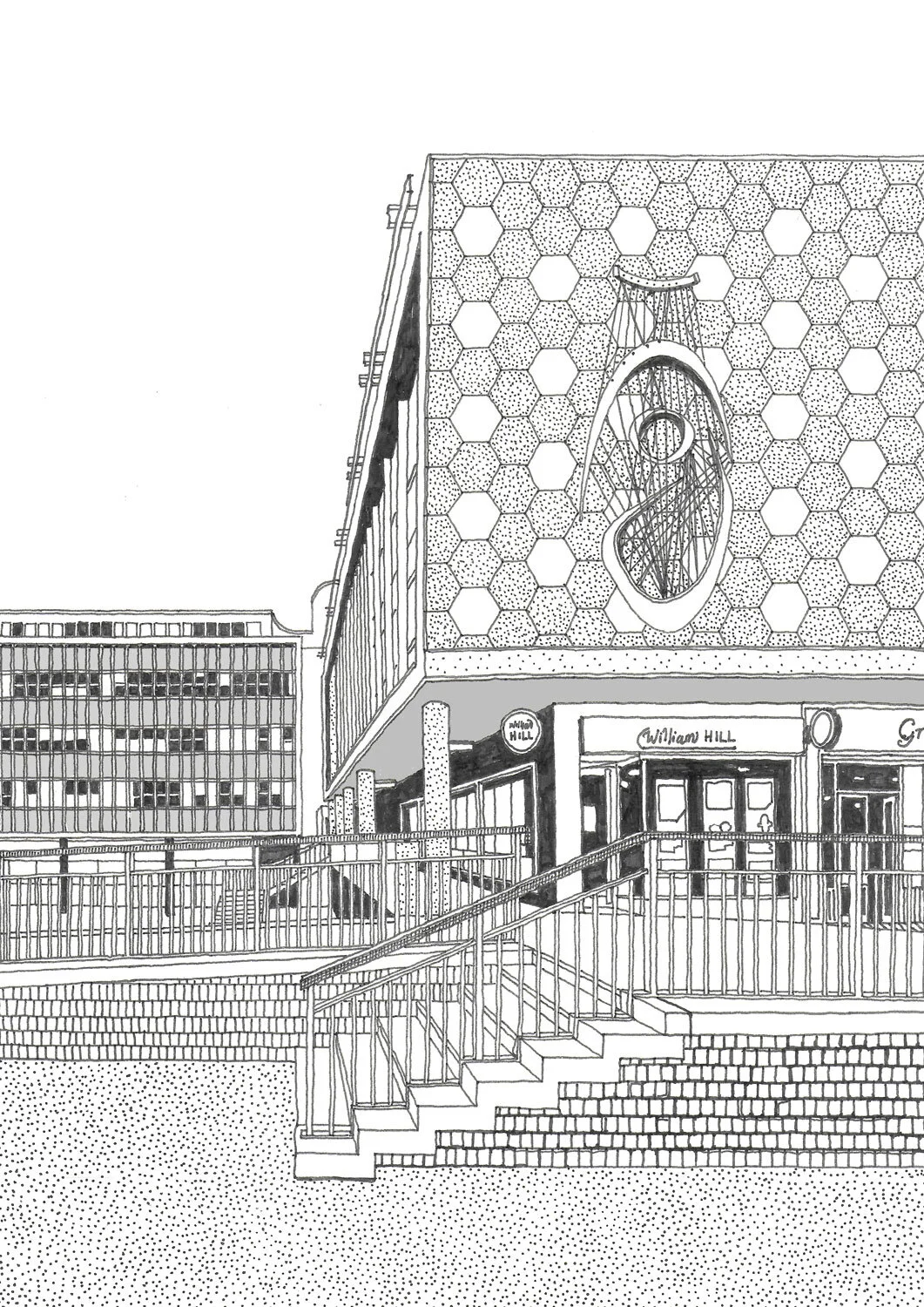
(Commissioned) Freedom House and East Square, Basildon SS14 1HT
10-20 TOWN SQUARE, BASILDON, SS14
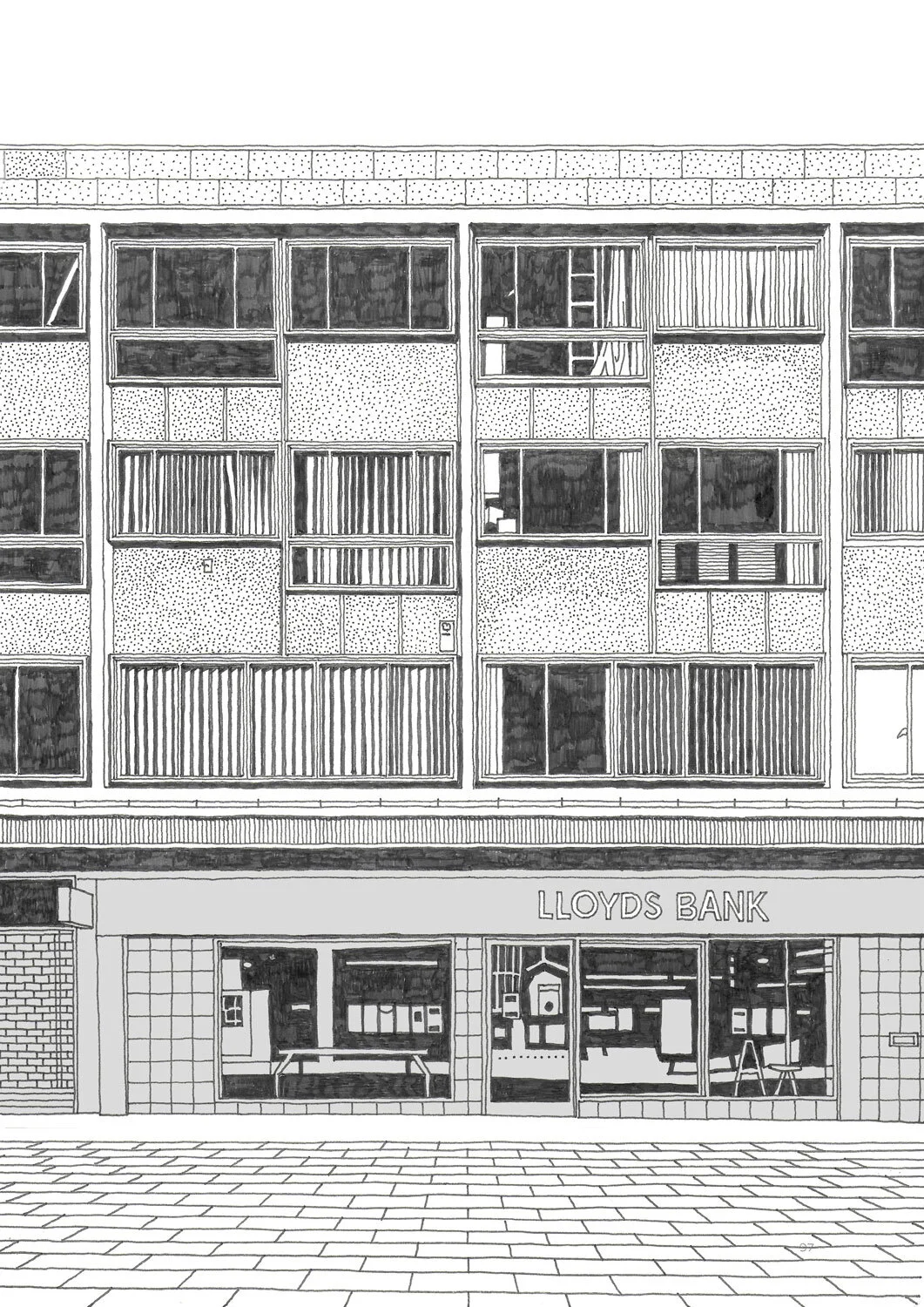
(Commissioned) 10-20 Town Square, Basildon, Essex SS14 1DU
SOUTHGATE HOUSE, TOWN SQUARE, BASILDON, SS14
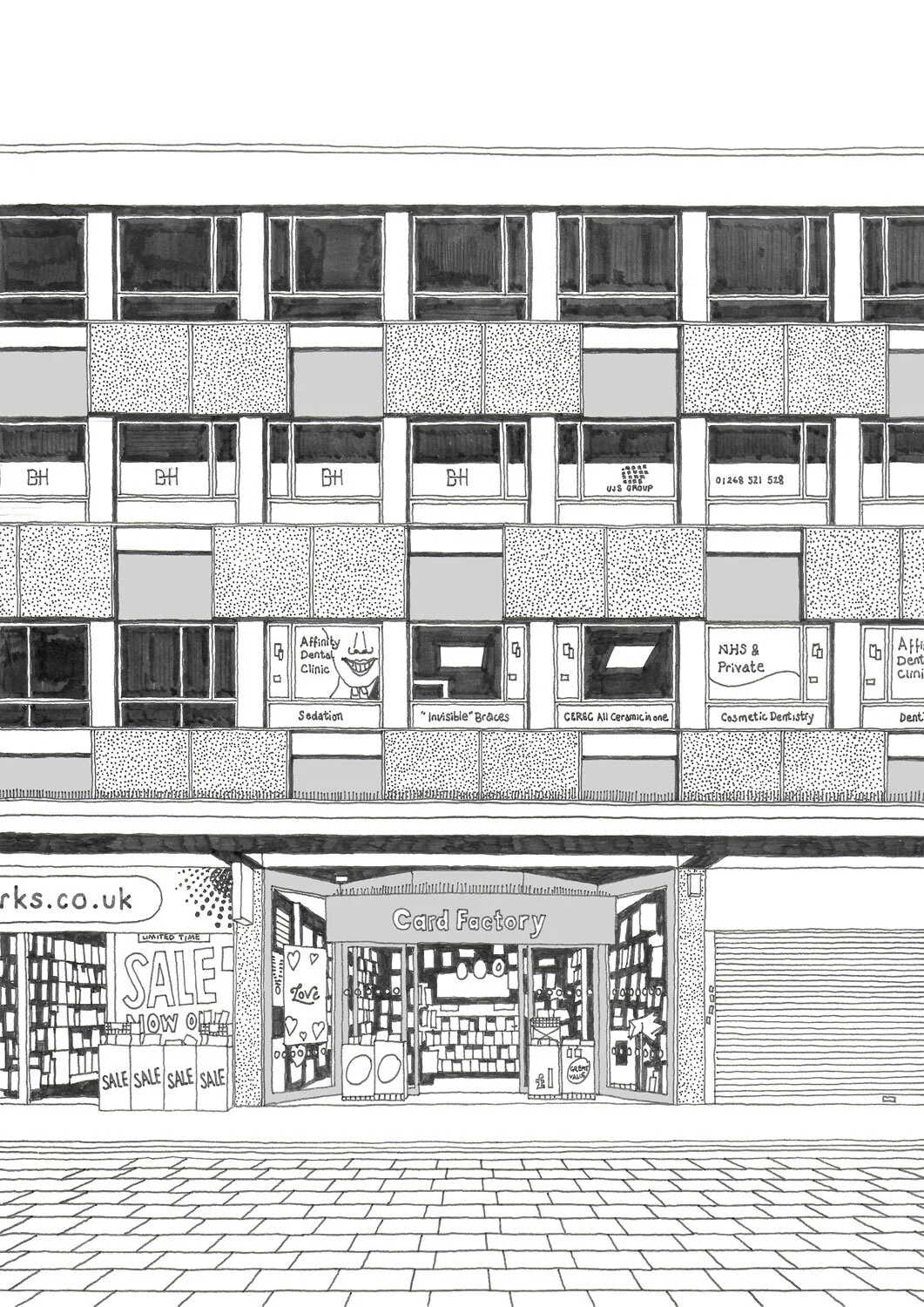
(Commissioned) Southgate House, Town Square, Basildon, Essex SS14 1BN
47 EAST WALK, BASILDON, SS14
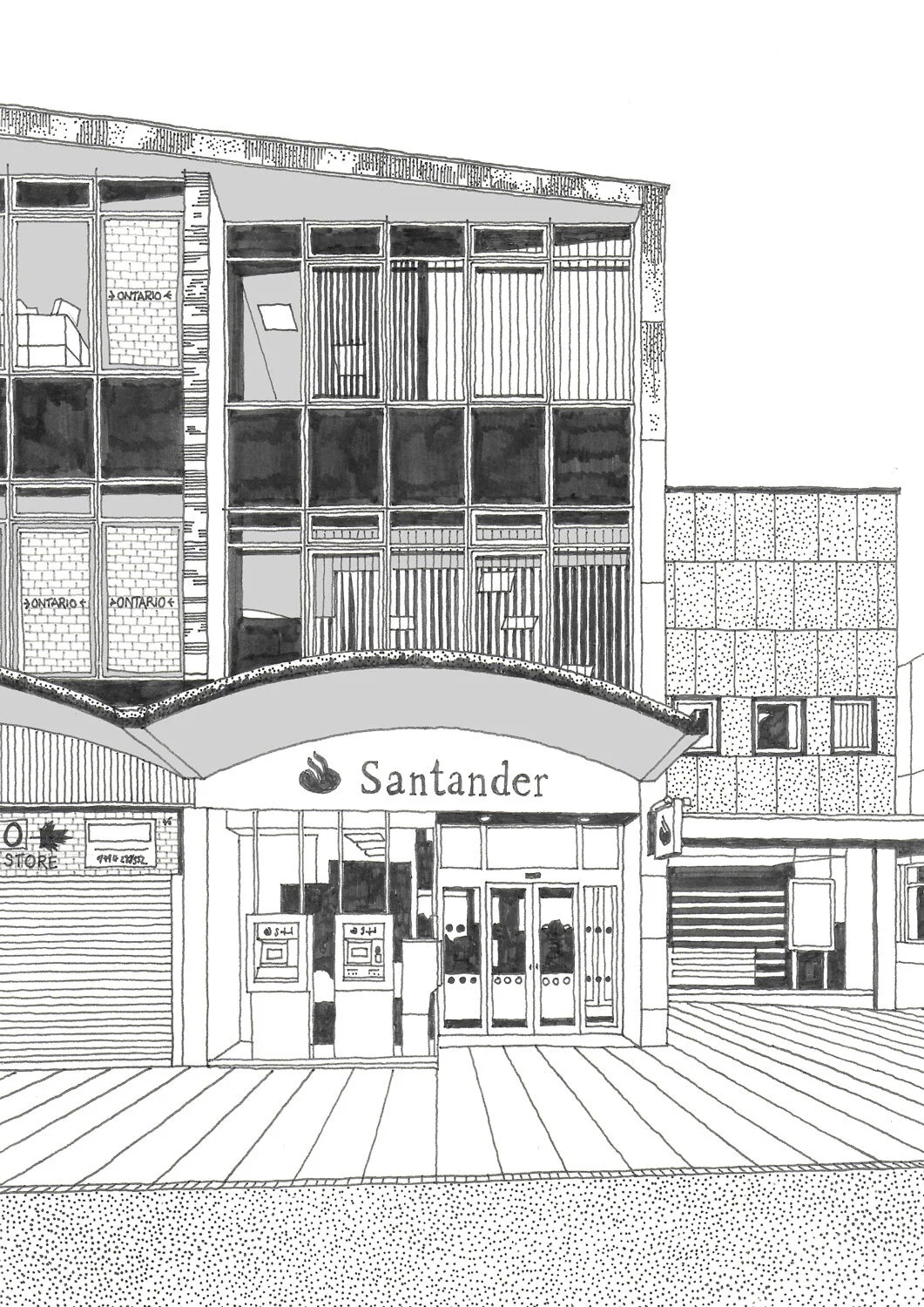
(Commissioned) 47 East Walk, Basildon, Essex SS14 1HA