
SOUTH ENGLAND
EAST SUSSEX
ROYAL PAVILION, BRIGHTON, EAST SUSSEX, BN1
The Royal Pavilion is a Grade I listed former royal residence.
Beginning in 1787, it was built in three stages as a seaside retreat for George, Prince of Wales. The last stage was built between 1815 and 1822 by the John Nash who redesigned and greatly extended the Pavilion and gave the palace its striking and unique Indo-Islamic exterior with its domes and minarets.
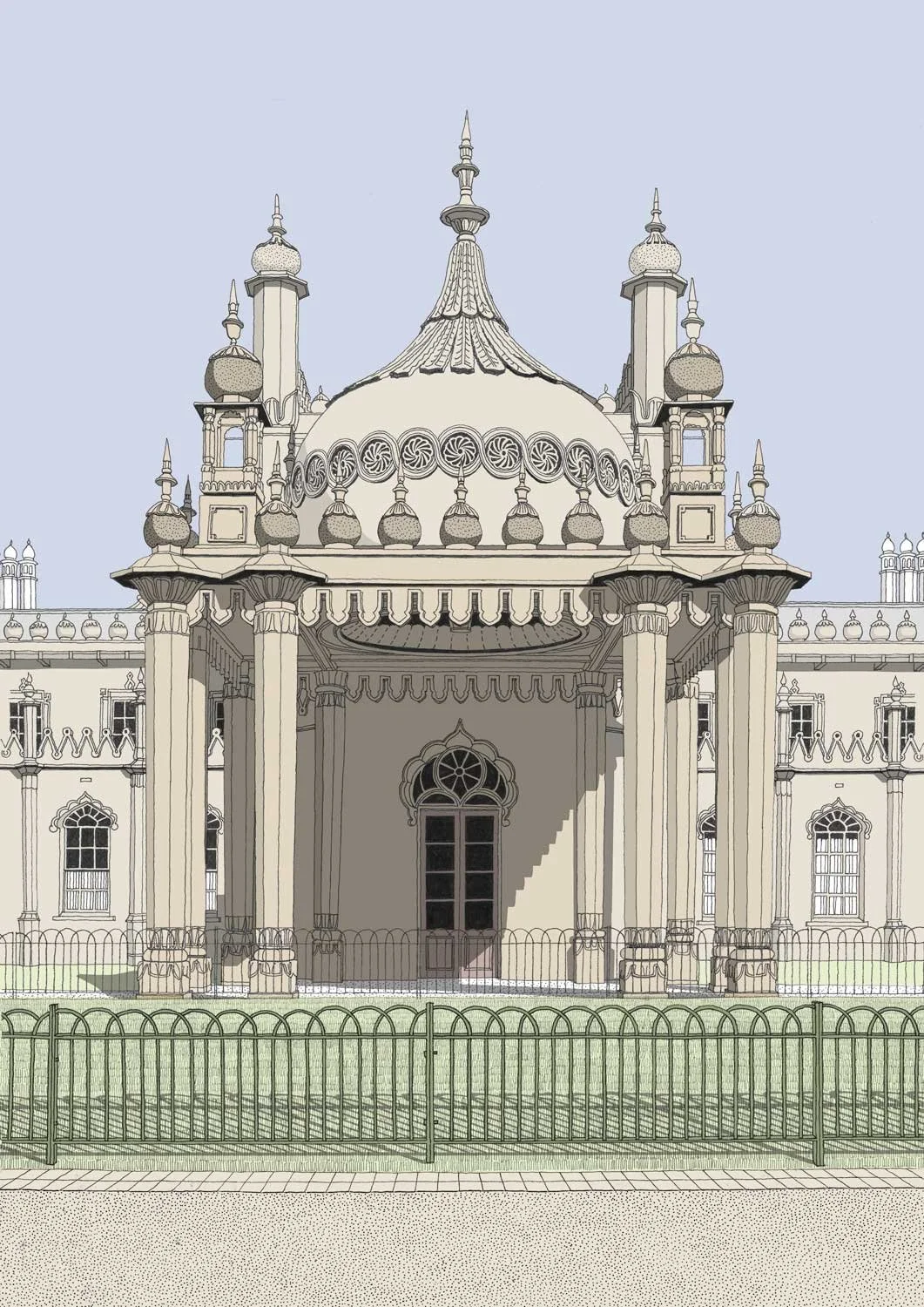
Royal Pavilion (I), 4/5 Pavilion Buildings, Brighton BN1 1EE
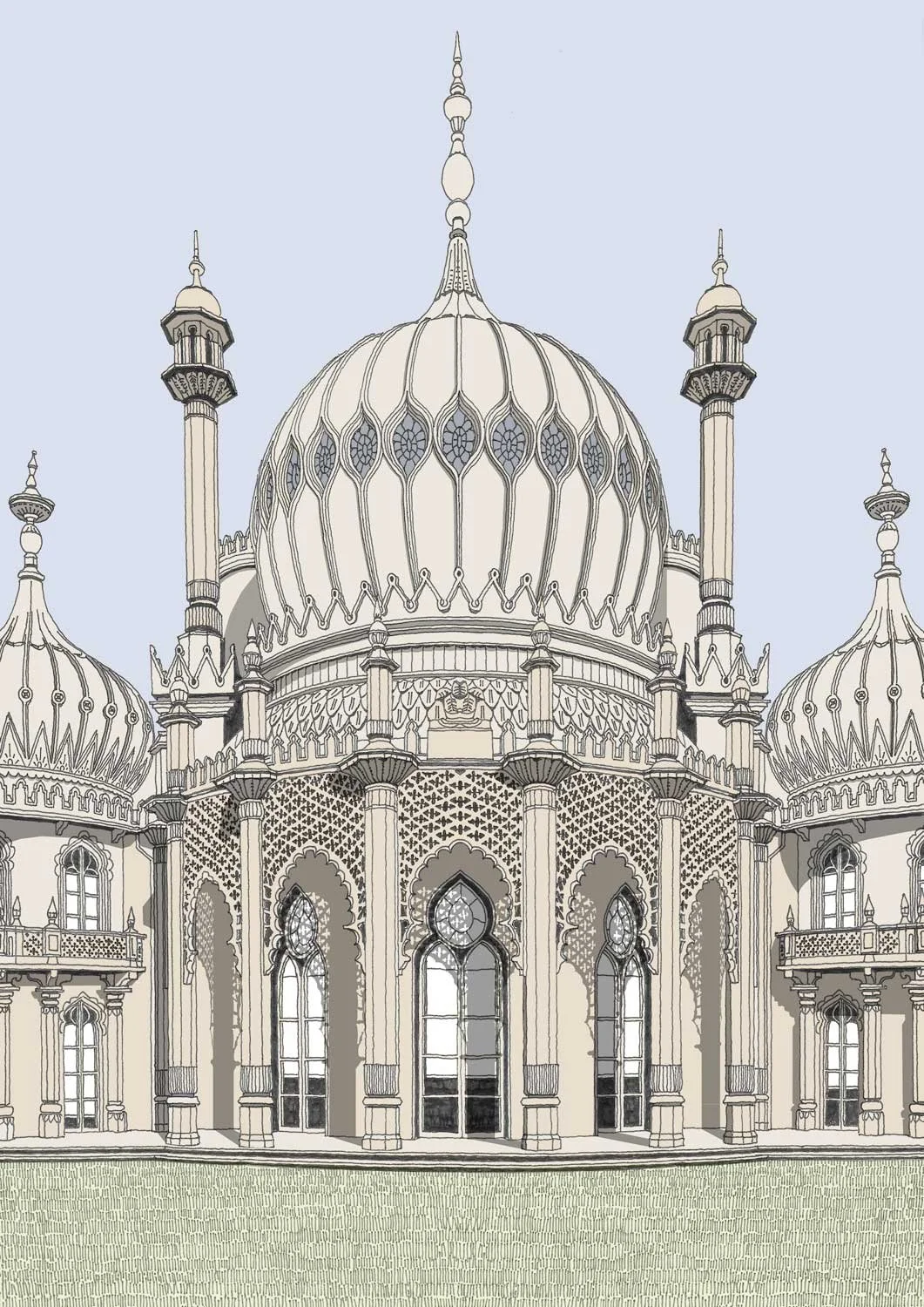
Royal Pavilion (II), 4/5 Pavilion Buildings, Brighton BN1 1EE
ROYAL CRESCENT, MARINE PARADE, BRIGHTON BN2
Royal Crescent forms a shallow crescent shape of 14 terraced houses on a generally east–west layout behind Marine Parade on Brighton’s seafront.
It was built by a wealthy merchant in the late 18th and early 19th century as a speculative development on the open cliffs east of Brighton. It was the seaside resort's first planned architectural composition and the first built intentionally to face the sea.
Each four-storey house has a common stylistic theme, There is a first-floor veranda with curved metal roofs, cast iron railings and bracketed supports. The whole terrace has a timber-framed façade with brick nogging infill and covered with black glazed mathematical tiles. These were laid in an interlocking pattern to mimic brick, and were frequently used in Brighton in the late 18th century. The glazing produced an iridescent effect which reflected sunlight in a visually pleasing way, and also coped better than bricks with sea-spray and other weathering effects.
|In 1952 English Heritage listed the crescent at Grade II* for its architectural and historical importance.

Royal Crescent, Marine Parade, Brighton, East Sussex. BN2 1AL
EMBASSY COURT, KING'S ROAD, BRIGHTON BN1
Wells Coates’ Embassy Court, 1935, stands on the border of Brighton and Hove. An L-shaped 12 storey apartment block with a curved corner and strong horizontal banding with almost continuous glazing.
Now grade 2* listed.
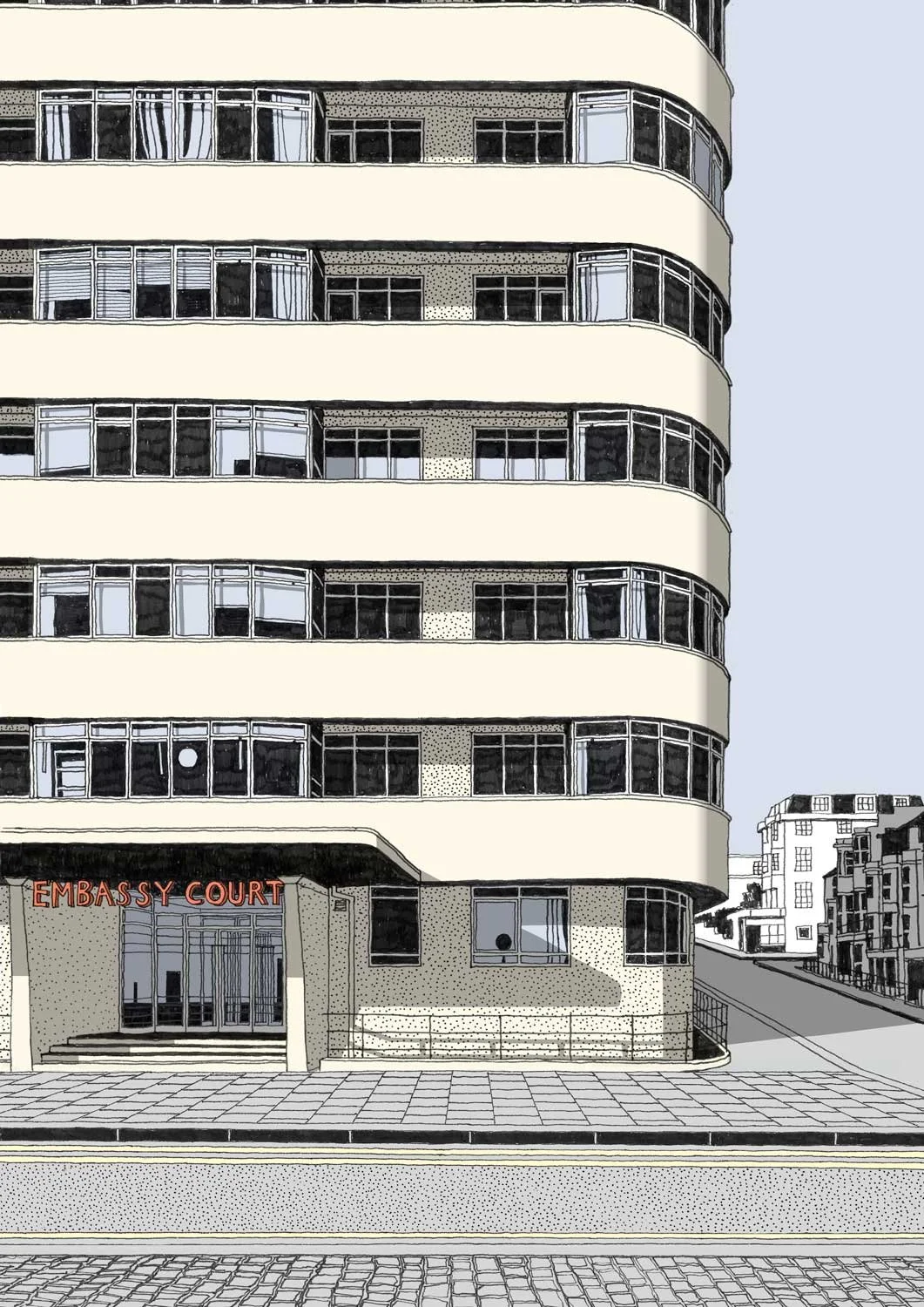
Embassy Court, King’s Road, Brighton BN1 2PY
HOLD - BOND STREET, BRIGHTON BN1
Early nineteenth century terraced house with original shopfront, grade 2 listed. Now the home to HOLD, an independent lifestyle boutique.
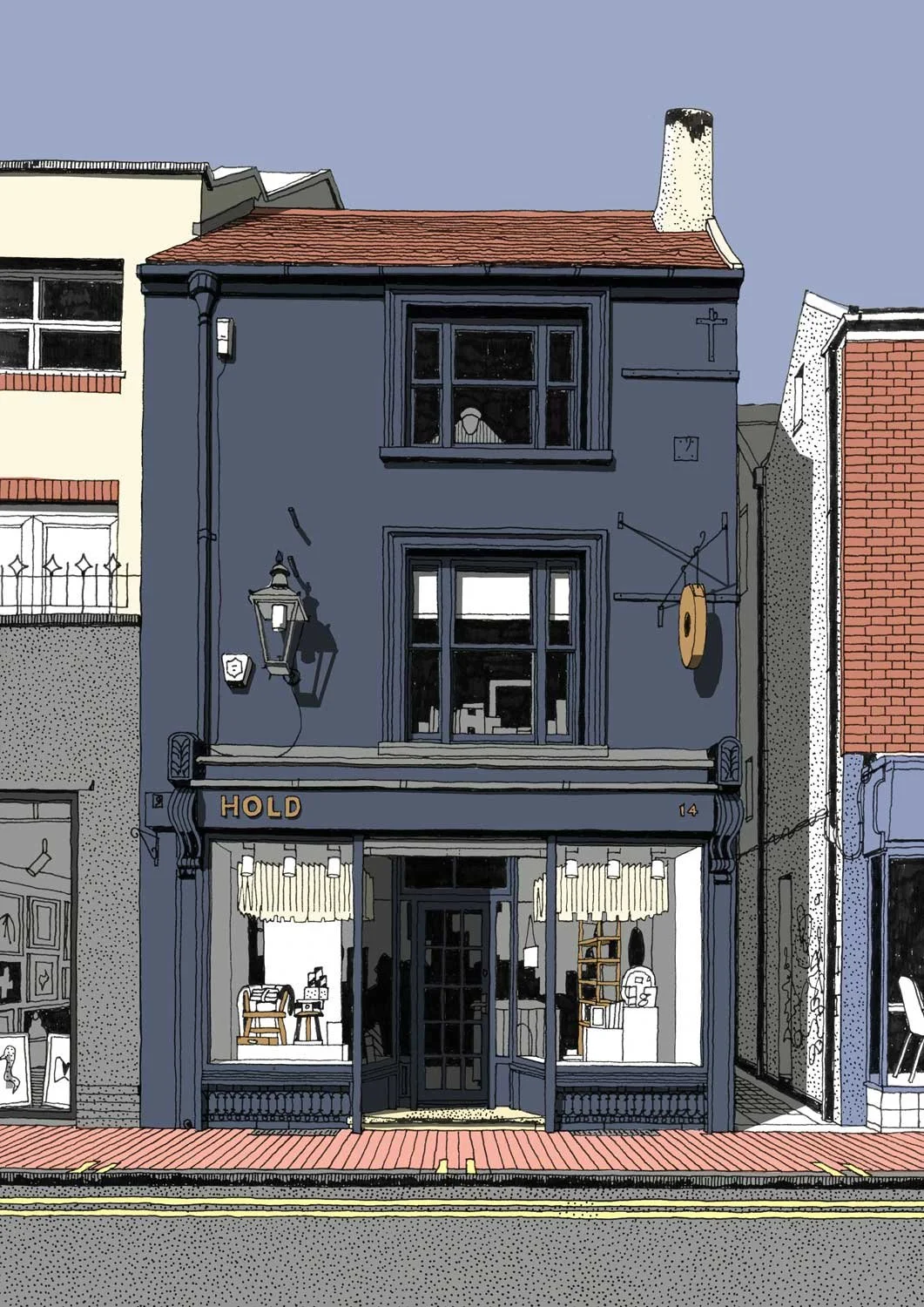
(Commissioned) HOLD, 14 Bond Street, Brighton, East Sussex BN1
FALMER HOUSE, UNIVERSITY OF SUSSEX, BRIGHTON BN1
The University of Sussex was the first of seven new or 'utopian' universities built in England after the Second World War. In January 1959 Basil Spence and Partners were commissioned to build Falmer House. This marked the beginning of the first building phase of Spence’s masterplan for the University that was to be undertaken over a period of 15 years.
Falmer House is a brick faced, vault-and-column structure. It is a three storey, square-plan building with an inner courtyard. The inner courtyard is separated from the building by a 15-foot wide moat running around the inside of the quadrangle. Pre-cast concrete vaults cover the ground floor arcade. The upper floor voids, which can be used as roof terraces, were intended for further expansion. Spence used different concrete finishes with the local brickwork to create visual contrast.
Falmer House is now a Grade I listed building.
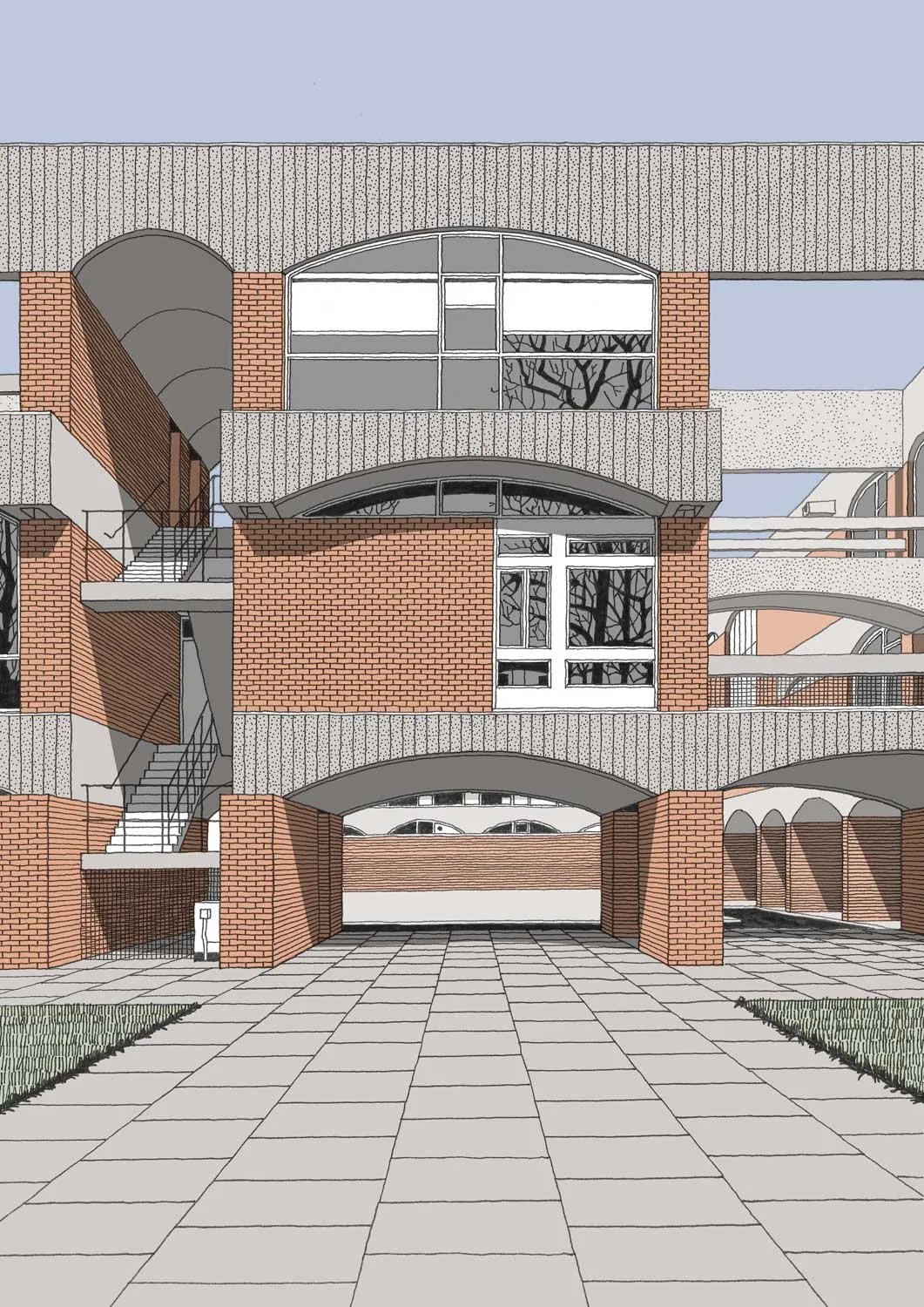
Falmer House, University of Sussex, Falmer, Brighton BN1 9QF
BRUNSWICK SQUARE, HOVE BN3
Built as a collaborative project between the architect Charles Augustin Busby and the landowner Reverend Thomas Scutt, construction started in 1824 to provide prestigious and sophisticated housing comparable to the distinguished Nash developments in London.
Busby designed the square not as identical units but as a unified series with some individual variations. The facades of the elegant houses were decorated in the popular neo-classical style, changing with the different roof levels on the rising ground but providing a unified theme.

Brunswick Square, Hove, East Sussex BN3 1EG
DE LA WARR PAVILION, BEXHILL-ON-SEA TN40
A seafront public building initiated by the town’s socialist mayor - Herbrand Sackville, 9th Earl De La Warr and designed by architects Erich Mendelsohn and Serge Chermayeff, leading figures of the modern movement. The programme specified an entertainment hall, restaurant, reading room and lounge to a budget of £80,000
The building was constructed and opened in 1935 and was awarded Grade 1 listed building status in 1986.
After an extensive restoration exercise in 2005 the pavilion reopened as a contemporary arts centre.

De La Warr Pavilion (I), Marina, Bexhill-on-Sea, East Sussex TN40 1DP
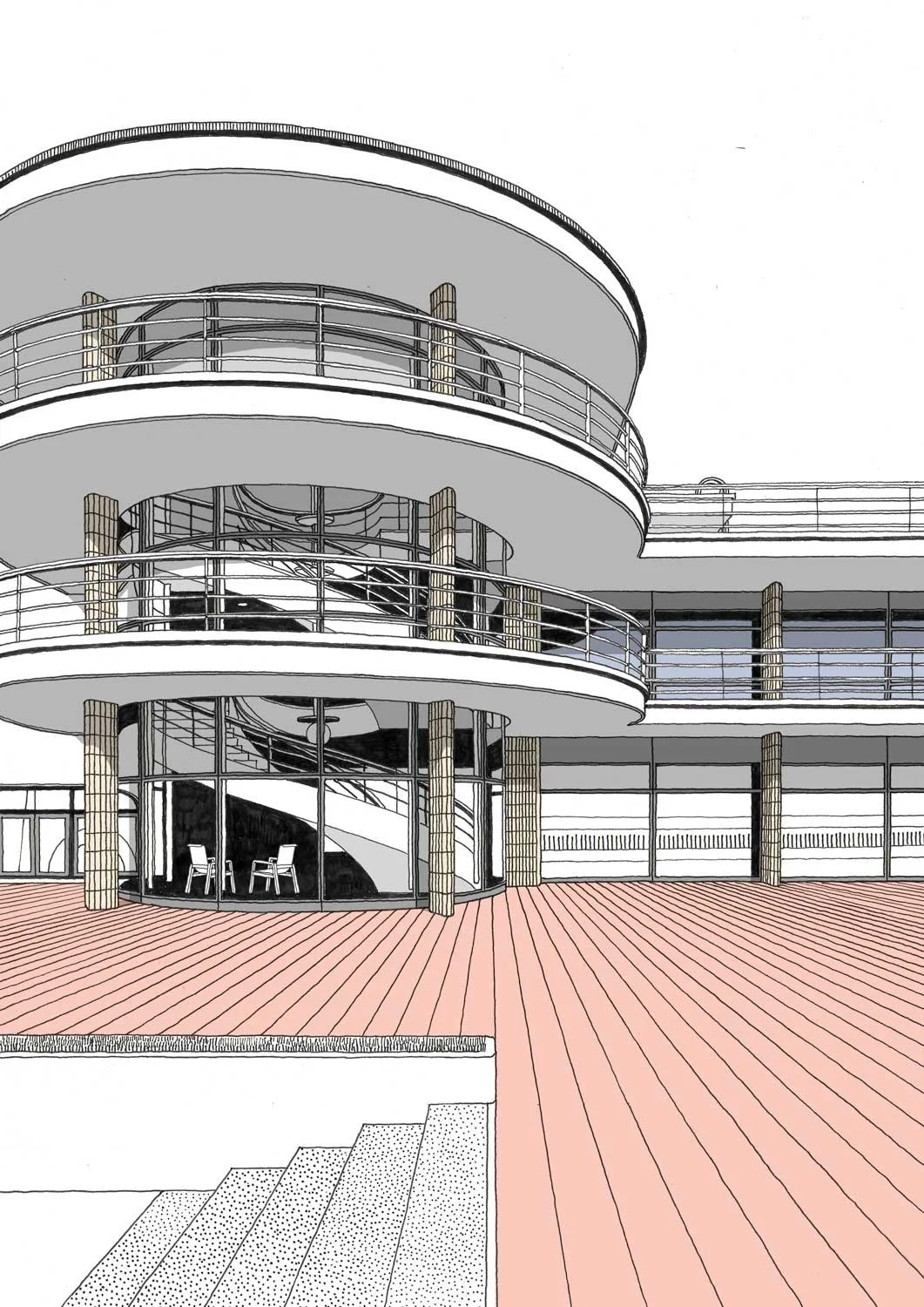
De La Warr Pavilion (II), Marina, Bexhill-on-Sea, East Sussex TN40 1DP
WEST SUSSEX
SOUTHERN PAVILION, WORTHING PIER, WEST SUSSEX BN11
Art Deco ‘streamline-style’ Pavilion at the end of the pier, designed by the Borough Architect and opened in 1935.
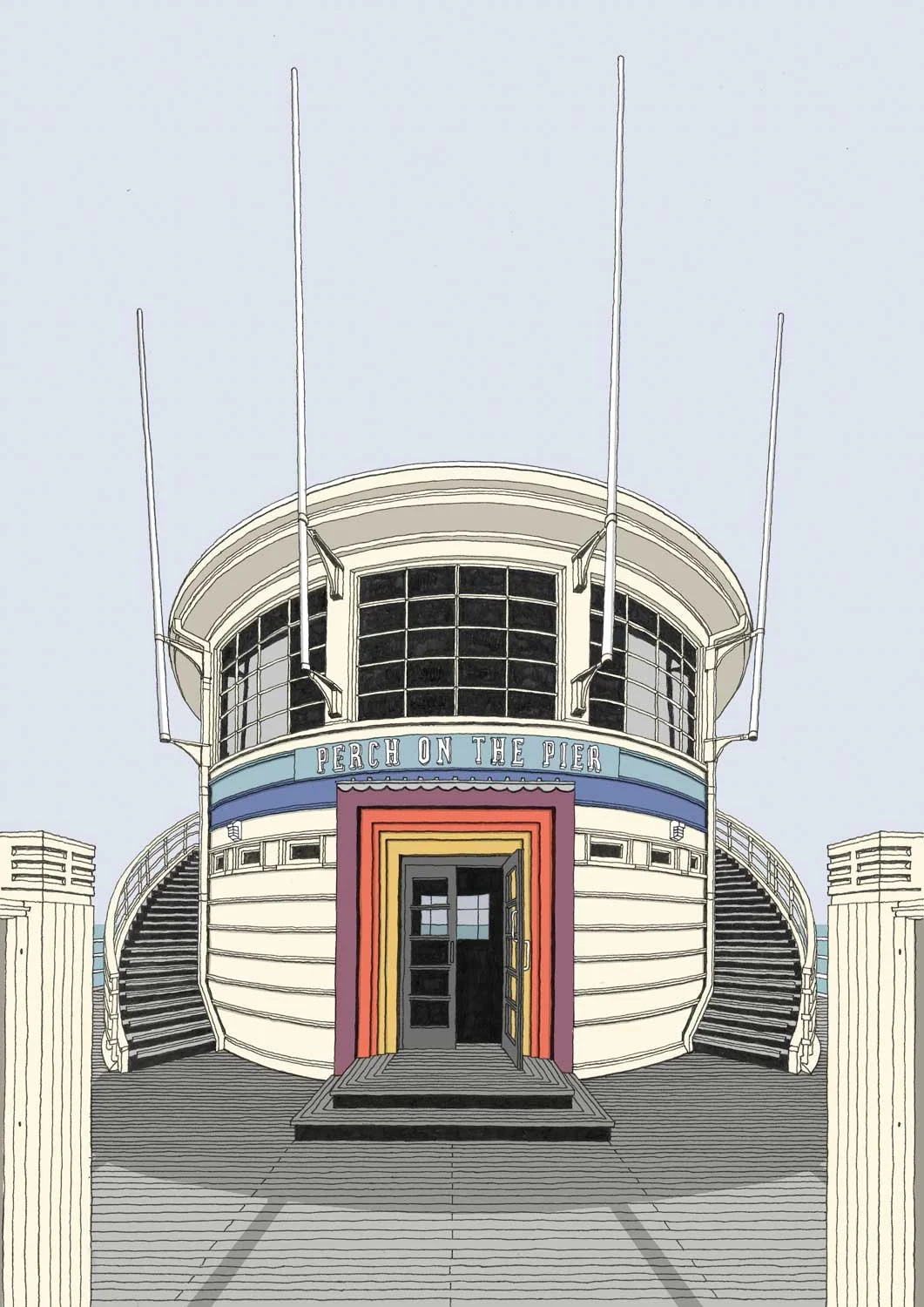
Southern Pavilion, Worthing Pier, Marine Parade, Worthing, West Sussex BN11 3PX
BUCKINGHAMSHIRE
SUN HOUSE no. 3, AMERSHAM, BUCKINGHAMSHIRE HP7
One of four speculative reinforced concrete houses built against the hillside, designed by architect Aymas D Connell (of Connell and Ward) for Mr C de Peyer.
1934. Grade 2 listed
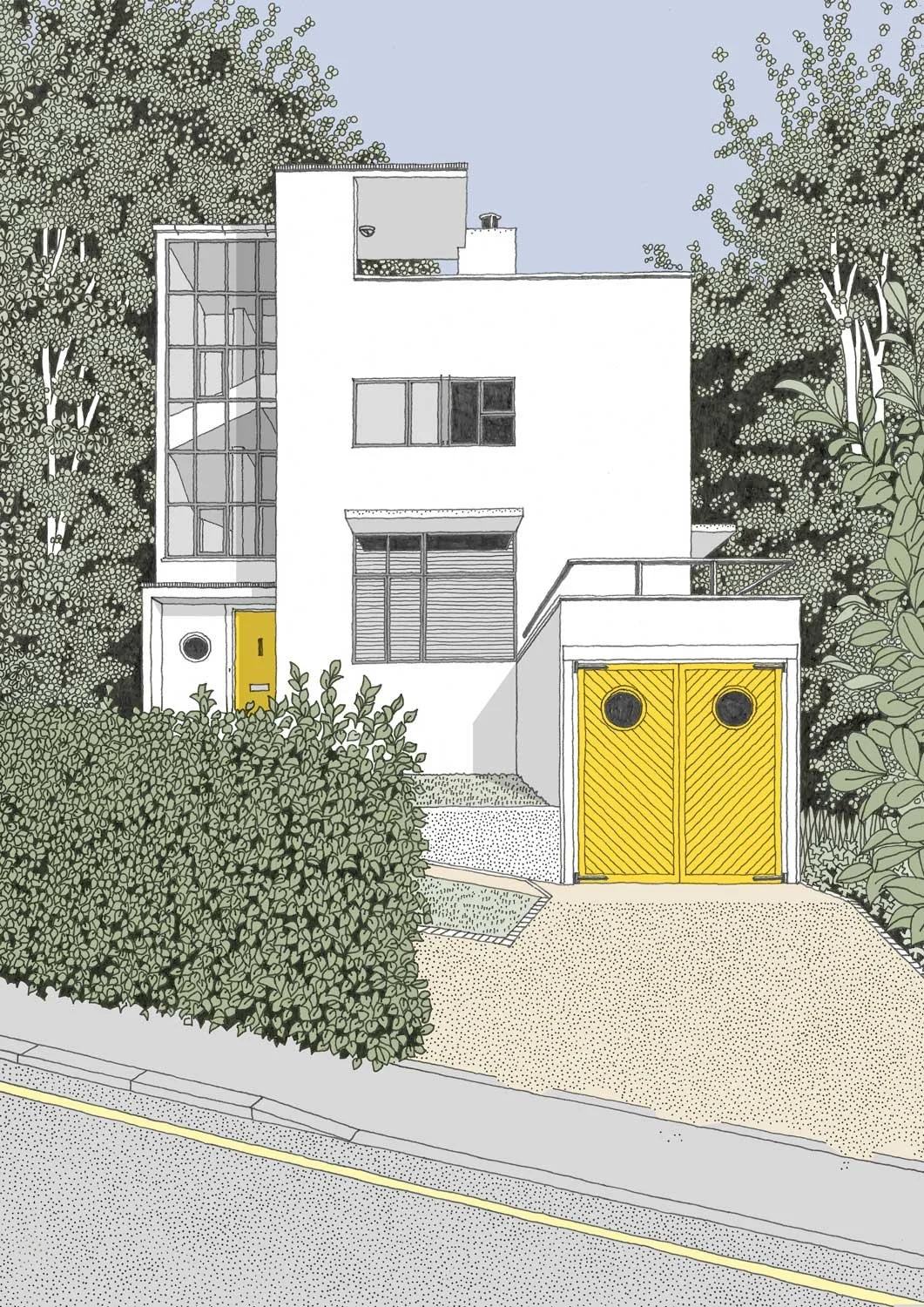
Sun House, 8 Highover Park, Amersham, Buckinghamshire HP7 0BN
SURREY
POLESDEN LACEY, GREAT BOOKHAM, NEAR DORKING, SURREY RH5
Polesden Lacey is a Regency house transformed into an Edwardian mansion by brewery heiress Mrs Ronald Greville.
The first house was built on the site in 1336, and the site has seen many new designs since then. The core house as it is today was originally built in 1821-1823 by Thomas Cubitt, and then transformed into an Edwardian house in 1906 by Mewès & Davis, the architects of the Ritz Hotel, under the instruction of socialite Dame Margaret Greville and her husband Captain Ronald Greville.
It is now owned and run by the National Trust.
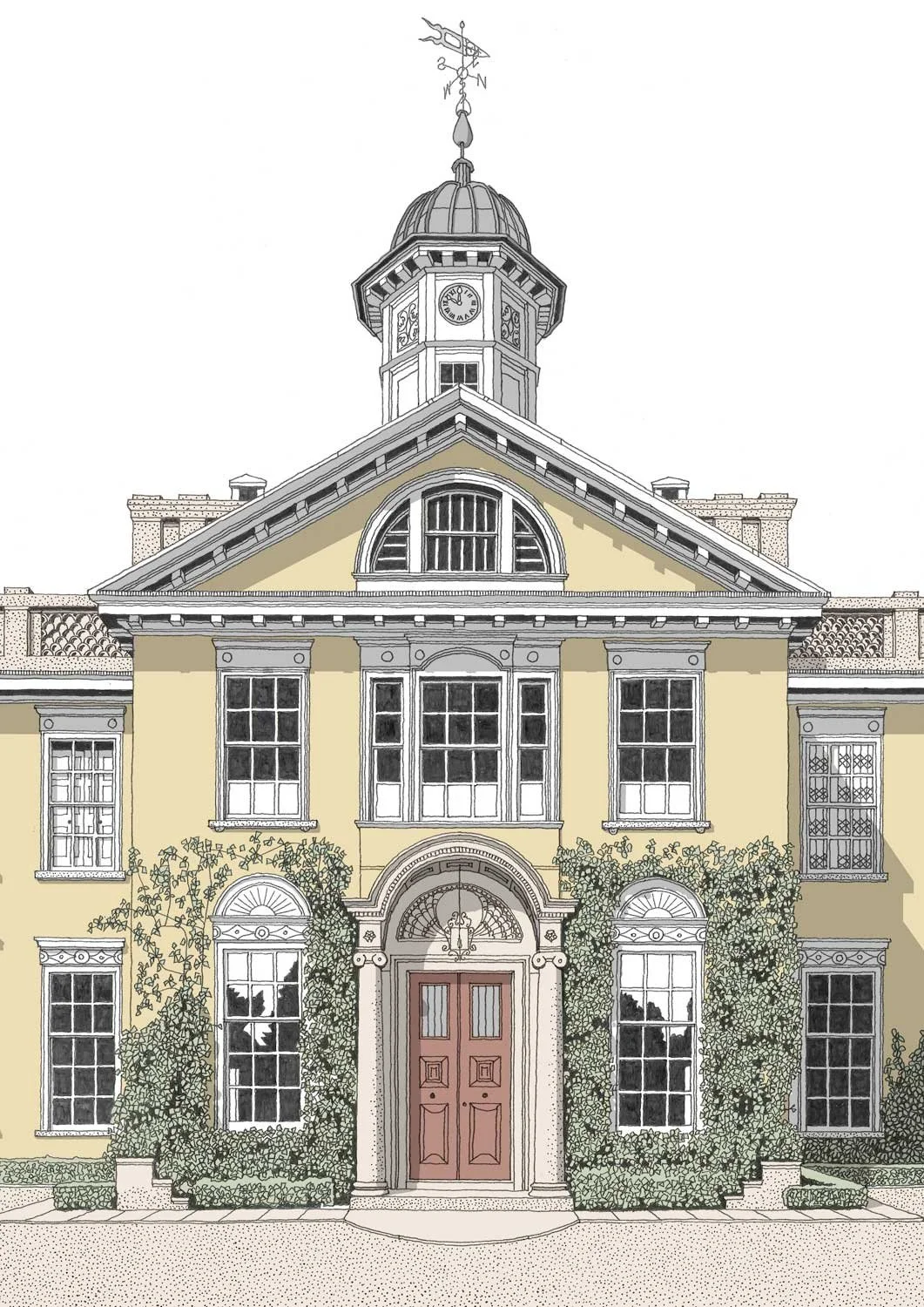
Polesden Lacey, Great Bookham, near Dorking, Surrey, RH5 6BD
APEX DRIVE, FRIMLEY, CAMBERLEY, SURREY GU16
The Apex Drive development (1966) was designed by Lawrence Abbot and built by the Apex Society, founded in 1965, to provide 'affordable housing in Greater London and the Home Counties'.
The development is made up of eight blocks, each containing four apartments with grey brick exteriors and protruding curved staircases.
They’re locally listed by Surrey Heath Borough Council as ‘Buildings of Special Architectural or Historic Interest’.

(Commissioned) 8 Apex Drive, Frimley, Camberley, Surrey GU16 7AF
‘BLANDINGS’, WOKING, SURREY GU21


(Commissioned) Blandings, Woodham Lane, Woking GU21 5SR
HAMPSHIRE
BOMBAY SAPPHIRE DISTILLERY,
WHITCHURCH RG28
The glasshouses at the Bombay Sapphire Distillery are a masterclass in adaptive reuse, blending Victorian industrial heritage with 21st-century sculptural design.
Designed by Heatherwick Studio and opened in 2014, the twin structures are composed of 893 individually shaped glass panels held by over a kilometre of bronze-finished stainless steel frames. Rather than standing as isolated objects, the glasshouses appear to "flow" directly from the historic mill buildings, their forms inspired by the distillation process itself.
Functionally, the structures are as much an engineering feat as an aesthetic one. They utilise waste heat from the gin distillation process to maintain two distinct climates: one tropical and one Mediterranean. These environments house the ten exotic botanicals—including juniper, coriander, and grains of paradise—used in the vapour-infusion process. By rooting the structures in the River Test, the design creates a literal and symbolic connection between the distillery’s natural ingredients and its historic Hampshire setting.
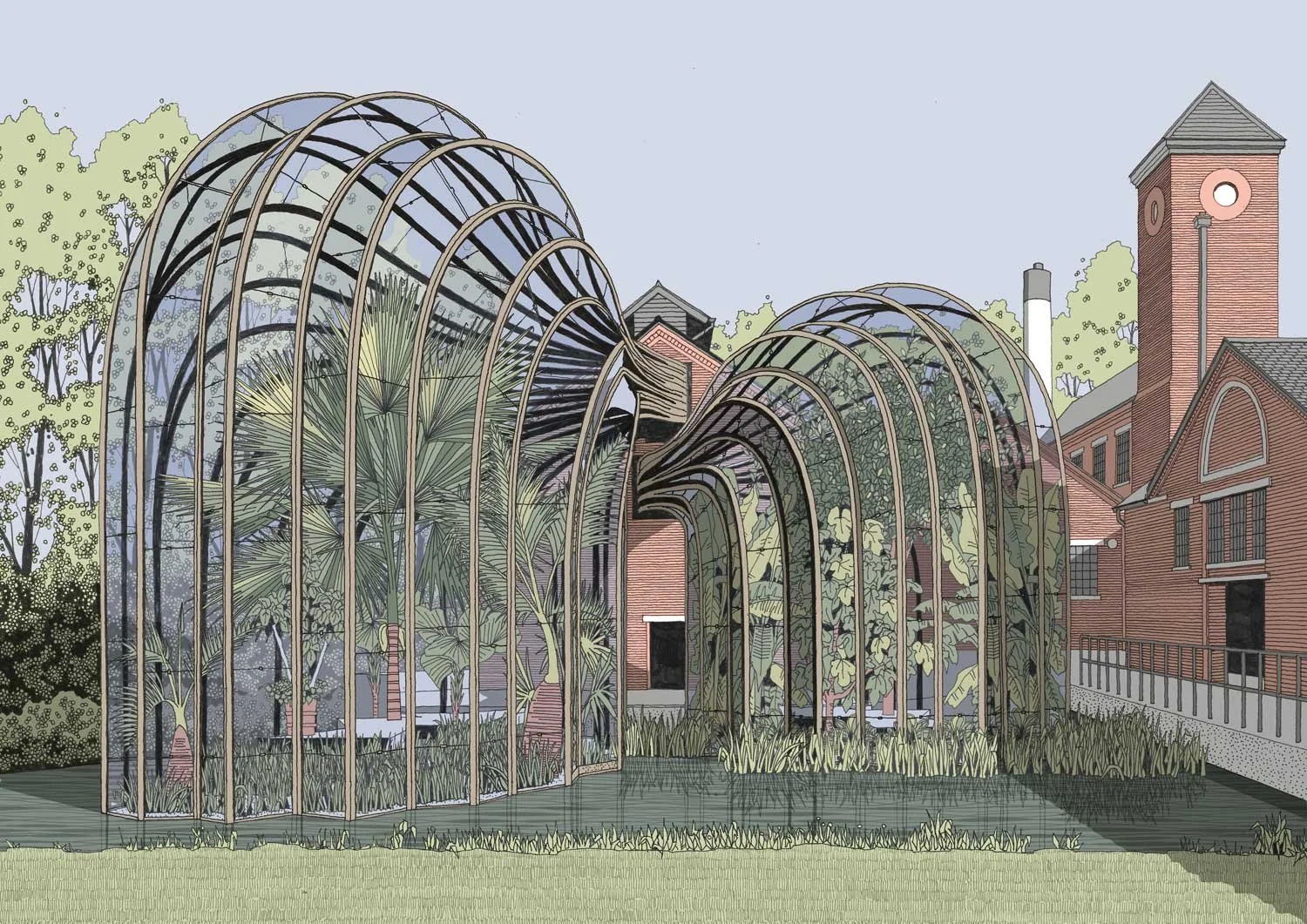
Bombay Sapphire Distillery, Laverstoke Mill, London Road, Whitchurch RG28 7NR
BACK LANE, SOUTHWICK, FAREHAM PO17
The picturesque village of Southwick is situated six miles north of Portsmouth in Hampshire. Southwick is a rare example of a privately managed, privately owned estate that includes some 17 farms, 164 dwellings and numerous commercial premises.
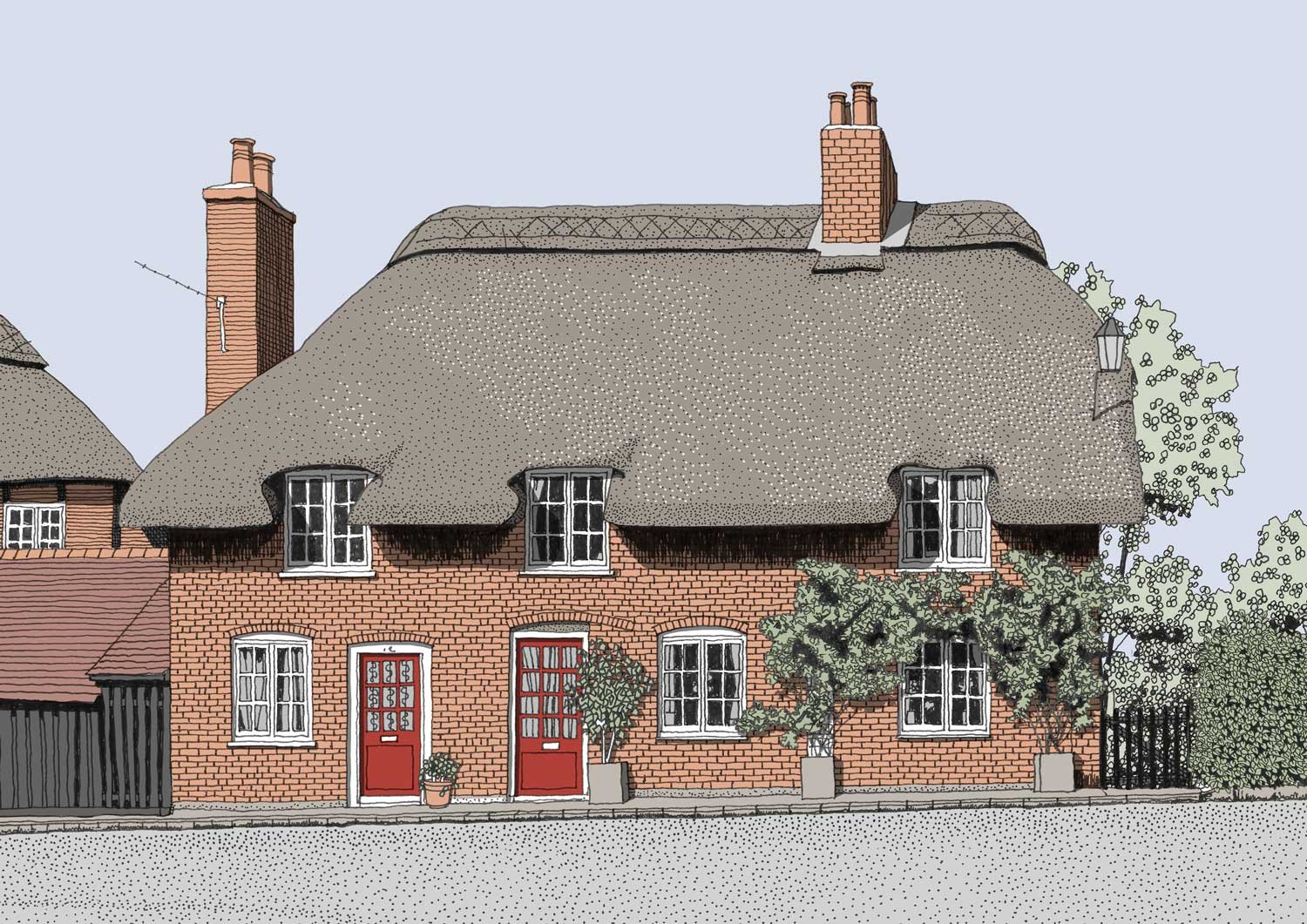
Back Lane, Southwick, Fareham PO17
MIDDLEBRIDGE STREET, ROMSEY, HAMPSHIRE S051
Early Victorian two storey building, circa 1840, with original shopfront window.
Grade II listed.

(Commissioned) Middlebridge Street, Romsey, Hampshire SO51
KENT
SISSINGHURST CASTLE, CRANBROOK, KENT TN17
A red-brick, three-storey Elizabethan Tower (listed grade I) with its two octagonal turrets. The Tower and moat is the only surviving part of the great Elizabethan courtyard house, probably built by Sir John Baker's son Richard, circa 1560-70 on the site of the earlier Baker house and demolished by Sir Horace Mann circa 1800.
The Tower was restored in 1931 by Vita Sackville-West, poet and gardening writer, and her husband Harold Nicolson. The National Trust took over the whole of Sissinghurst including its garden, farm and buildings in 1967.
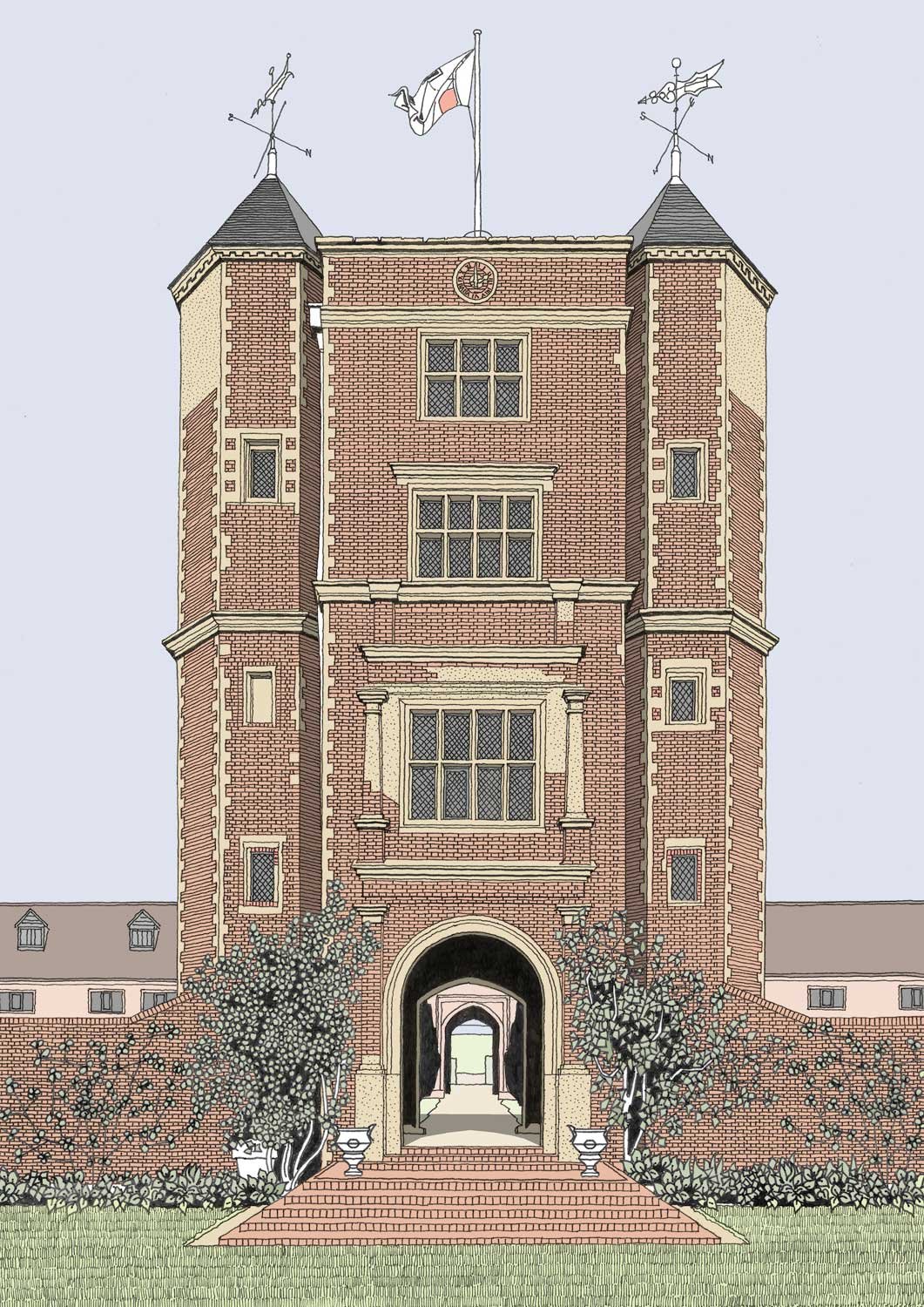
Sissinghurst Castle, Biddenden Road, Cranbrook, Kent TN17 2AB
102 MINNIS ROAD, BIRCHINGTON-ON-SEA, KENT CT7
A unique Art Deco house built in 1935 on the north Kent coast. The house has been recently fully renovated both externally and internally by the owners who now run it as a bed and breakfast .

(Commissioned) 102 Minnis Road, Birchington-On-Sea, Kent, CT7 9NX
HEREWARD AVENUE, BIRCHINGTON-ON-SEA, KENT CT7
Another unique and beautifully restored Art Deco House on the north Kent coast. It had an identical one to the right of the illustration, but has had a roof added.

(Commissioned) 12 Hereward Avenue, Birchington-On-Sea, Kent CT7 9LY
LIVERPOOL LAWN, RAMSGATE, KENT CT11
This end of terrace in Liverpool Lawn (built between 1827-36) caught my attention for its quirky lean-to chimney stack at the back and an eclectic mix of materials and window styles. With flint to the ground floor, lancet windows to each floor that reflect the fenestration and materials of Grace Cottage shown on the left.

Liverpool Lawn, Ramsgate CT11
KING STREET, MARGATE, KENT CT9
Dutch gable with snapped flints and brick dressing.Dating from 1601, but has likely been renovated or rebuilt in the 19th century.

King Street, Margate, Kent CT9
EASTGATE HOUSE, ROCHESTER, KENT ME1
Built in 1590, Eastgate House is a Grade I listed 16th century town house and is one of the most impressive and distinctive buildings in Rochester’s historic high street.
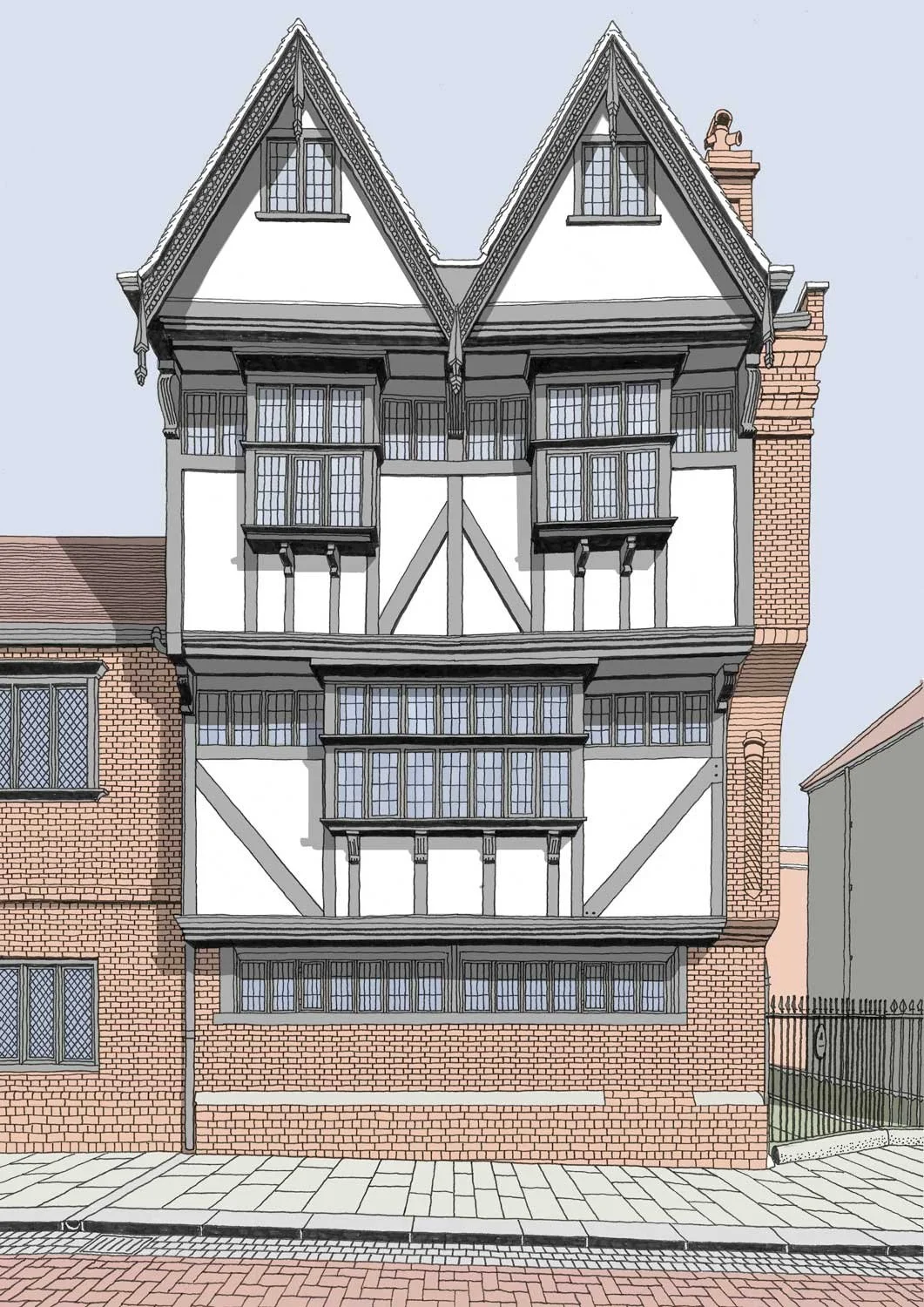
Eastgate House, High Street, Rochester, Kent, ME1 1EW