
OUTER LONDON BOROUGHS
LONDON BOROUGH OF BARNET
LYTTON CLOSE, HAMPSTEAD GARDEN SUBURB, N2
Part of the Hampstead Garden Suburb, Lytton Close is an enclave of art deco houses designed and built around 1935, all to designs of architect G.G. Winbourne and constructed by W.L.M. Estates.
With flat roofs, glazed rooftop pavilions and balconies, the design is eclectic, confident and eschews the compromises found elsewhere in the Suburb in Moderne-style houses.
Now grade II-listed for their architectural significance.
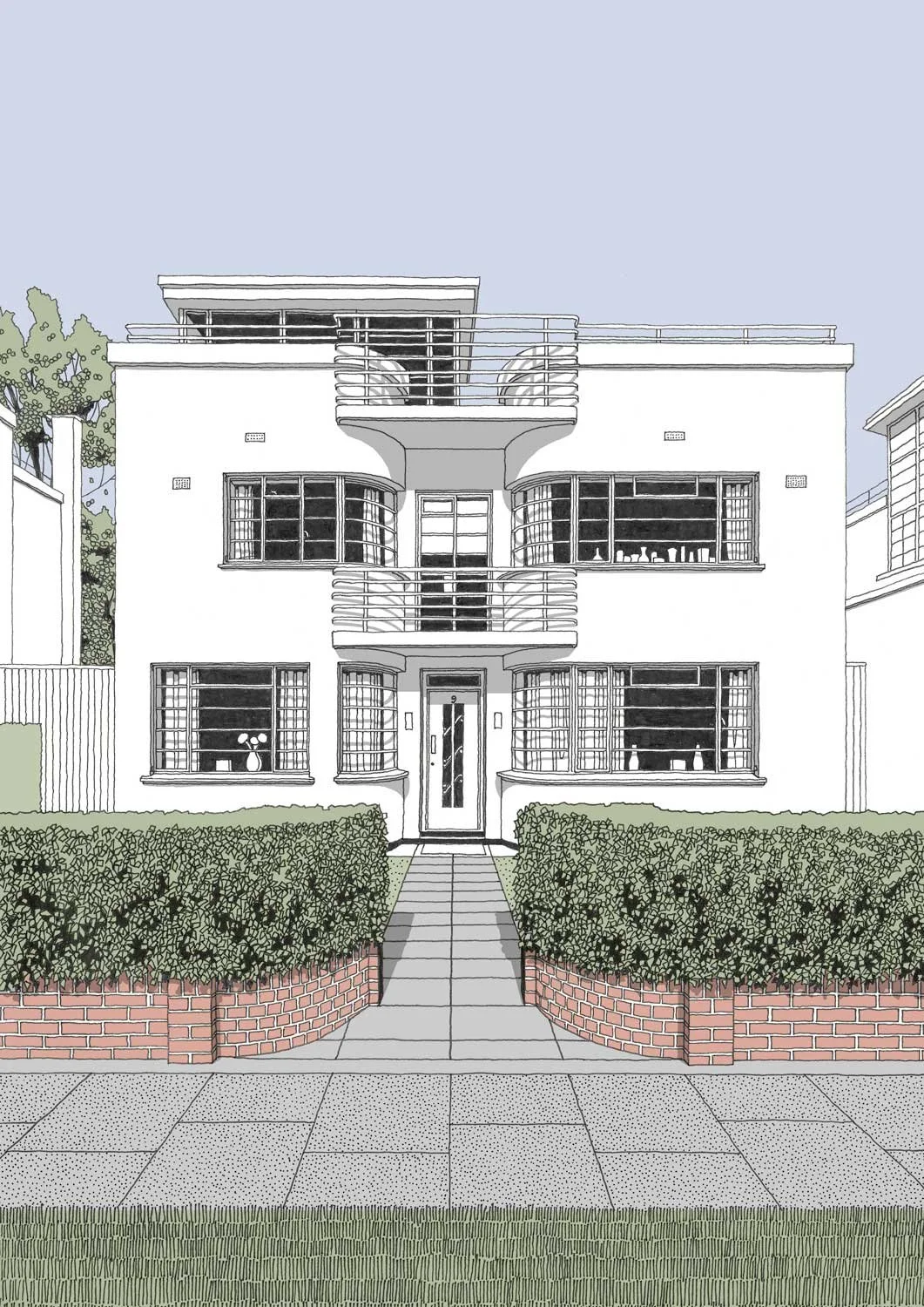
Lytton Close, Hampstead Garden Suburb, London N2 0RH
LONDON BOROUGH OF BROMLEY
BROMLEY PICTURE HOUSE BROMLEY BR1
A 1936 Art Deco cinema, designed by architect George Coles. The cinema underwent a major refurbishment and extension in 2019.

Bromley Picturehouse, 242 High Street, Bromley, London BR1 1PQ
APEX CLOSE, BECKENHAM BR3
Bold sculptural brick forms at Apex Close, off The Avenue.
The Apex Close Housing Trust was set up by Derek Sharp Associates in 1966 . The building of Apex Close took place between 1966 and 1967 and consists of duplex apartments with the upper duplexes reached from a rather extravagant elevated walkway.
Locally listed by Bromley Council.
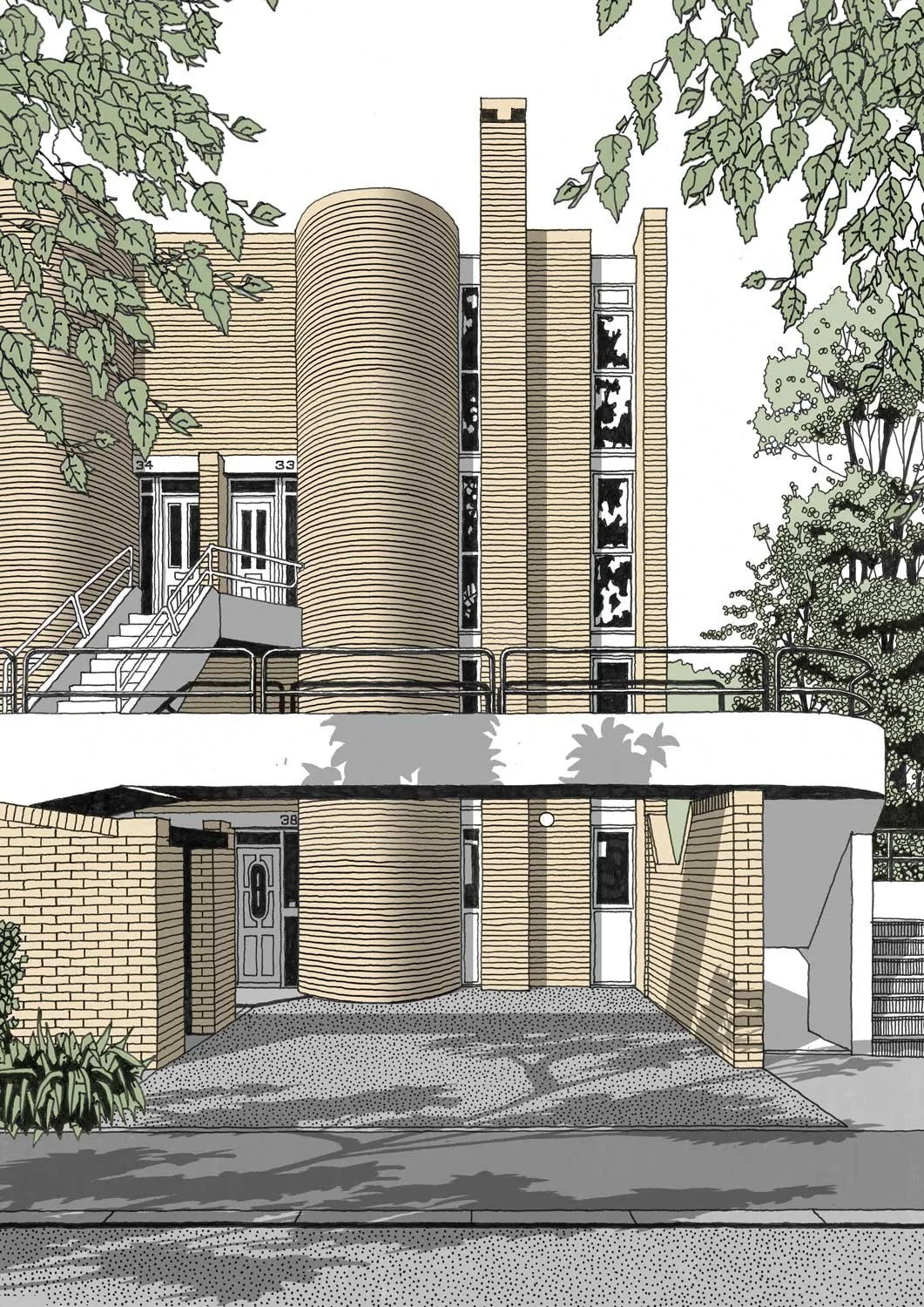
Apex Close, Beckenham, BR3 5TU
LONDON BOROUGH OF CROYDON
No. 1 CROYDON, CR0
No. 1 Croydon (formally the NLA Tower) was one of many new commercial buildings constructed in the growing town of Croydon in the 1960s. It has 24 storeys and is 82 metres high.
Designed by Richard Seifert & Partners and completed in 1970.
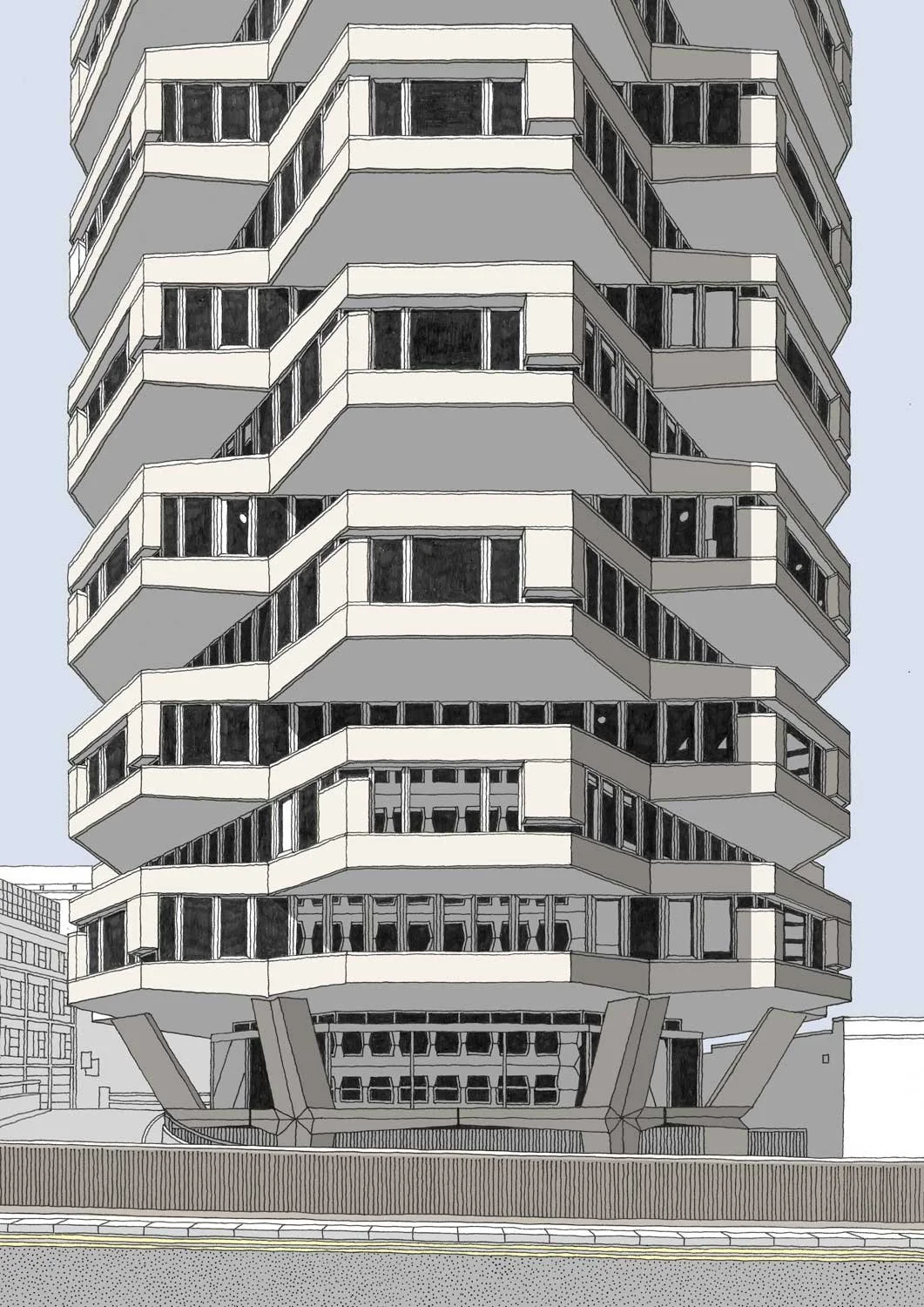
No. 1 Croydon, 12-16 Addiscombe Road, Croydon CR0 0XT
LONDON BOROUGH OF ENFIELD
ARNOS GROVE STATION, N11
This station was built in 1932-4 by the architect Charles Holden. It was the temporary terminus of the four-mile Piccadilly line extension towards Cockfosters which opened on 19th September 1932. The station, stated as being Holden's favourite, was restored to near original condition in 1990.

Arnos Grove Station (I) , Bowes Road, Arnos Grove, London N11 1AN
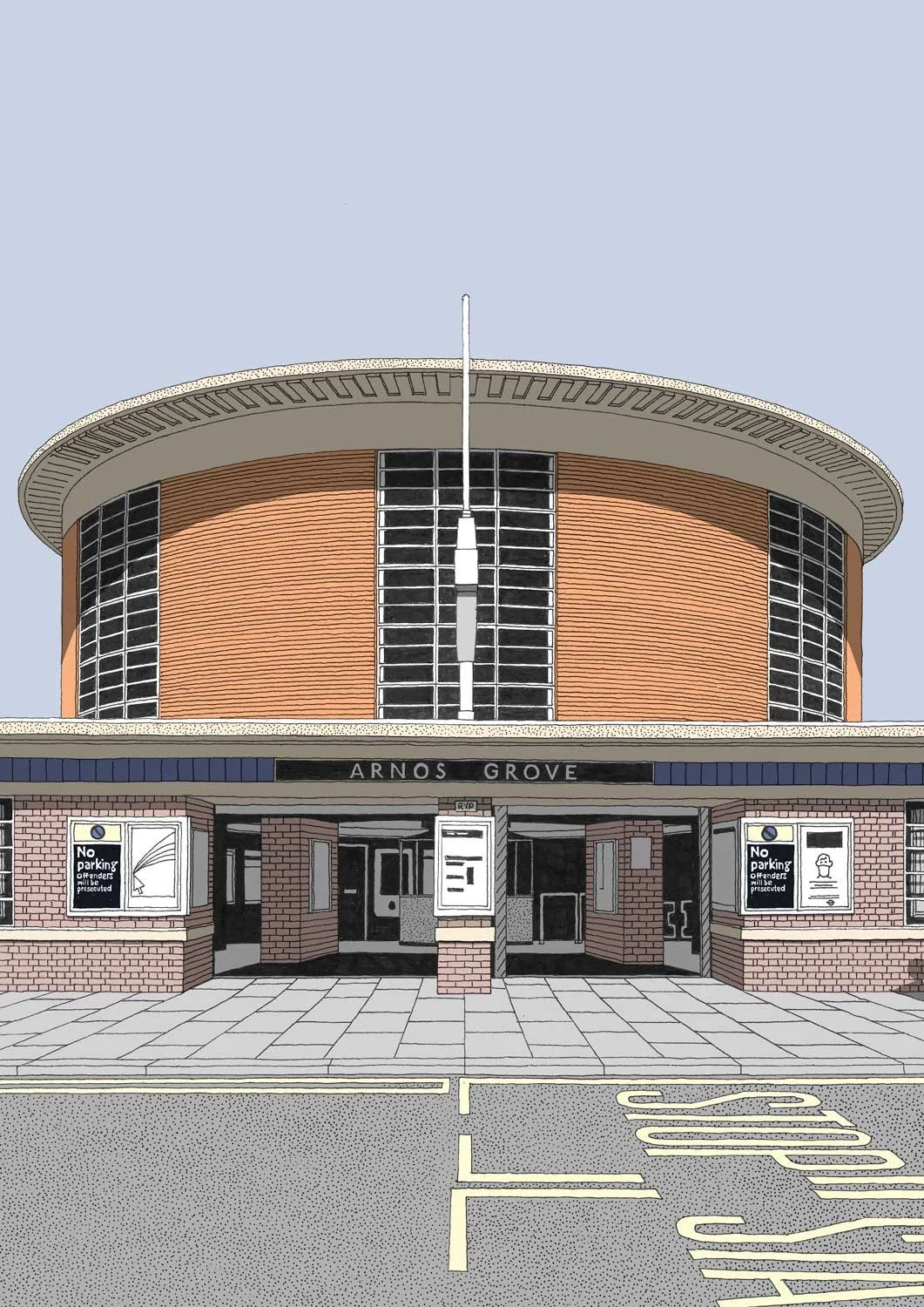
Arnos Grove Station (II), Bowes Road, Arnos Grove, London N11 1AN
LONDON BOROUGH OF GREENWICH
GENESTA ROAD, PLUMSTEAD SE18
A mid terrace house designed by Berthold Lubetkin and completed in 1934. This set of four terrace homes were one of the first attempts at redesigning a traditional English house with the benefits of concrete construction and off street parking.
Concrete party walls and an intermediate column are articulated with a horizontal concrete window band at first floor living room level. The ‘cyma’ or double curvature bedroom balconies at second floor are typical characteristics of Lubetkin's work.
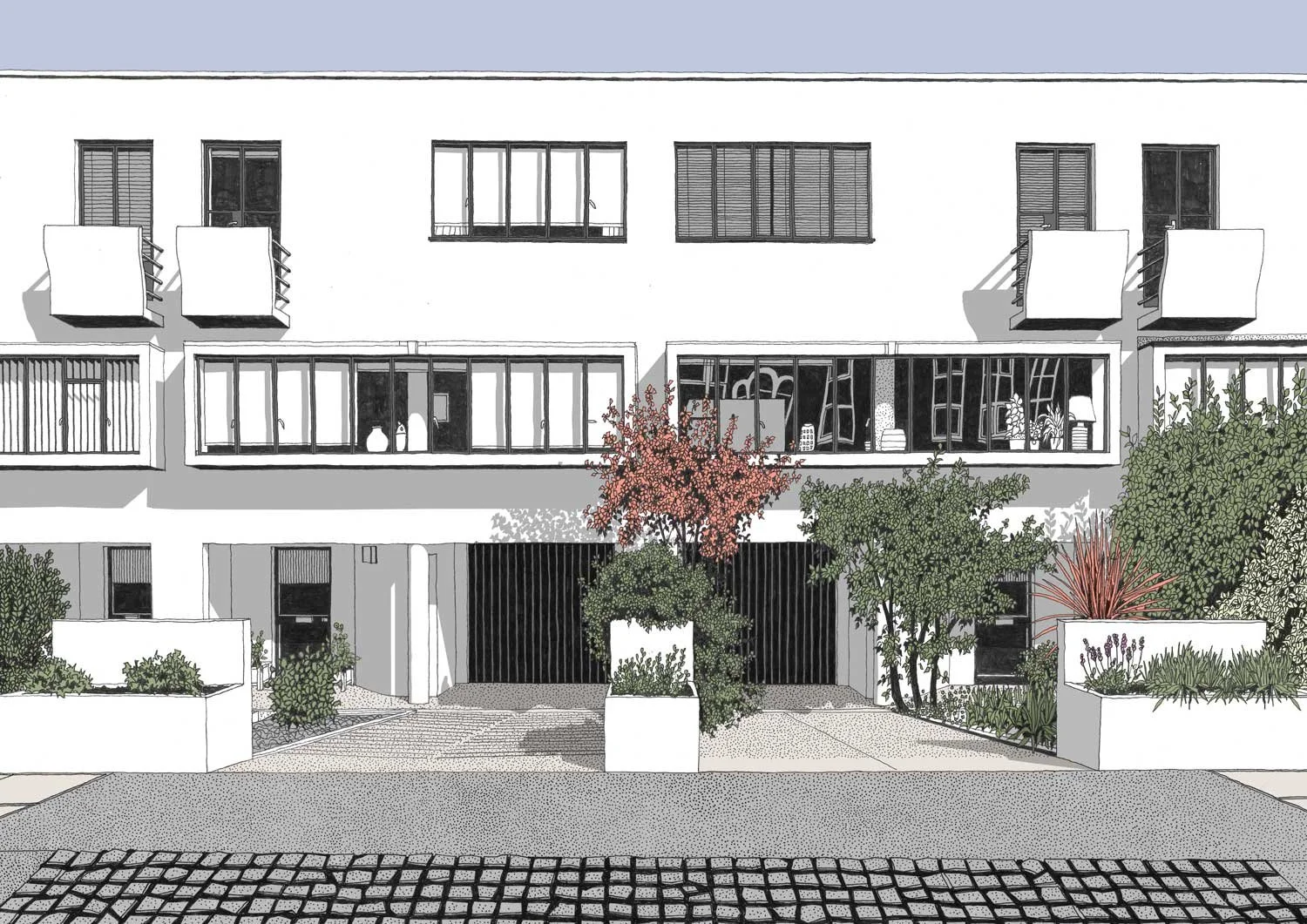
Genesta Road, Plumstead, SE18
CORALLINE WALK, THAMESMEAD, SE2
Thamesmead was London County Council’s bold attempt to build a new town to address the city’s housing shortage after the Second World War.
Rising from London’s Erith marshes in the 1960’s, the danger of flooding lead the original design to place all living spaces at first floor level or above, interconnecting dwellings with raised walkways and leaving the ground level of buildings as garage space or plant rooms. These elevated design principles have contributed towards the estate’s decline and Carolline Walk has since been demolished to pave the way for new housing.
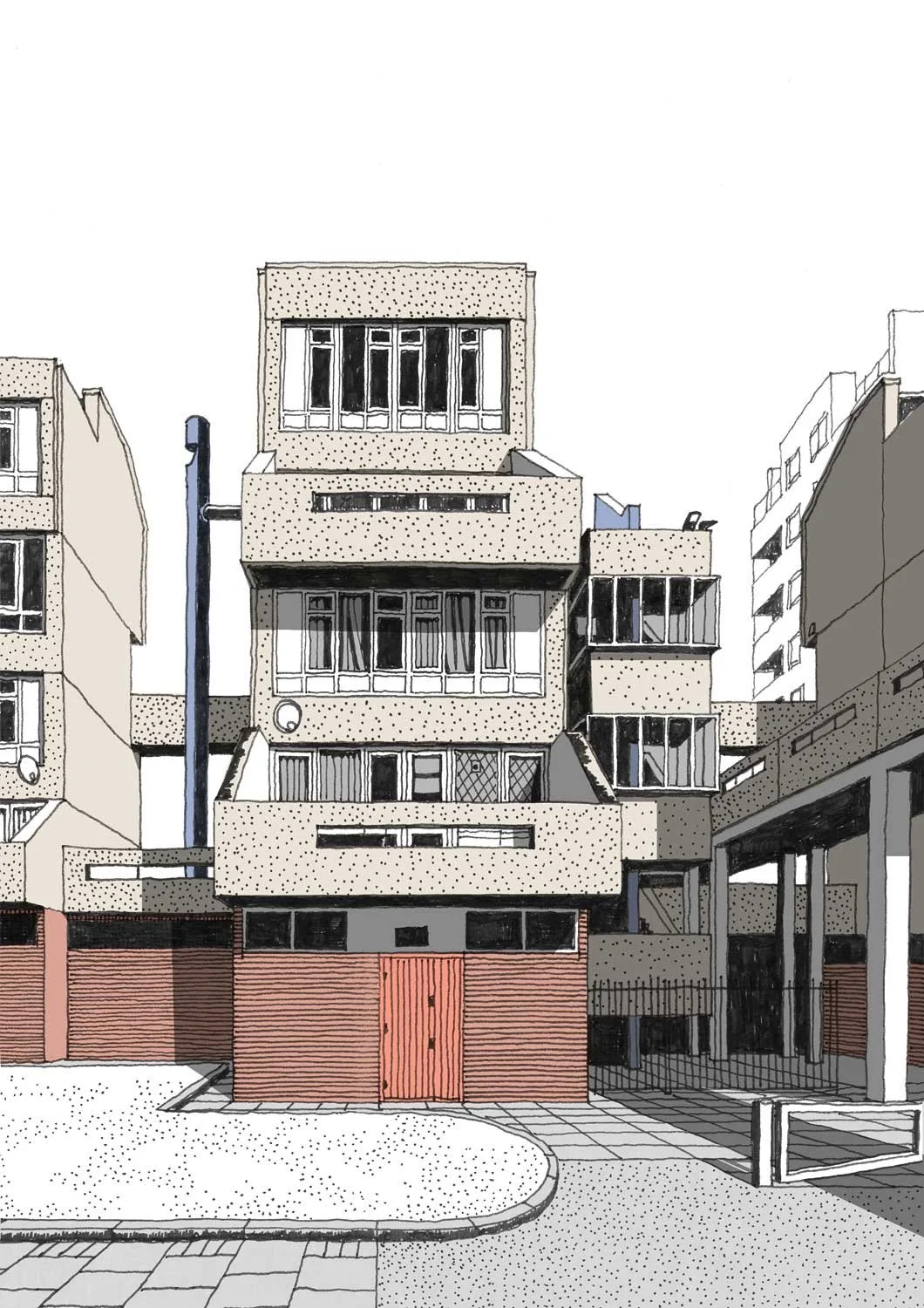
Coralline Walk, (now demolished) Thamesmead, London SE2
LONDON BOROUGH OF HAMMERSMITH & FULHAM
THE TALISMAN, FULHAM SW6
The former Talisman, an iconic 1930’s garage and petrol filling station on the New Kings Road, now converted into apartments.
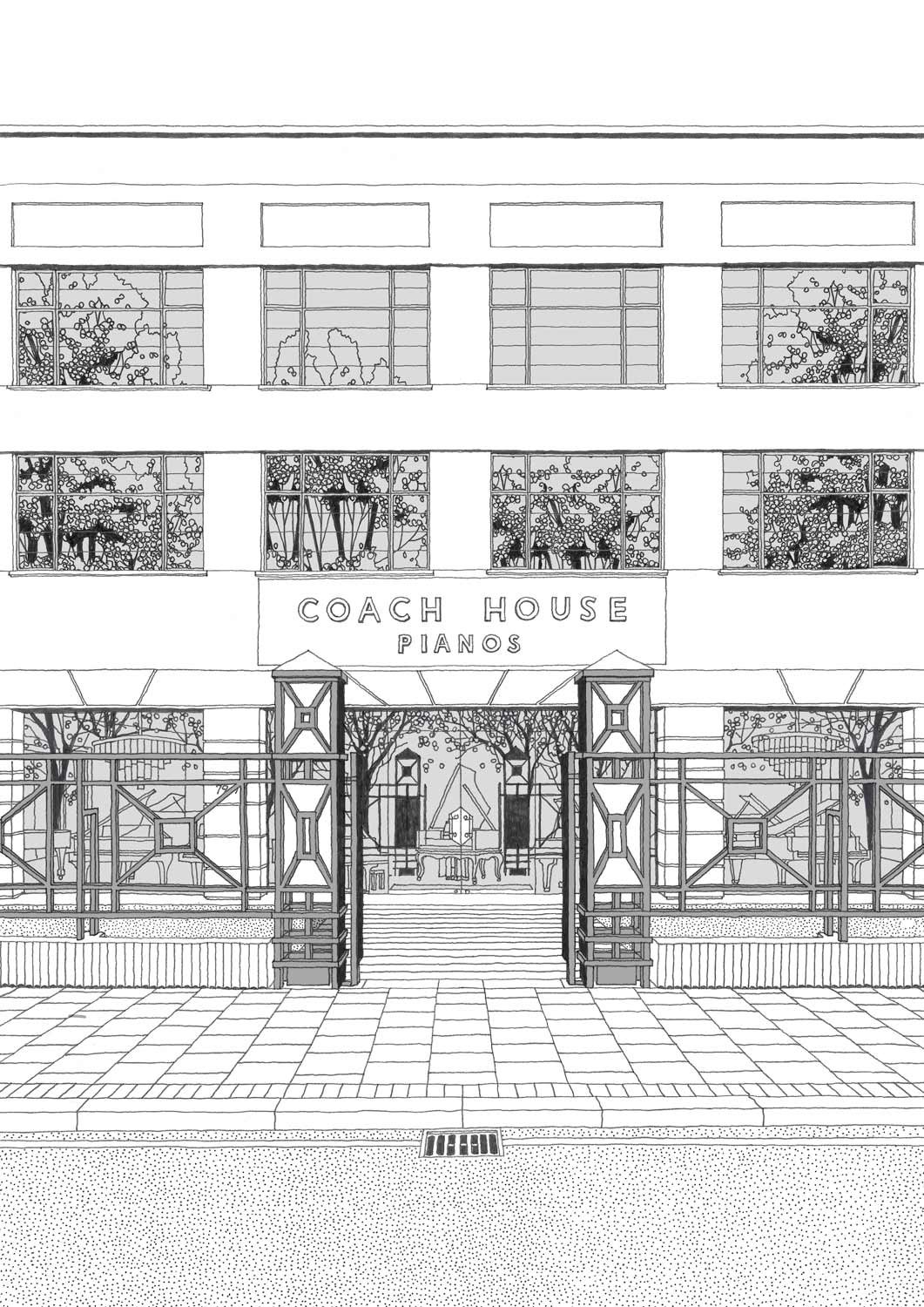
(Commissioned) 79-91 New Kings Road, London SW6 4SQ
LONDON BOROUGH OF HARINGEY
CHOLMELEY LODGE, HIGHGATE N6
Cholmeley Lodge is a six-storey block of 54 flats built in 1934-5 to the designs of Guy Morgan.
The development is made up of three curved crescents, giving a scalloped outline, emphasised by boldly projecting balconies on each floor, with projecting bays above the entrance to each section of the development. The entrance doorways are set behind fluted surrounds under a curved canopy.
Morgan’s design was originally intended for the seafront at Bournemouth. However, the planners objected to its modernity, wanting Tudor timberwork to soften the aesthetic. As a result, the architect withdrew his plans and recycled them in the more progressive environment of Highgate.
Cholmeley Lodge has similarities with Guy Morgan’s other well-known London landmark, Florin Court in Charterhouse Square.
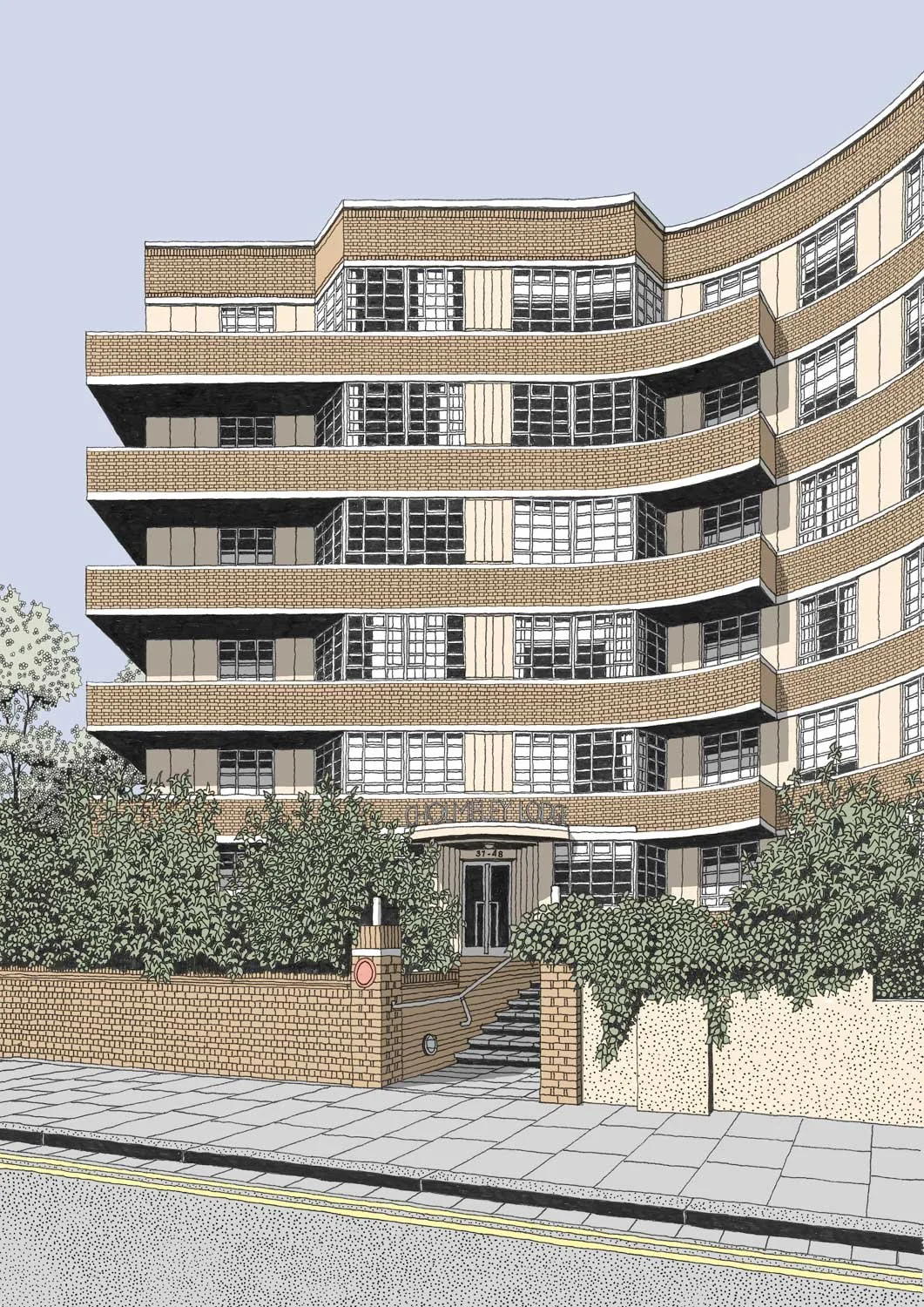
37-48 Cholmeley Lodge, Cholmeley Park, Highgate, London N6 5EN
ALEXANDRA PALACE, MUSWELL HILL / HORNSEY N22
Former International Exhibition Hall and 'People's Palace'. Rebuilt 1873-5 by John Johnson and Alfred Meeson following fire damage to the first building of 1868-73 by the same architects.
It is a rare survival of a large-scale Victorian exhibition and entertainment complex, and for the surviving BBC studios where the world's first high-definition television programme was transmitted in 1936.
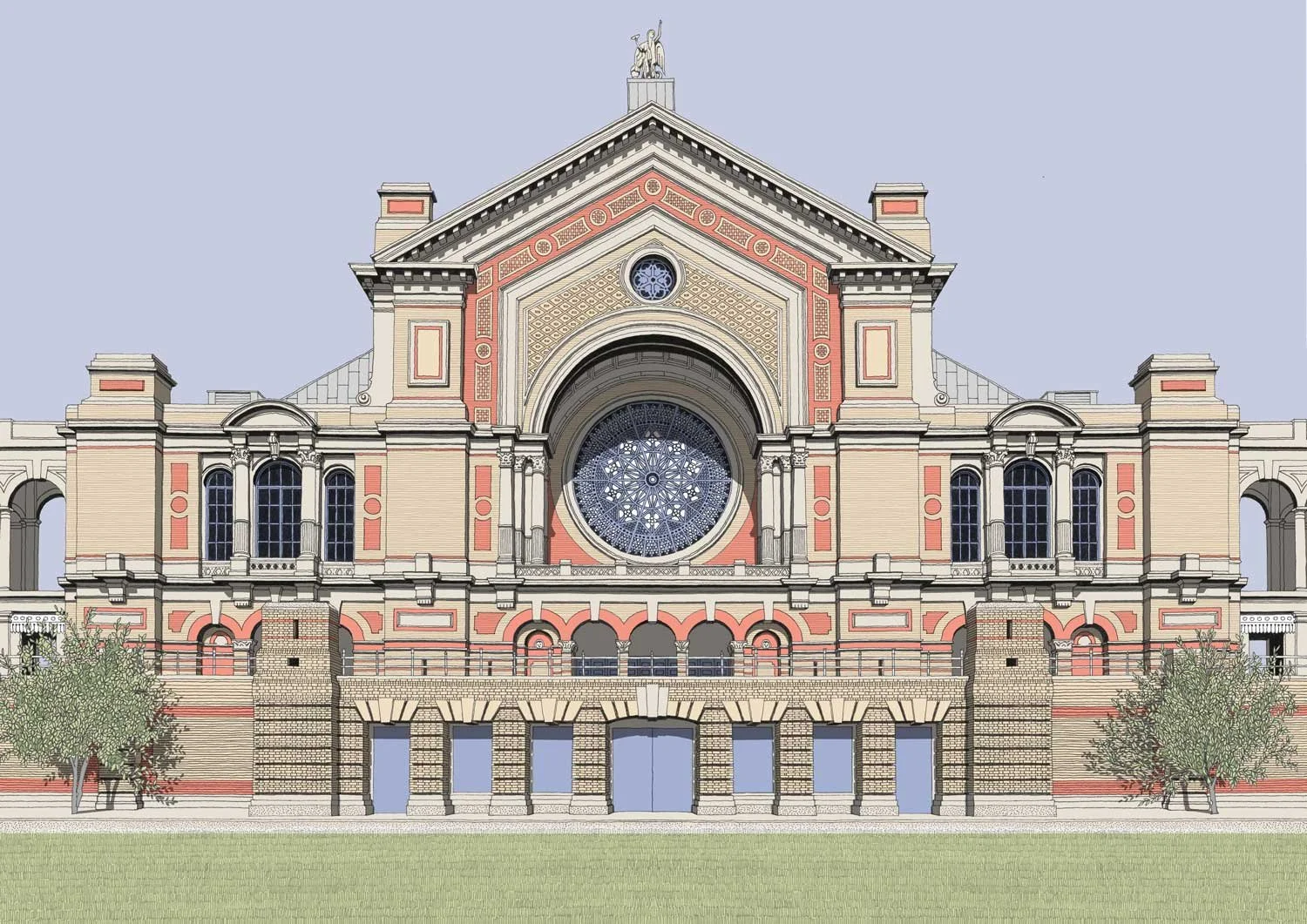
Alexandra Palace (I), Alexandra Palace Way, Muswell Hill / Hornsey, London N22 7AY
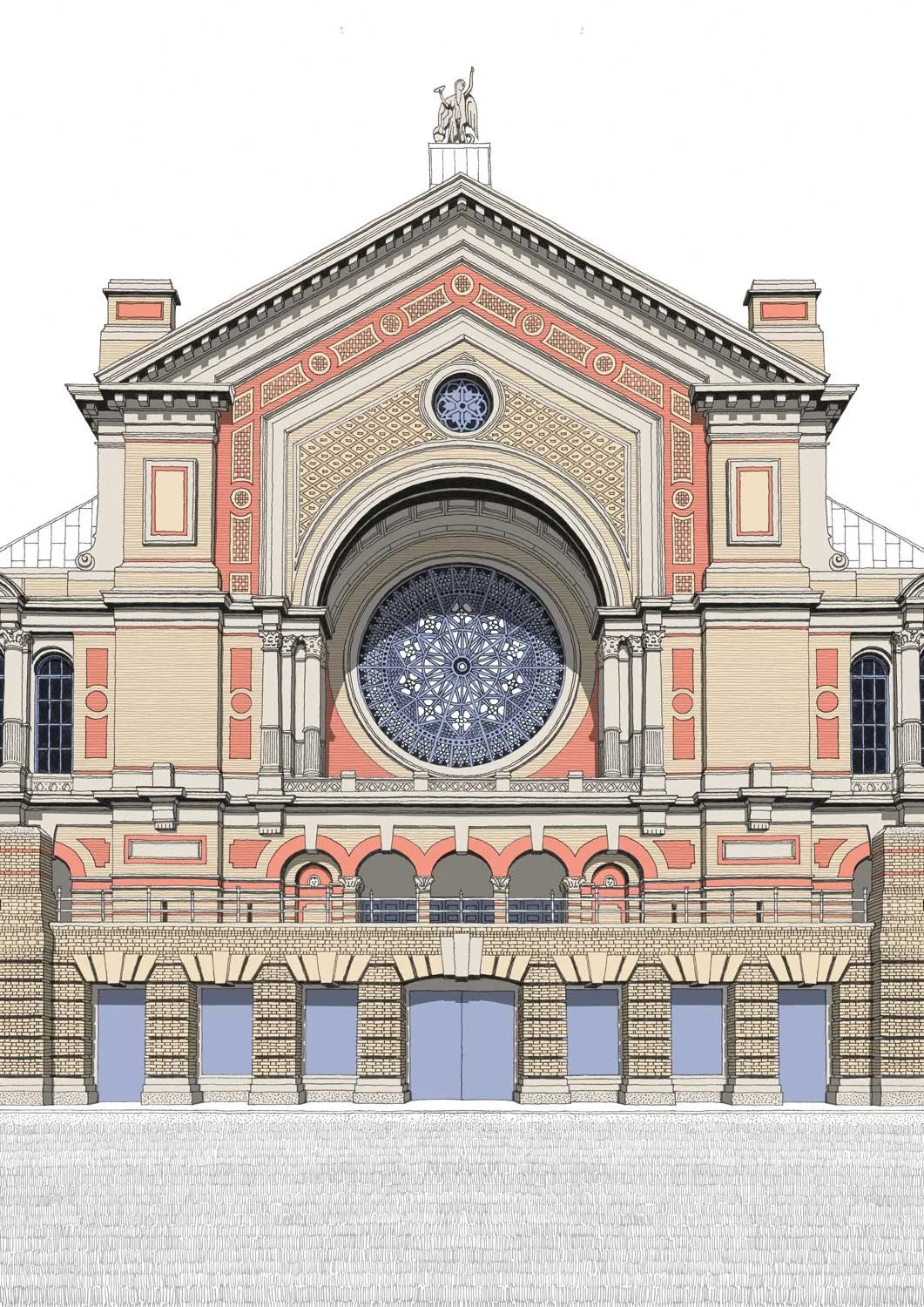
Alexandra Palace (II), Alexandra Palace Way, Muswell Hill / Hornsey, London N22 7AY
LONDON BOROUGH OF HARROW
RAYNERS LANE STATION, HARROW HA5
Built in 1938 to designs by architect Reginald Uren that followed London Transport’s ‘house style’ developed by Charles Holden.
The station features the double height cube-shaped red brick and glass ticket hall, capped with a flat reinforced concrete lid roof.
The main entrances are set behind two projecting curved corner kiosks at street level. Above each of the kiosks is a large, pole-mounted 'Underground' roundel.
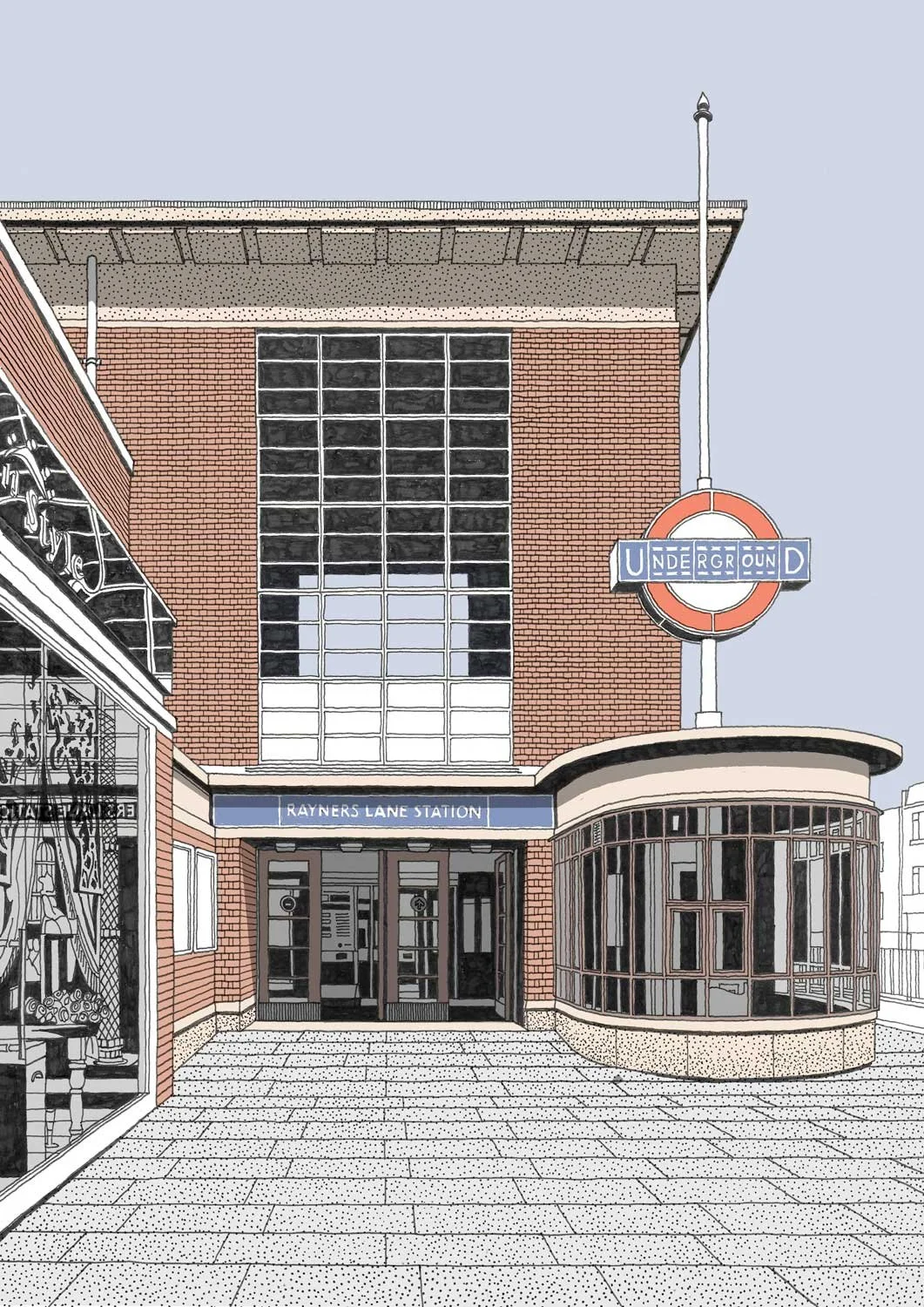
Rayners Lane Station, Alexandra Avenue, Harrow, HA5 5EG
LONDON BOROUGH OF HAVERING
THE ROUND HOUSE, ROMFORD RM4
The Round House is a Grade II* listed late Georgian elliptical stuccoed villa located on Broxhill Road in Havering-atte-Bower, London. The house was built between 1792 and 1794 by John Plaw for William Sheldon. As wealthy tea merchant Sheldon asked that the building was designed in the shape and form of his favourite tea caddy.

The Round House, Broxhill Road, Havering-atte-Bower, RM4 1QH
LONDON BOROUGH OF HOUNSLOW
CHISWICK HOUSE, CHISWICK W4
Chiswick House is a Palladian Villa in the west of London. It was built and designed by Richard Boyle, 3rd Earl of Burlington (1694-1753) in collaboration with the painter, architect and garden designer William Kent (1685-1748). Built between 1726 and 1729 it is one of the earliest and finest neo-Palladian villas in England.
Chiswick House wasn't actually built to live in. It has no bedrooms, kitchens or bathrooms. It was built to show off the excellent taste and art collection of Lord Burlington.

Chiswick House (I), Burlington Lane, Chiswick, London W4 2RP

Chiswick House (II), Burlington Lane, Chiswick, London W4 2RP
LONDON BOROUGH OF HILLINGDON
PARK AVENUE, RUISLIP HA4
One of a group of three semi-detached houses completed in 1935 by architects Connell, Ward & Lucus. The severity of form is crisply Teutonic, with a Bauhaus-like balcony acting as a screen to a full height windows to the first floor bedroom.
The distinctive glazed staircase on the left projects out at right angles to the plan and is encased in a glass tower that leads to the roof terrace. Whilst it would have provided plenty of natural light into the hall and corridors, at the time this transparent design produced a scandalised reaction as the occupants could be seen by all and sundry wearing only their night clothes. A central modesty screen has since been added!

97 Park Avenue, Ruislip, Middlesex, HA4
LONDON BOROUGH OF LEWISHAM
HORNIMAN MUSEUM, FOREST HILL, SE23
The museum was built from 1898-1901 at a cost of about £40,000 and was designed by Charles Harrison Townsend (also architect to the Whitechapel Gallery). It has both an Arts and Crafts and Art Nouveau influences, incorporating a tree motif and Romanesque arches. Unique to the Horniman is Robert Anning Bell’s mosaic “Humanity in the house of circumstance” and the Clocktower. The Clocktower, with its rounded edges, is meant to evoke the natural world, and to reflect Frederick Horniman’s desire that the collections, Gardens and buildings be unified in one theme.
Its unique style has made the Horniman a landmark in South London.
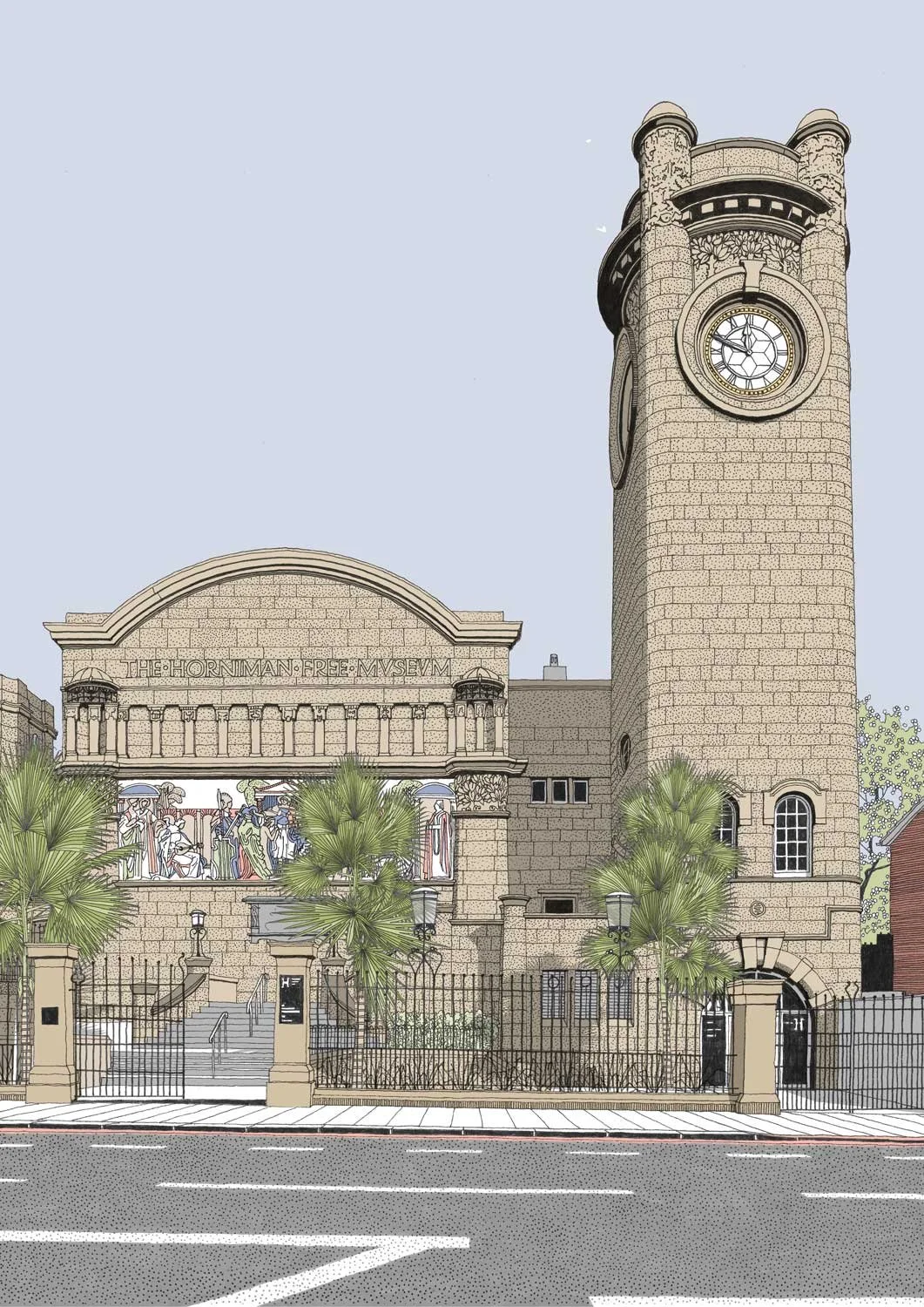
Horniman Museum,100 London Road, Forest Hill, London SE23 3PQ
LONDON BOROUGH OF RICHMOND UPON THAMES
HAM HOUSE, RICHMOND-UPON-THAMES
A Stuart mansion nestling on the banks of the River Thames.
Built in 1610 and extended in 1673 when it was at the heart of Restoration court life, Ham House is one of the best surviving examples of 17th century fashion, power and architecture in England.
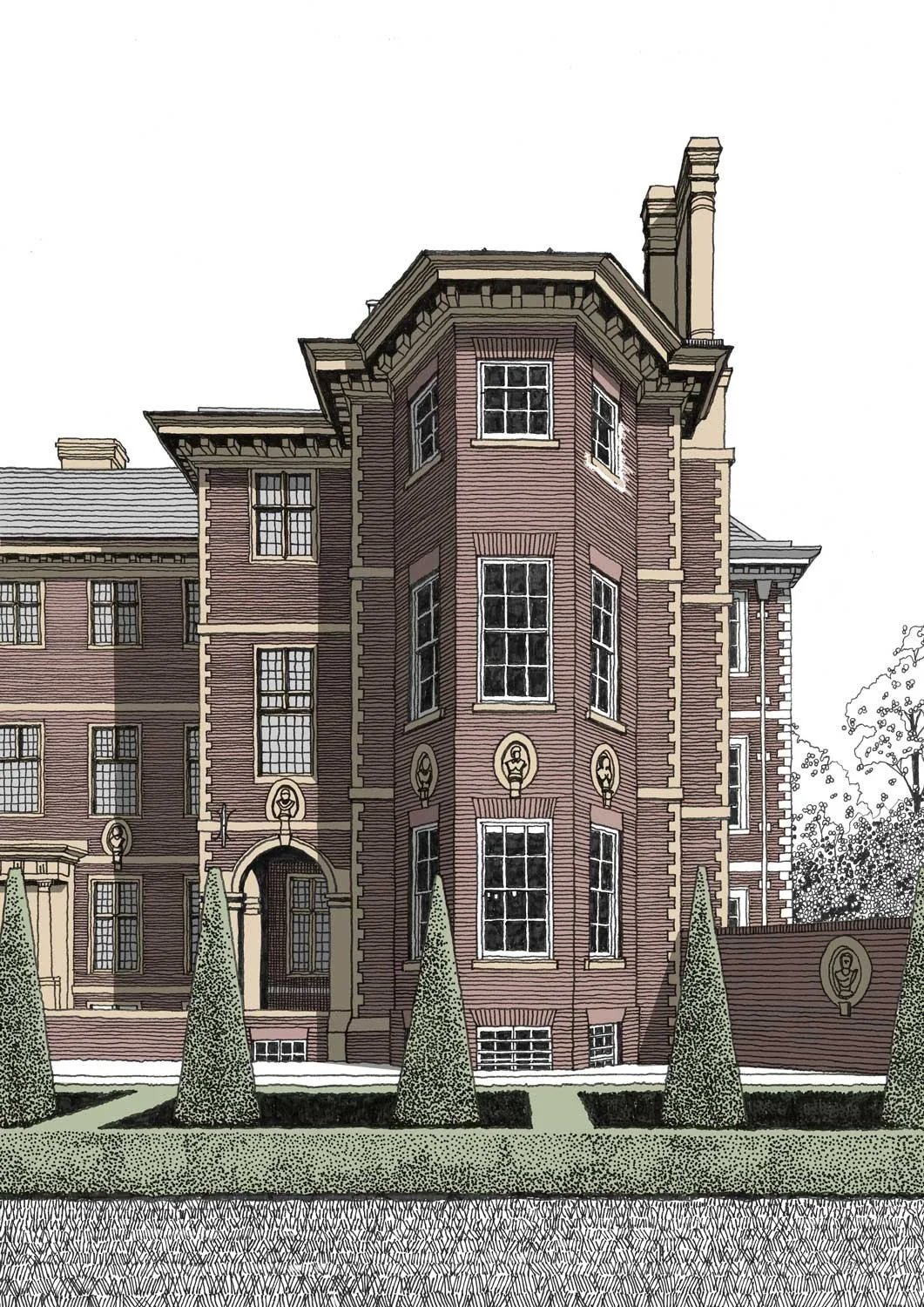
Ham House, Ham Street, Ham, Richmond TW10 7RS