
BUDAPEST, HUNGARY
The Hungarian capital is home to some noteworthy buildings from a wide range of different periods and styles, including Baroque, Art Nouveau, Bauhaus and Socialist Modernism.
I’ve illustrated a few noteworthy (and perhaps not so noteworthy) examples from a visit during 2023, arranged in order of district.
HATTYÚHÁZ, DISTRICT I
Hungary’s influential organic architecture movement helmed by Imre Makovecz produced most of its buildings outside of Budapest. A rare exception is Hattyúház at the foot of Castle Hill on the Buda side of Budapest, designed by Ervin Nagy, Makovecz’s student and later partner. Built in 1998 it is a mixed-use development using natural materials such as stone, wood and slate that successfully manages to both integrate into into its locality and also draw attention to itself.
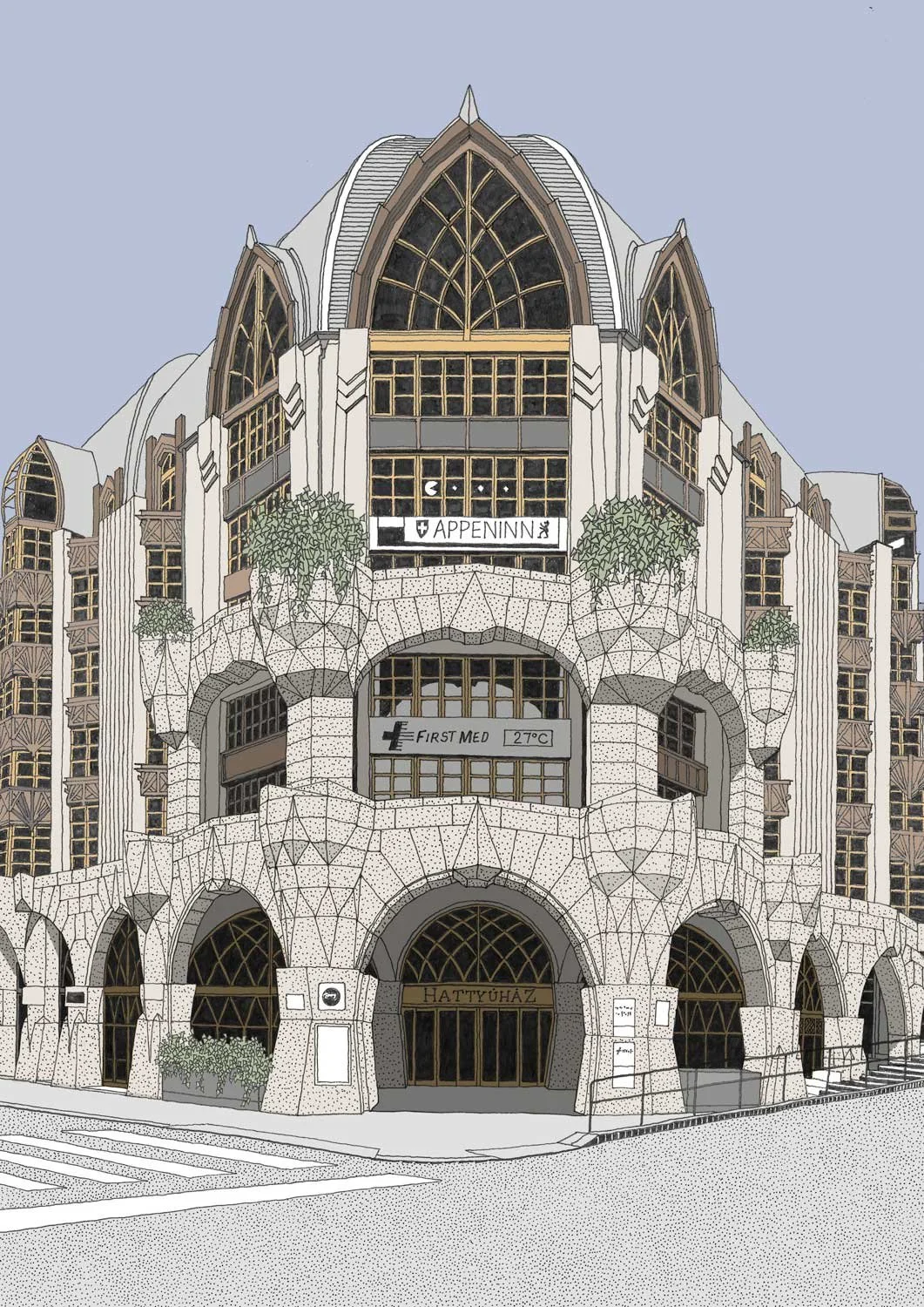
Hattyúház, Hattyú Útca 14, Budapest, 1015 Hungary
THE MANFRED WEISS PENSION FUND APARTMENTS, DISTRICT II
This upscale modernist apartment development on the Buda side was built by the Weiss Manfred Enterprises Recognized Pension Fund, whereby the owners used the rental income to pay benefits to their retired employees.
Built to the designs of architects Béla Hofstätter and Ferenc Domán in 1937-38.
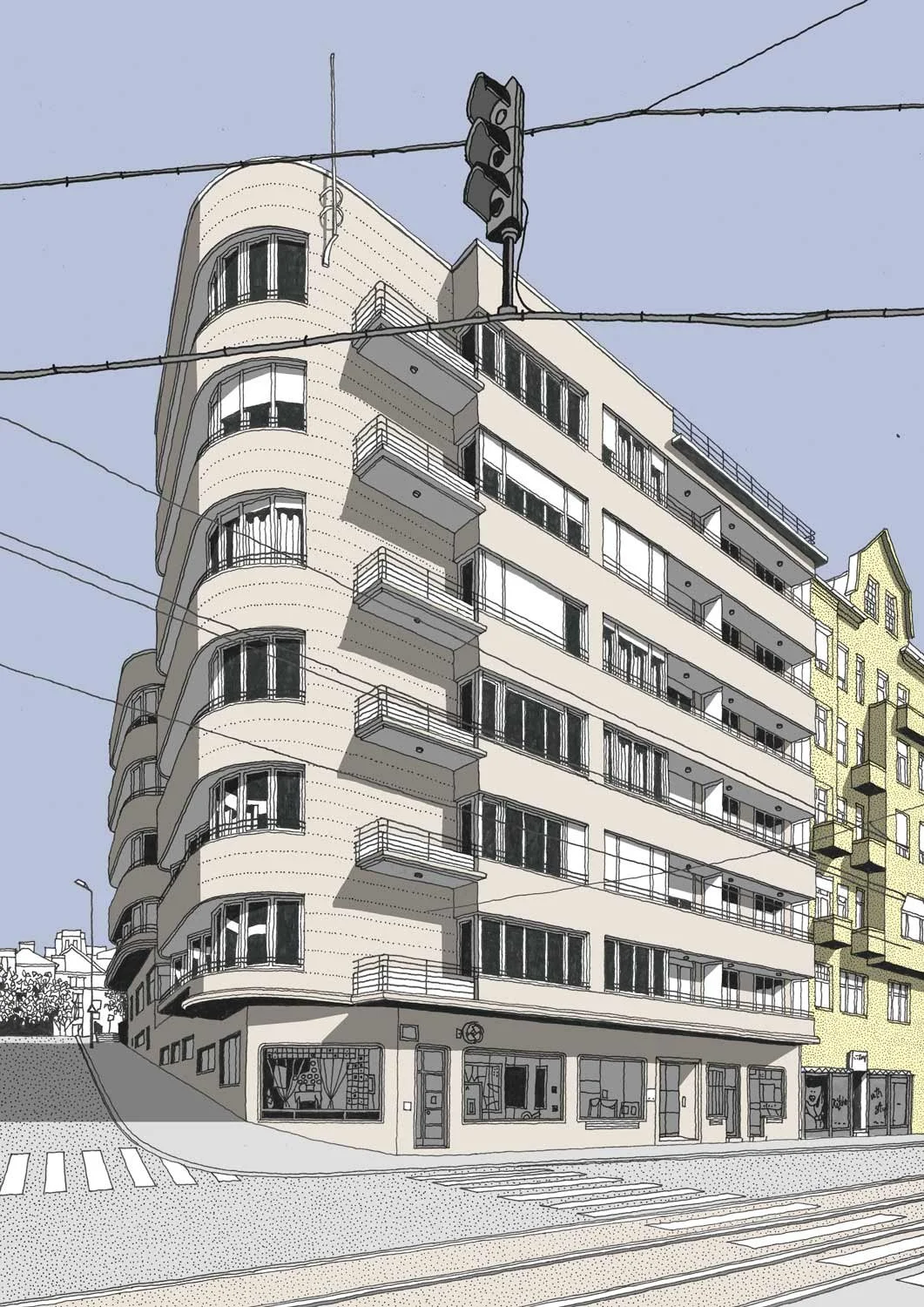
The Manfred Weiss Pension Fund Apartments, Margit Körút 15-17, Budapest, 1024 Hungary
ÁTRIUM, District II
Átrium, another Bauhaus-style building on Margit Körút, with a cinema on the ground floor and apartments above, was designed by architect Lajos Kozma.
The cinema opened in 1936 and screened mainstream Hollywood films in its 700-seat auditorium. By the 2000’s it was renamed Majus 1 Kino and was closed in December 2008. It re-opened in Autumn 2012 as the Átrium Film Theatre.
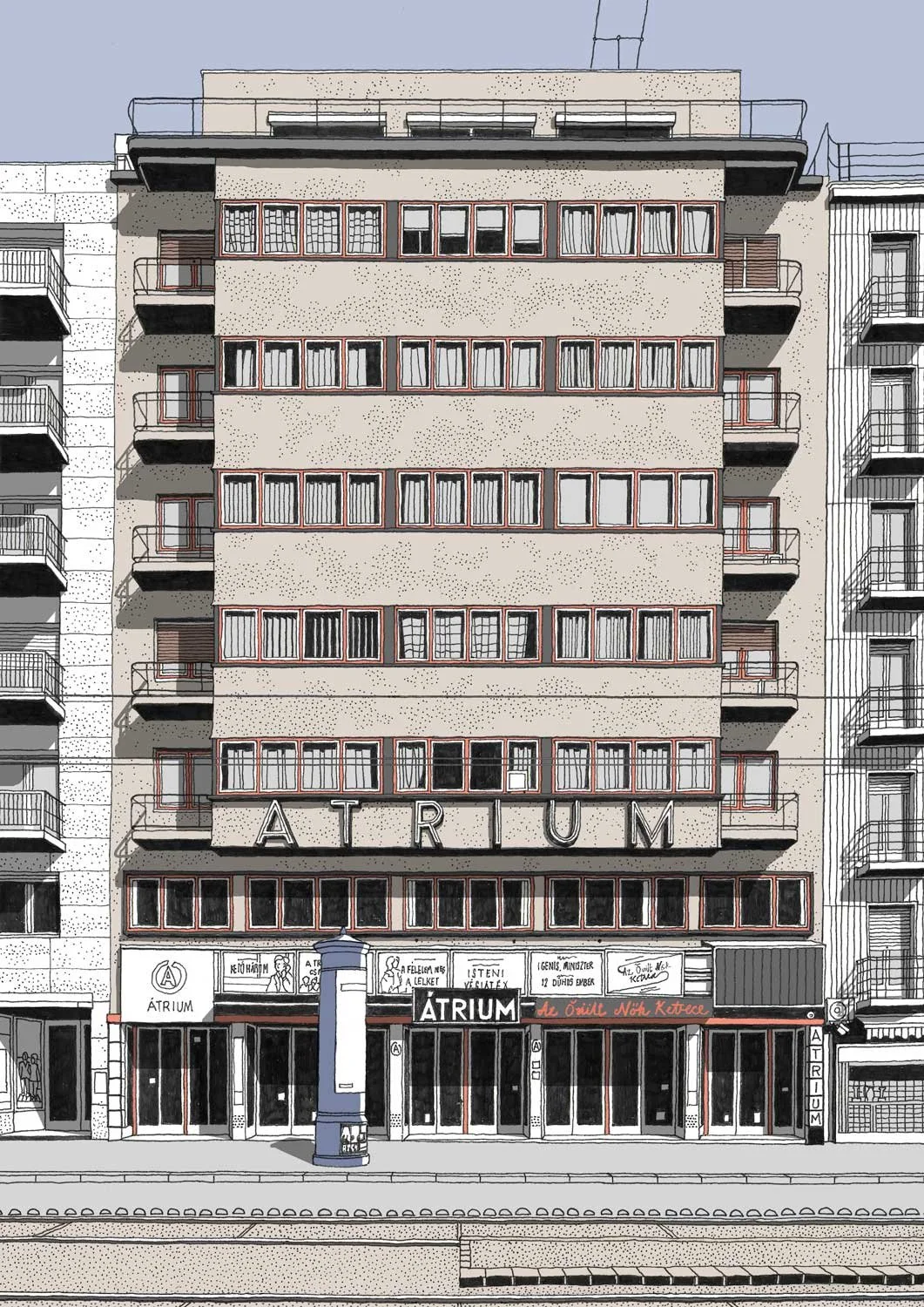
Átrium, Margit Körút 55, Budapest, 1024 Hungary
HOTEL BUDAPEST, DISTRICT II
With its 19 floors, Hotel Budapest, which opened on New Year’s Eve in 1967, was a true curiosity of its time. Designed by architect György Szrogh, the top of the tower block offers sweeping views over the Buda hills.
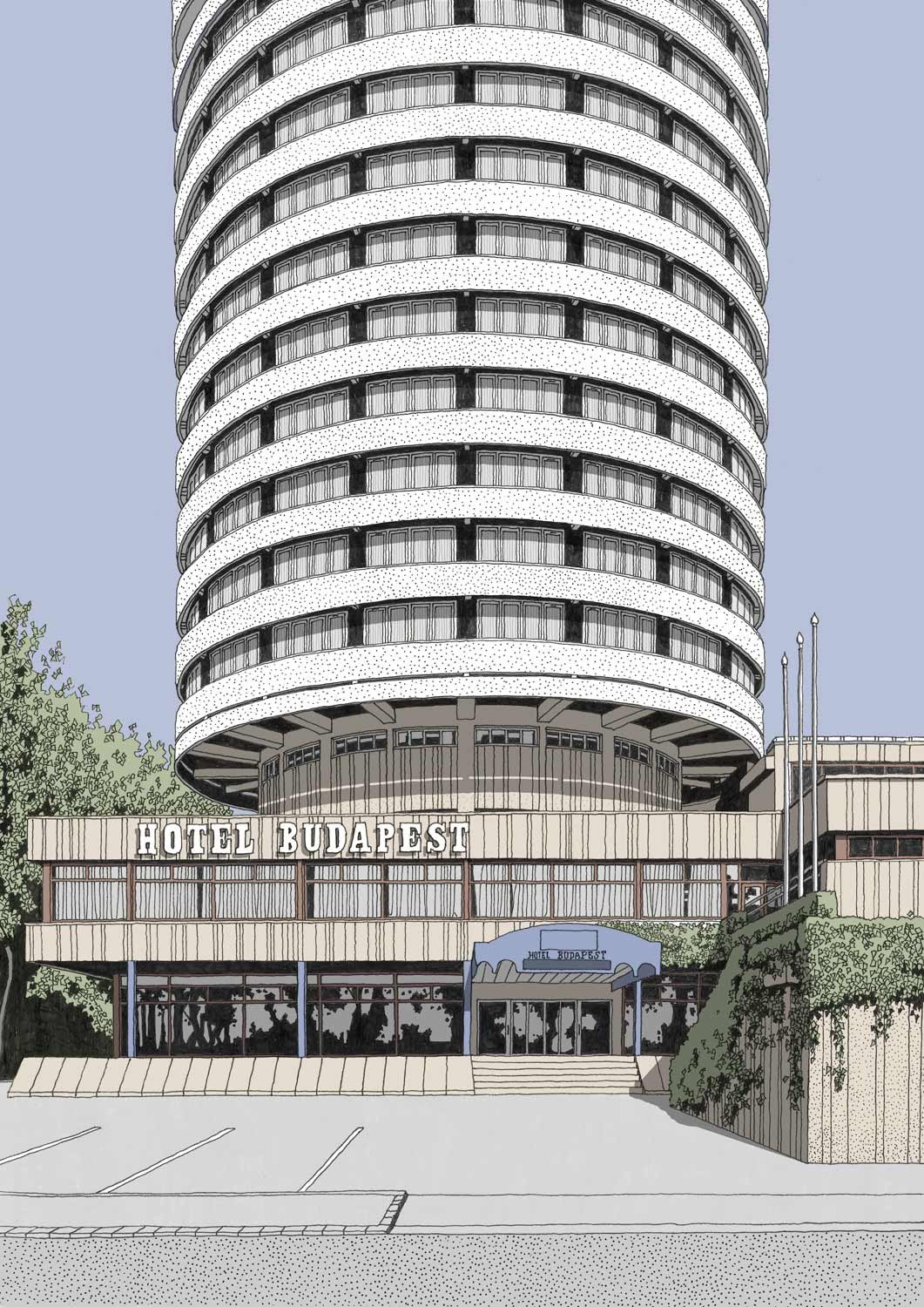
Hotel Budapest, Szilágyi Erzsébet Fasor 47, Budapest, 1026 Hungary
PANELHÁZ, DISTRICT III
Panelház, a Hungarian term for a type of concrete block of flats, was the communist era’s solution to the city’s critical housing shortage of the 1950s, due to forced industrialisation.
Consequently hundreds of gray, uniform precast concrete slabs sprung up across Budapest and throughout Hungary. These high-rise blocks came with district heating and hot running water, amenities previously unavailable to many of the residents and offering a real improvement in their living conditions.
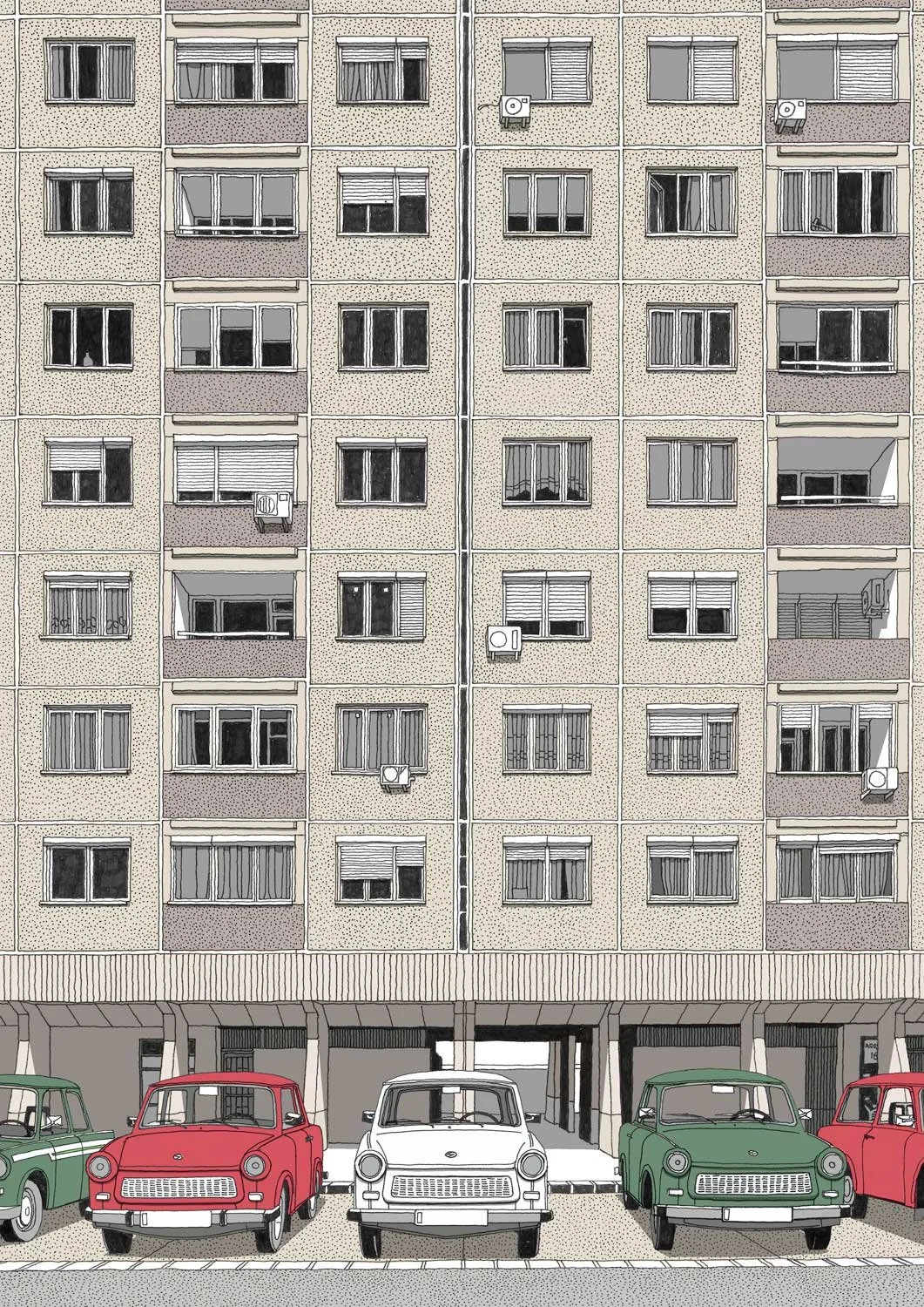
Ágoston Útca 16, Budapest, 1032 Hungary
HOUSE OF HUNGARIAN ART NOUVEAU, DISTRICT V
This building on Honvéd ut, in central Budapest, is today home to The House of Hungarian Art Nouveau (Magyar Szecesszió Háza) is now a museum dedicated to Secession Style. It was designed by Emil Vido for Béla Bedö, a wealthy Hungarian factory owner. When it was completed in 1903 it incorporated a ground floor apartment for the Bedő family, as well as office space for his business and, apparently, accommodation for some of his employees.
Over the years the building fell into disrepair and suffered numerous architectural alterations. The original peacock tail arched wooden portal had been removed and replaced by a number of unattractive square windows. In recent years the building has undergone extensive restoration that has seen the return of the peacock tail portal and it has become a place of homage to all things Art Nouveau.
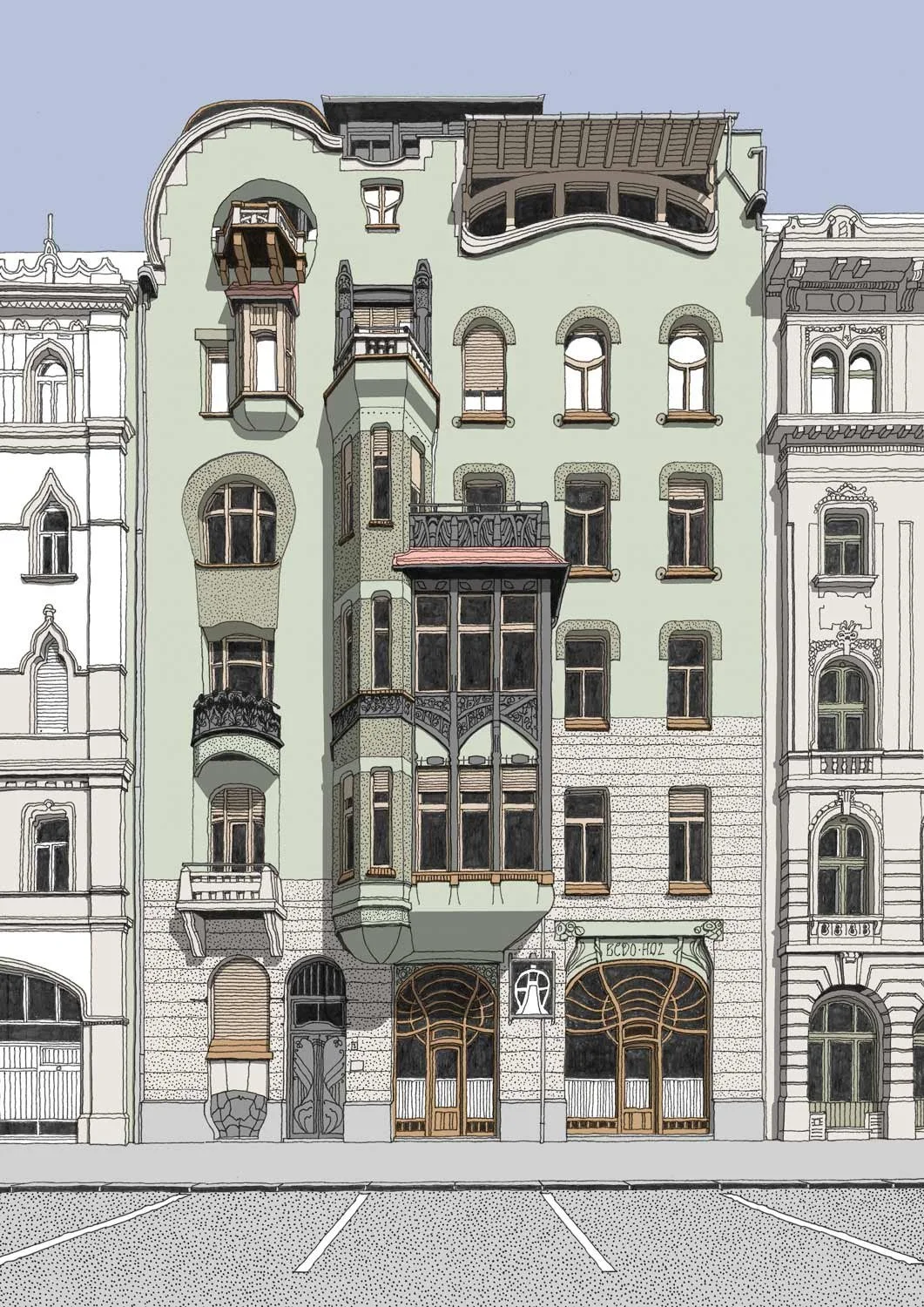
Magyar Szecesszió Háza, Honvéd Útca 3, Budapest, 1054 Hungary
TURKISH BANK HOUSE, DISTRICT V
Designed by Henrik Böhm and Ármin Hegedűs in 1906, 'Turkish Bank' House has an almost totally glass-covered facade and in the upper gable a secessionist mosaic by Miksa Róth called ‘Patrona Hungariae’, which depicts Saint Mary, Hungary's patron saint, surrounded by prominent Hungarian revolutionary figures.
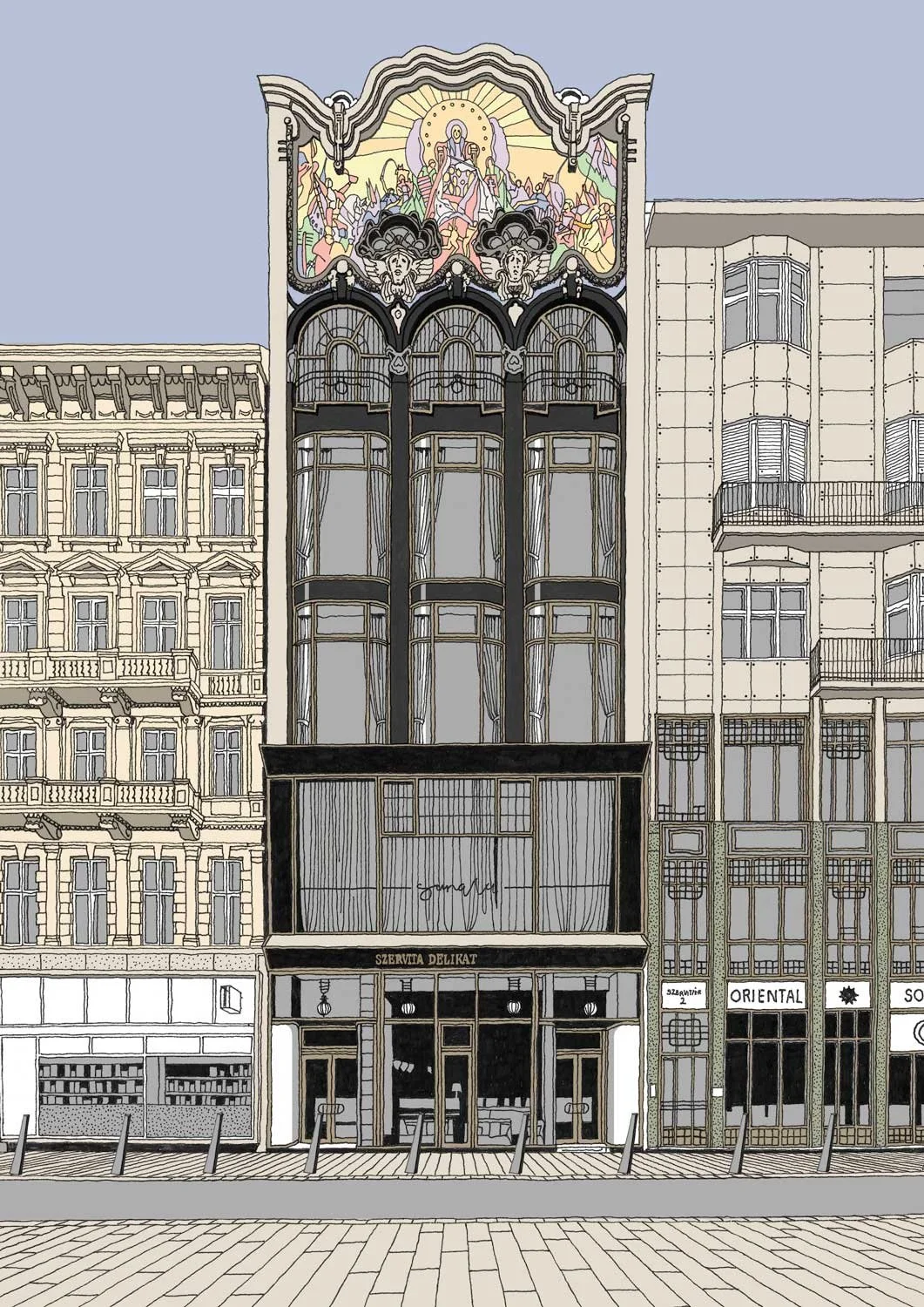
Turkish Bank House, Szervita Tér, Budapest, 1052 Hungary
MAGYAR SZÍNHÁZ, DISTRICT VII
The theatre on Sándor Hevesi Tér was built in 1964−66 to the plans of Sándor Azbeja, replacing earlier theatres that had stood on the site since 1897.
The theatre was the home of The National Theatre until September 2000, when the construction of the new National Theatre was started on the banks of the River Danube. From 2000 onwards the venue has been working as Pesti Magyar Színház and later as Magyar Színház.
The striking modernist facade was the work of sculptor Gyula Illyés. It is a relief made of 757 pieces of Zsolnay pyrogranites (a type of ornamental ceramic). Depicting many indistinctive tiny figures, it which creates a vibrant composition of monumental folds and creases.
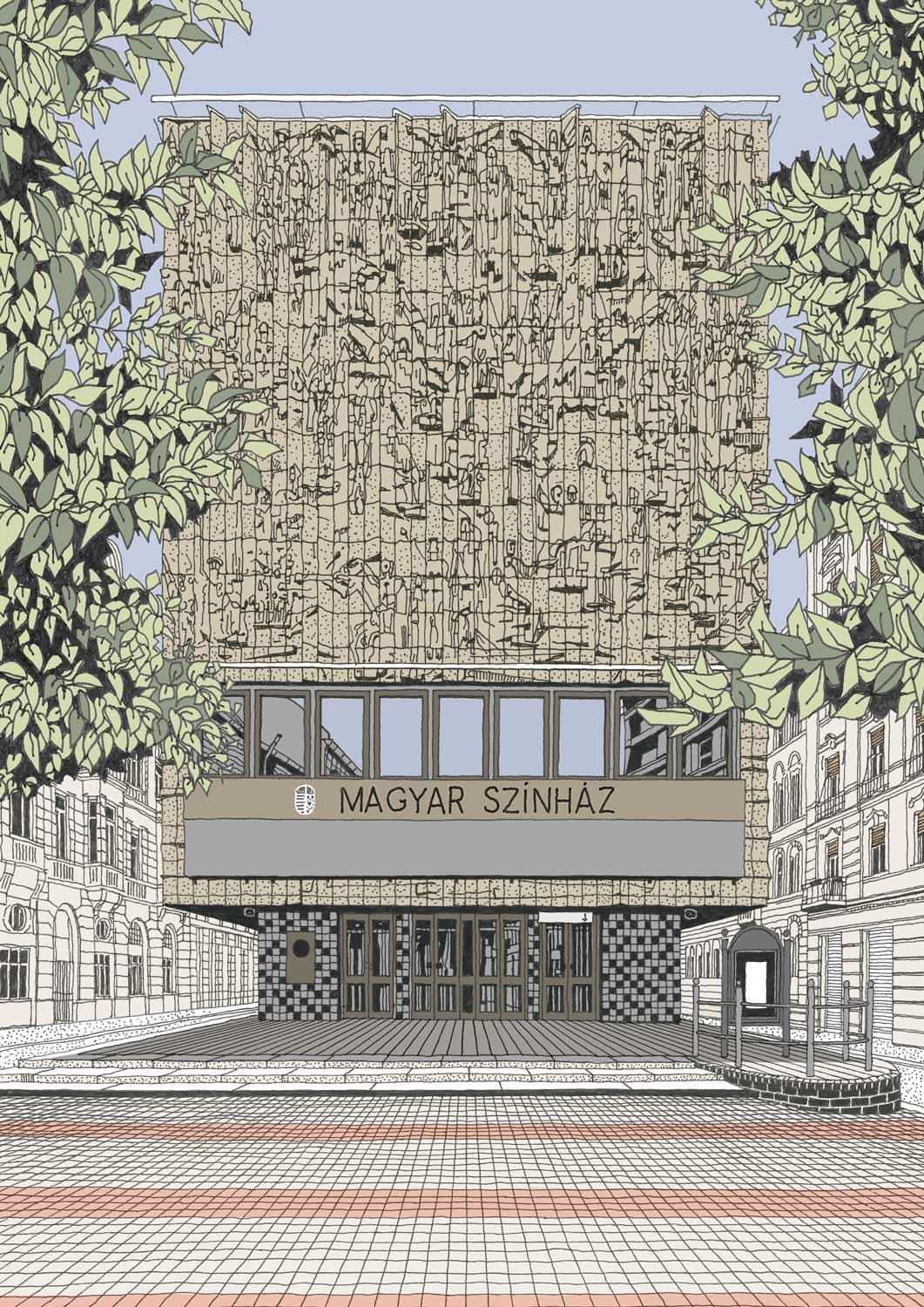
Magyar Színház, Hevesi Sándor Tér 4, Budapest, 1077 Hungary
KELETI PÁLYAUDVAR, DISTRICT VII
The historic Keleti Pályaudvar is Budapest's busiest railway station, with trains arriving & departing to or from Munich, Vienna, Zurich & Bucharest
The building was designed in the eclectic style by János Feketeházy (railway engineer) and Gyula Rochlitz (architect) and constructed between 1881 and 1884. The main façade is adorned with two statues depicting James Watt and George Stephenson.
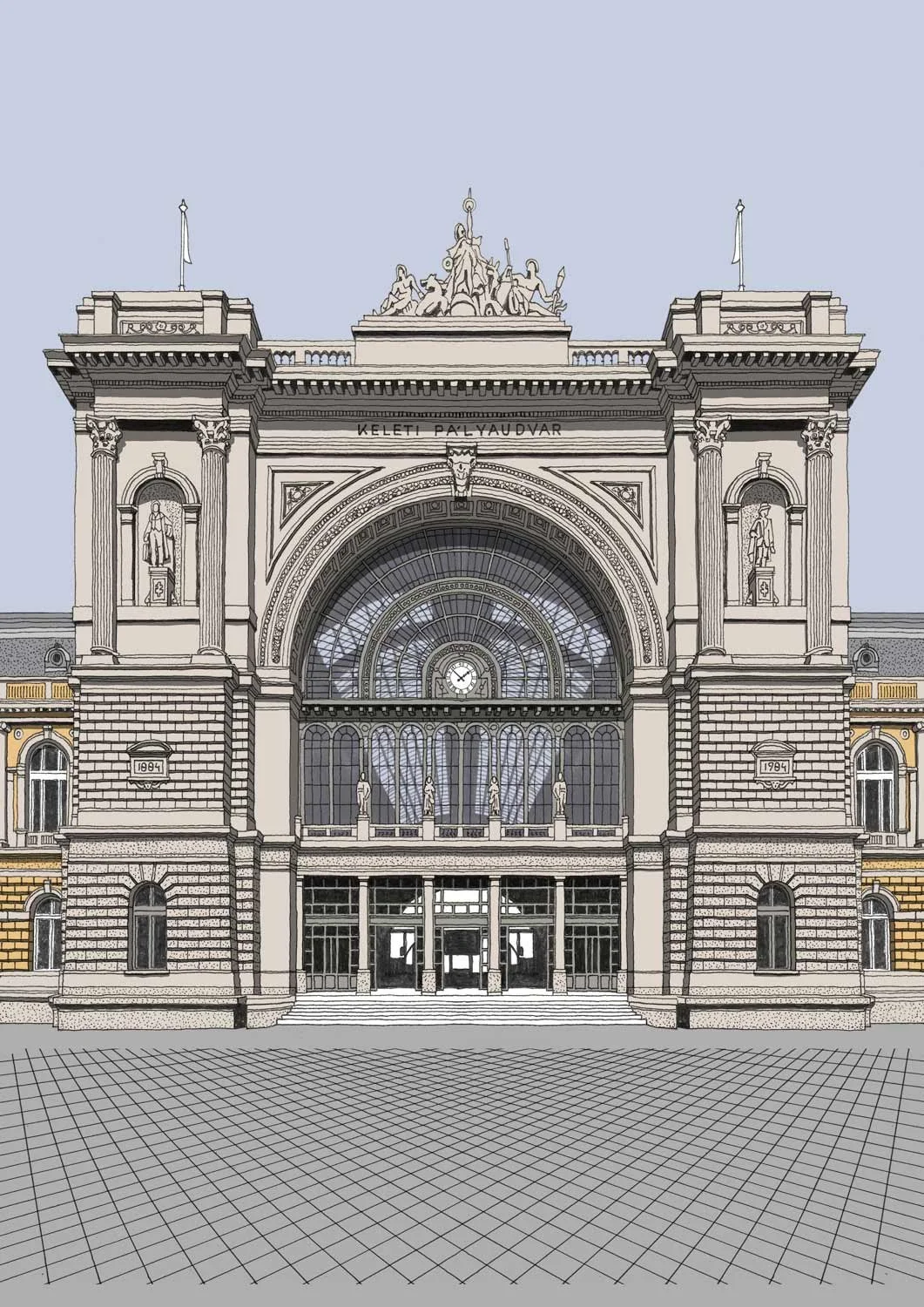
Keleti Pályaudvar, Kerepesi Útca 2-4, Budapest, 1087 Hungary
VÁLI ÚTCA, DISTRICT XI
Two socialist modernist apartment blocks, built in 1960 and 1970 respectively.
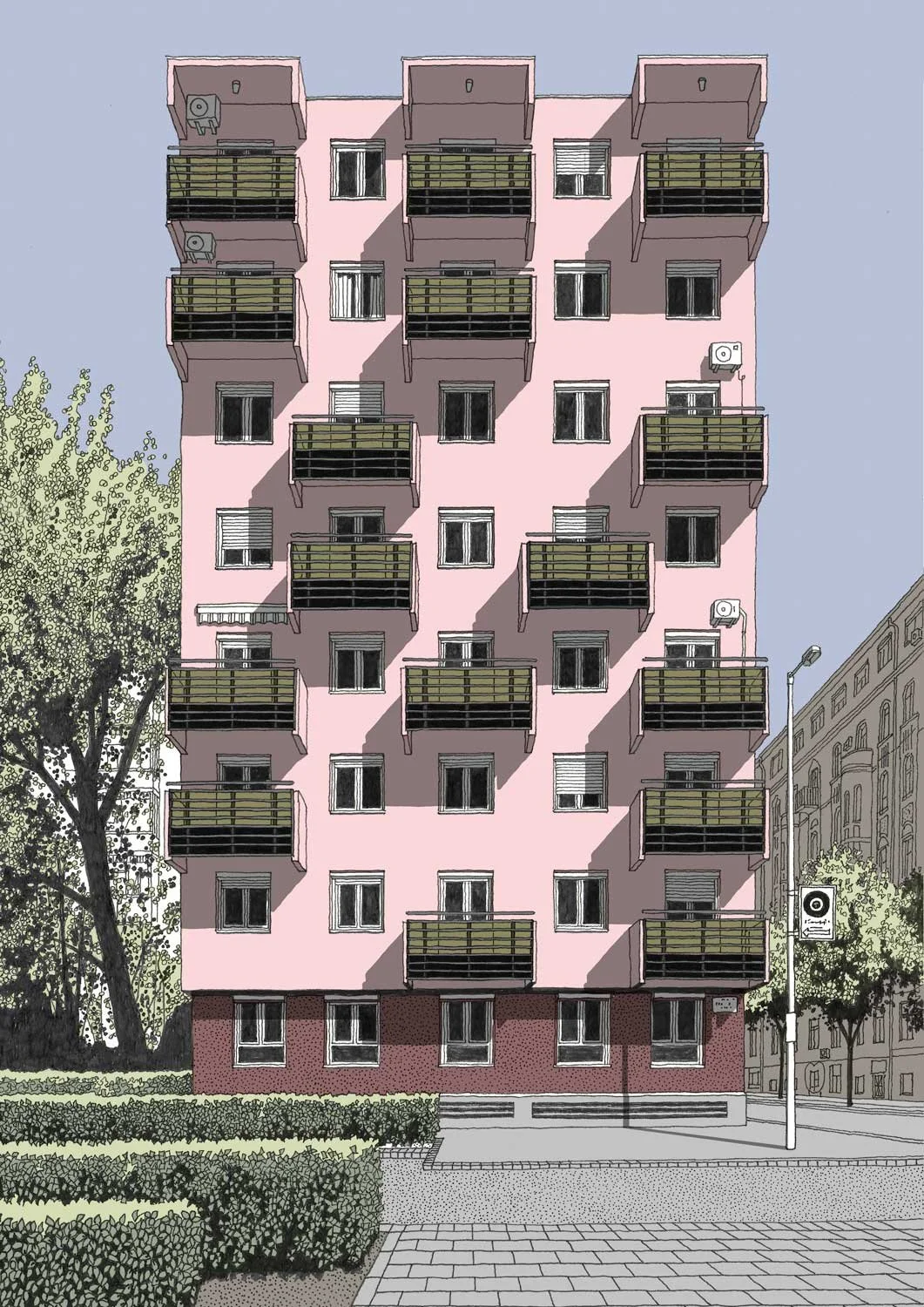
Apartment block, Váli Útca 14, Budapest, 1117 Hungary
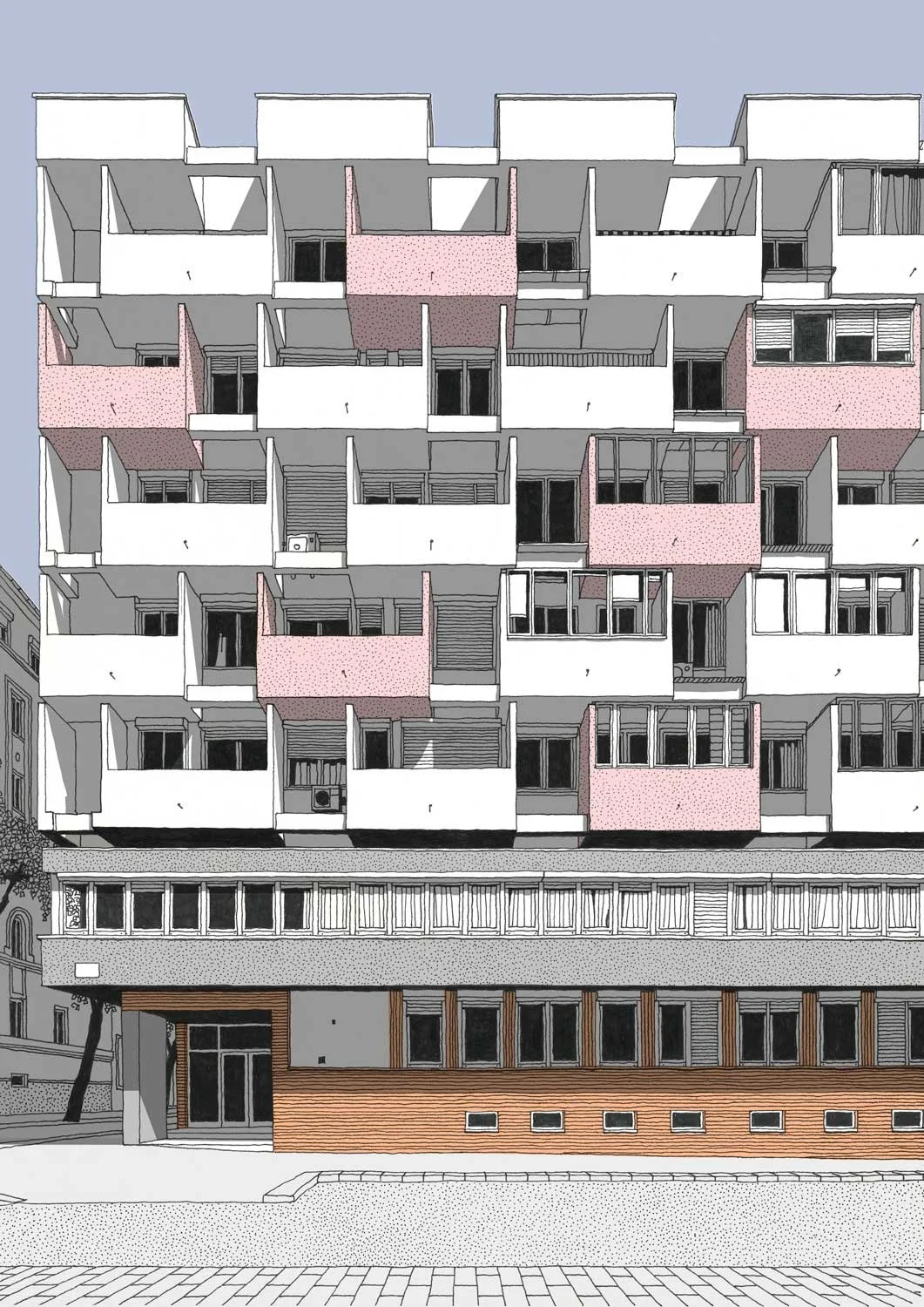
Apartment block, Váli Útca 6, Budapest, 1117 Hungary
BUDAFOKI ÚTCA, DISTRICT XI
A ‘Függőfolyosós Bérház’ is a Hungarian term for a ‘hanging corridor’ house for rentals, in which access to individual flats was from open galleries around an internal courtyard.
In this example the access concept also extended to the apartments facing the street.
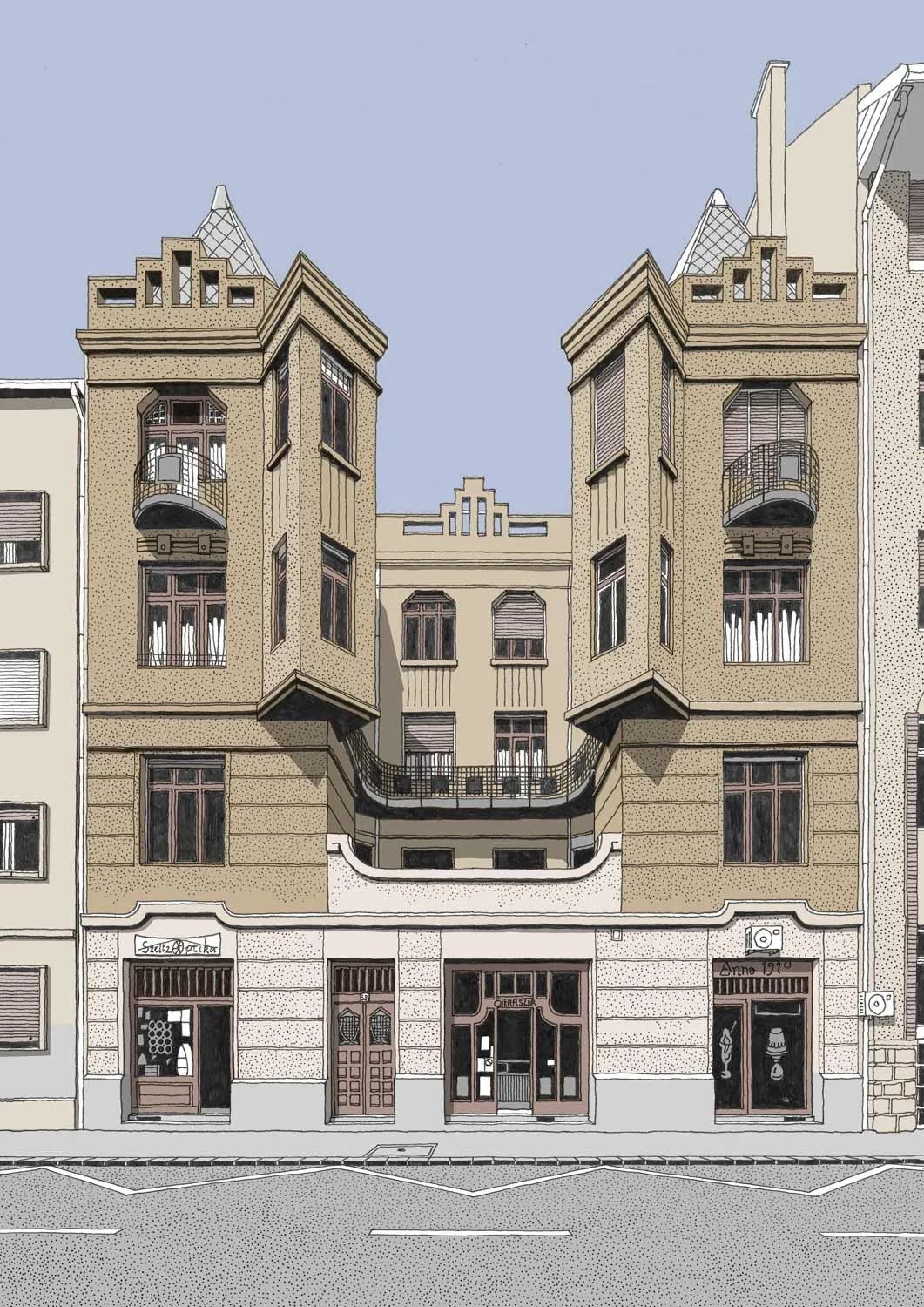
Apartment Block Budafoki Útca 51, Budapest, 1111 Hungary