
LONDON BOROUGH OF EALING
PITZHANGER MANOR & GALLERY, EALING W5
Pitzhanger Manor in Ealing stands as a "spectacular self-portrait" in brick and stone of the neoclassical architect Sir John Soane, who purchased and extensively remodelled the estate between 1800 and 1804. Designed as both a country retreat and a showcase for his architectural genius, the building’s facade is famously inspired by the Arch of Constantine in Rome. It features a grand central section articulated by four Ionic columns surmounted by Coade stone caryatids, a hallmark of Soane’s interest in classical antiquities and innovative building materials. Soane respectfully preserved the earlier George Dance wing (built in the 1760s), where he had worked as an apprentice, creating a fascinating dialogue between his own radical style and the more traditional Palladian elements of his mentor.
The interior highlights Soane's mastery of light and space, utilizing decorative domes, concealed light sources, and intense color schemes to define the character of each room. Though significantly altered in the 20th century while serving as a public library, a 2019 restoration by Jestico + Whiles and Julian Harrap Architects restored the building closer to its 1810 appearance, removing later additions and reinstating the originally envisioned picturesque relationship between the house and the surrounding Ealing parkland.
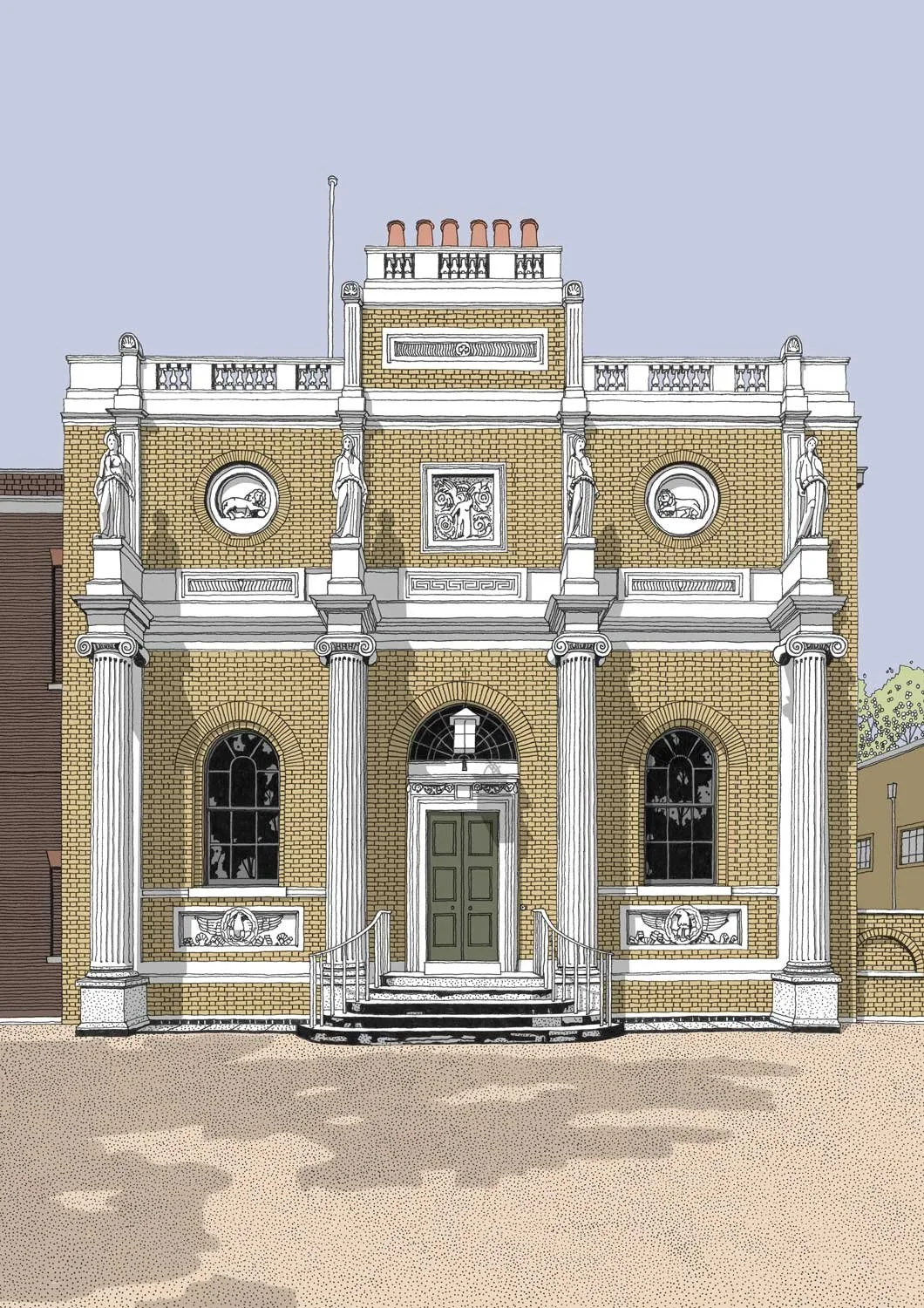
Pitzhanger Manor (I) , Ealing Green, Ealing W5 5EQ
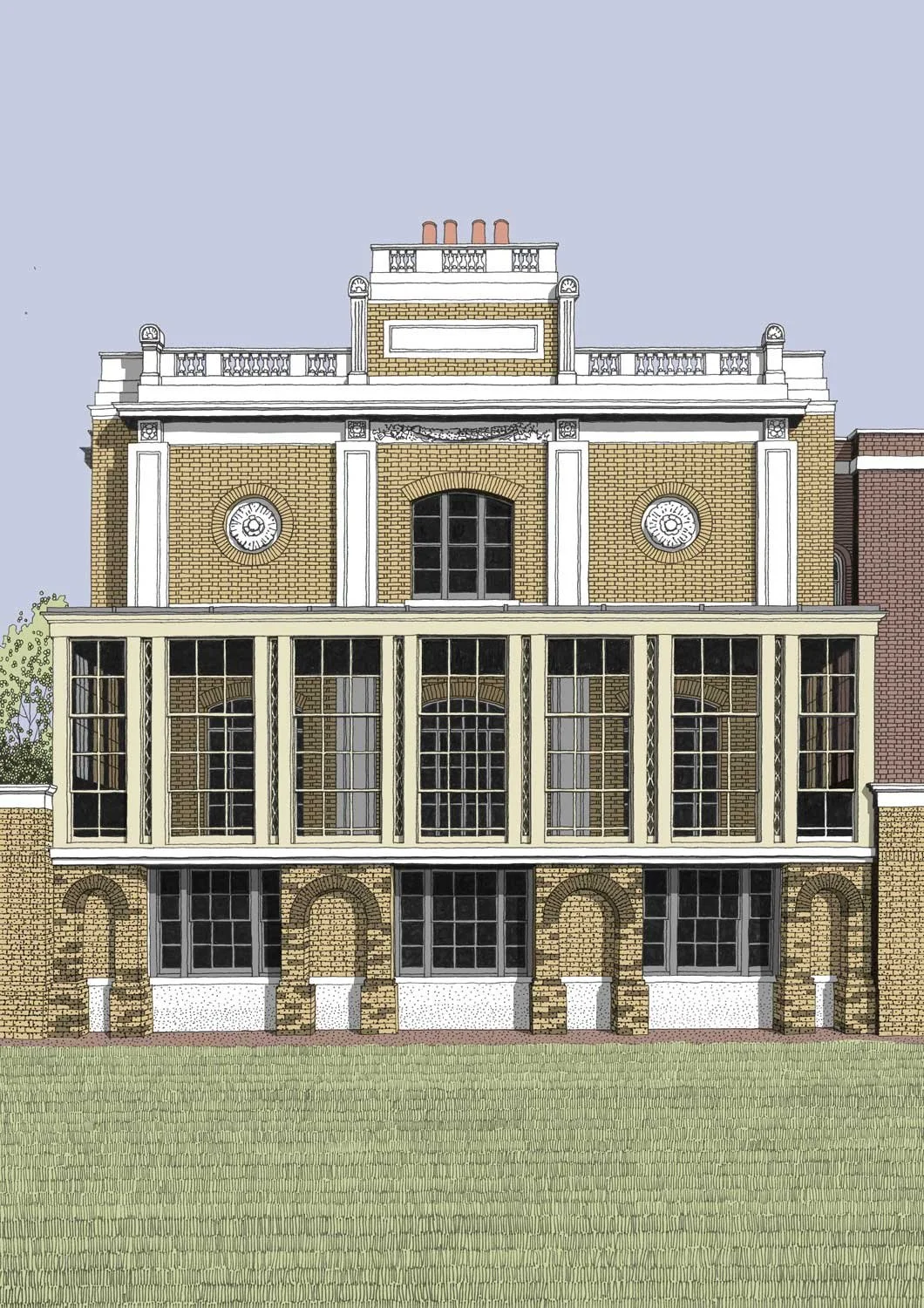
Pitzhanger Manor (II) , Ealing Green, Ealing W5 5EQ
THE HOOVER FACTORY BUILDING, PERIVALE UB6
Designed by Wallis, Gilbert and Partners and opened in 1933, the Hoover Factory Building in Perivale is widely regarded as one of Britain’s finest examples of Art Deco industrial architecture. Often described as a "Modern Palace of Industry," the Grade II* listed building was designed to serve as both a manufacturing plant and a high-profile advertisement on the Western Avenue (A40). Its dramatic façade features Egyptian-influenced columns, deeply recessed window bays, and a striking geometric sunburst pattern above the central entrance, all set against a brilliant white concrete finish.
Internally, the factory was designed to boost worker morale, featuring pioneering welfare facilities that were unique for the era, while the main entrance showcased lavish terrazzo lobby floors and ornate staircases.
Following a period of vacancy, the Grade II* listed building was repurposed and restored by IDM Properties into 66 residential apartments in 2018. The redevelopment carefully conserved the historic facade and key internal features.
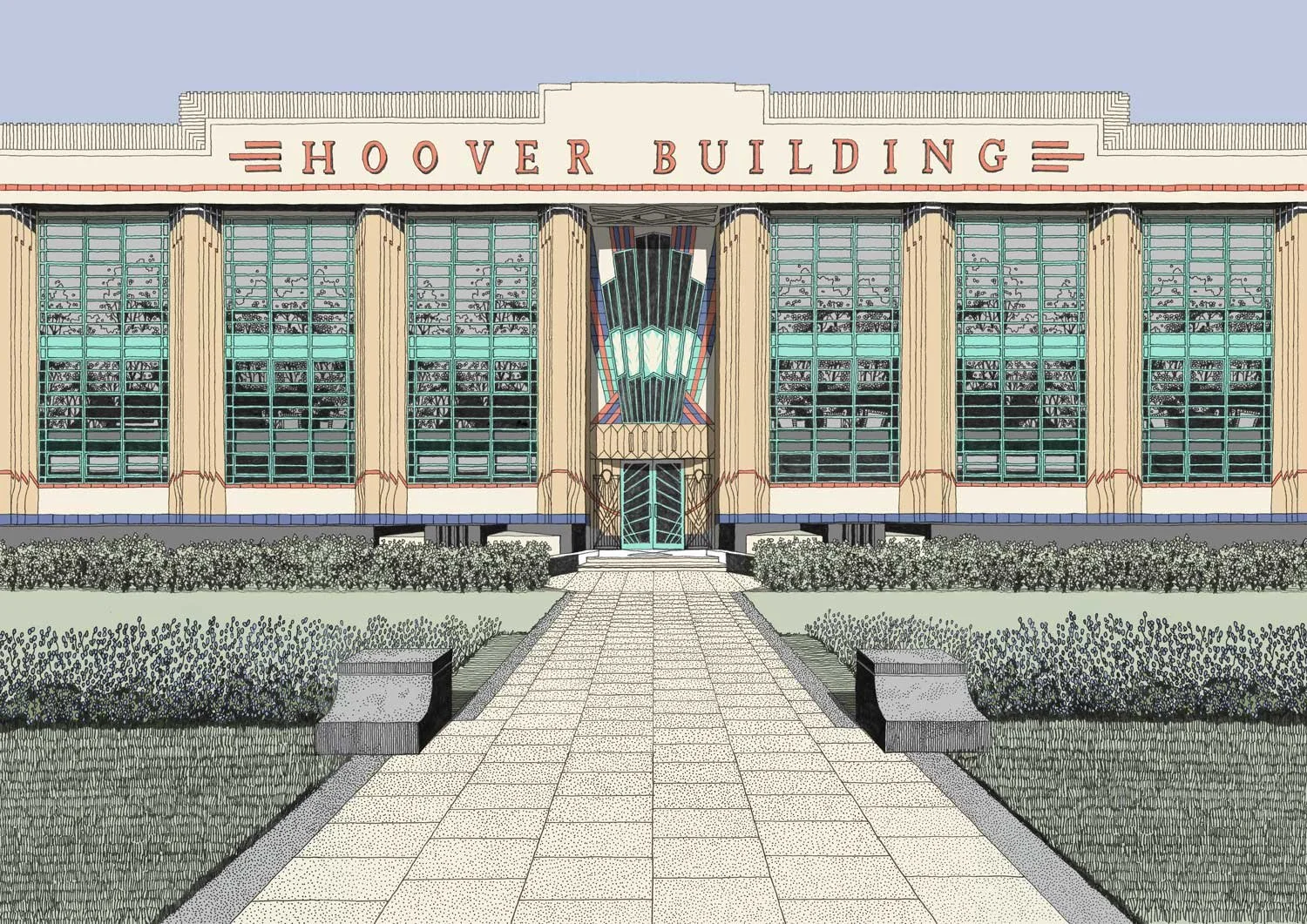
The Hoover Factory Building (II), Western Avenue, Perivale, Middlesex UB6
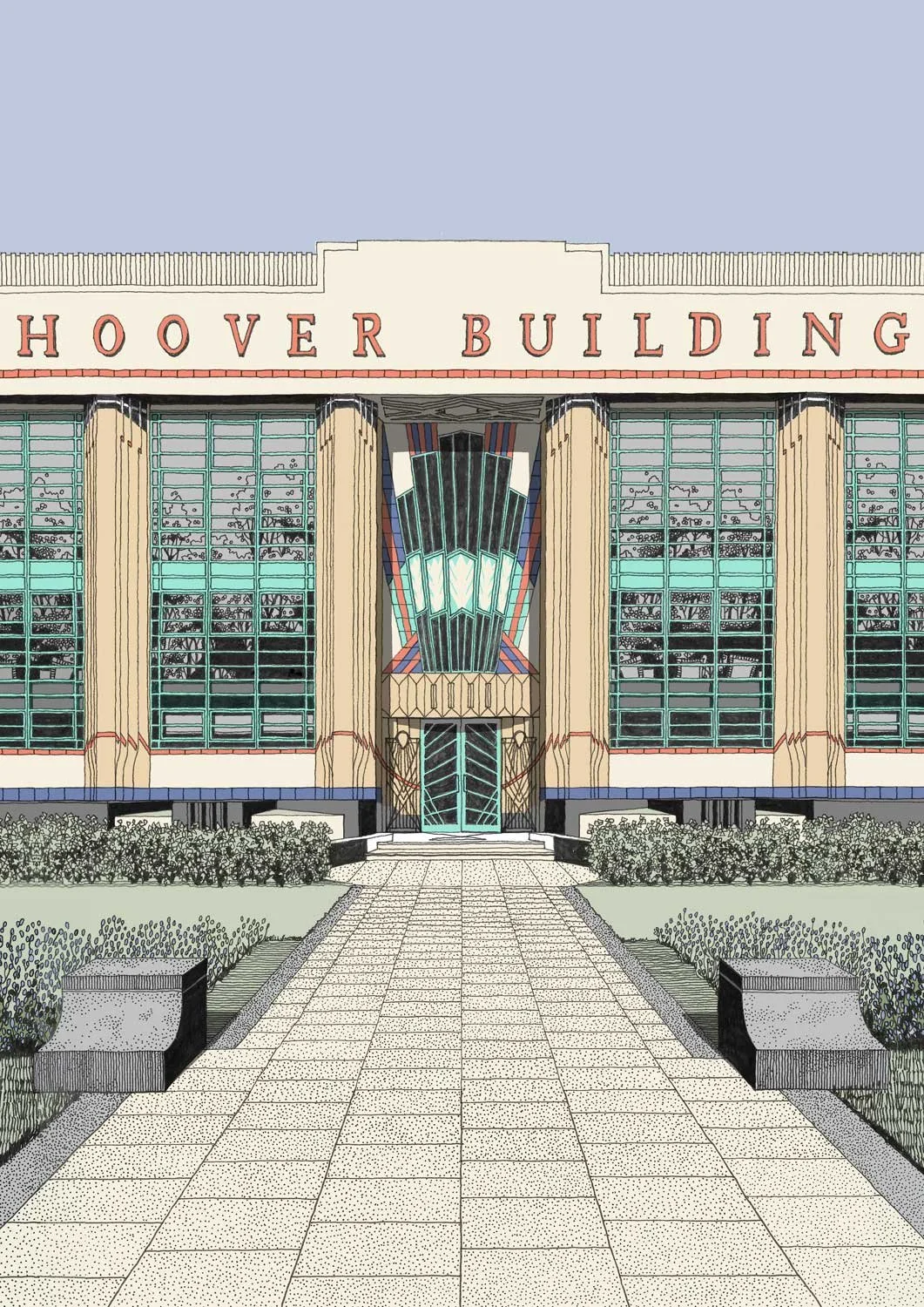
The Hoover Factory Building (III), Western Avenue, Perivale, Middlesex UB6
CHISWICK PARK STATION, CHISWICK W4
Chiswick Park station is a quintessential example of 1930s London Underground Modernism, designed by the renowned architect Charles Holden in collaboration with Stanley Heaps. Its most striking feature is a grand, semi-circular ticket hall constructed of brick, reinforced concrete, and glass, which was heavily influenced by Alfred Grenander’s Krumme Lanke station in Berlin. The double-height "drum" is topped with a flat, projecting concrete roof and illuminated by a sweep of green metal-framed clerestory windows, which flood the interior with natural light and cause the building to glow like a "Halloween pumpkin" after dark.
Externally, the station serves as a bold visual landmark highlighted by a square brick tower surmounted by the iconic London Underground roundel, designed to make the entrance visible from Chiswick High Road.
Now a Grade II listed building, the station remains remarkably well-preserved, though its central "passimeter" (ticket booth) was replaced in later years, slightly altering the original open-plan layout of the hall.
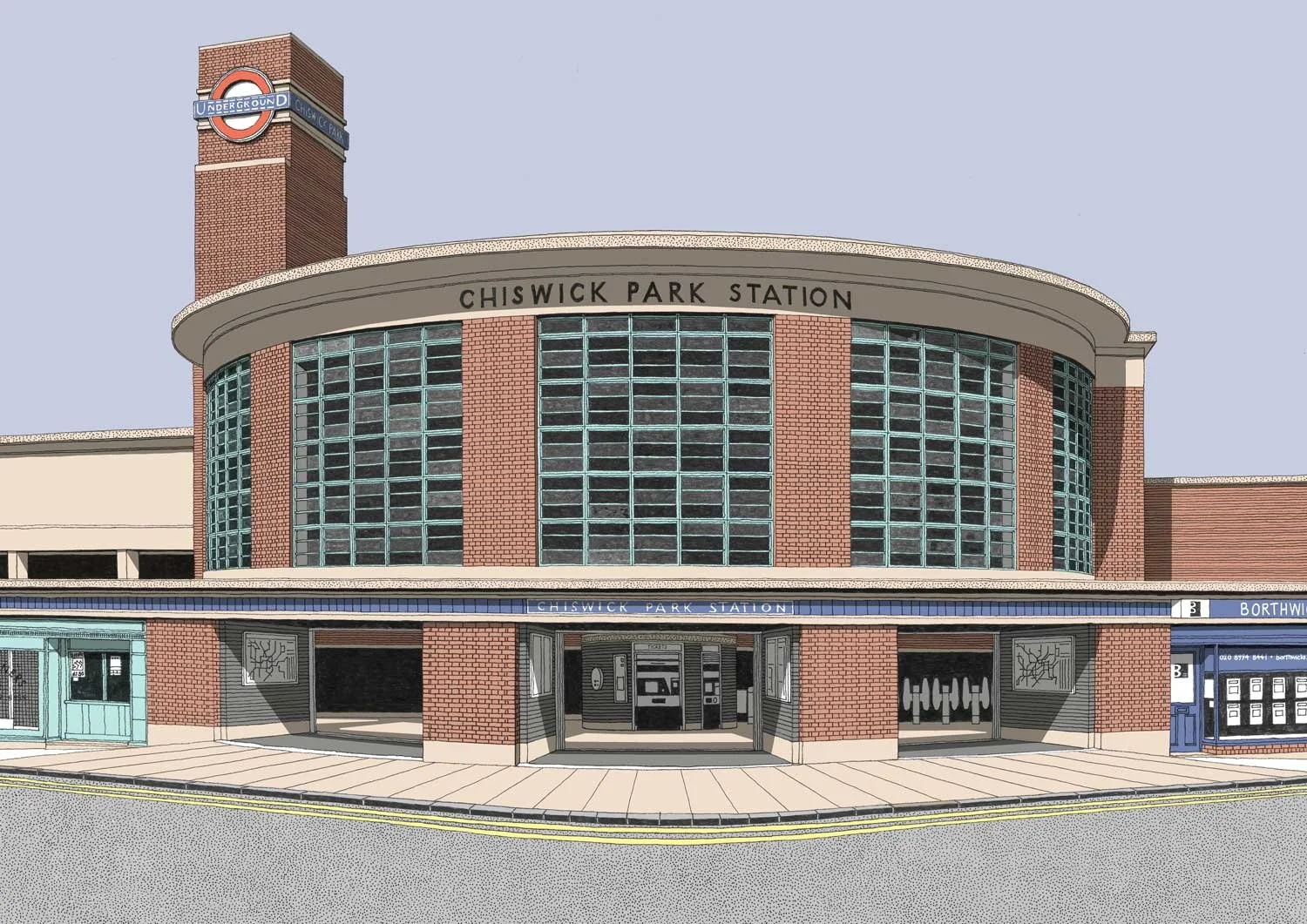
Chiswick Park Station, London Underground Ltd., Bollo Lane, London W4 5NE
PARK ROYAL STATION W5
Opened in 1936 on the Piccadilly line, Park Royal Underground Station is a Grade II listed example of 1930s modernist architecture designed by architects Herbert Welch and Felix Lander. It features a distinctive geometric design heavily influenced by Charles Holden, highlighted by a prominent, double-height circular brick ticket hall tower and adjacent three-storey, curved commercial building.
The station complex is an 'L' shaped structure located on Western Avenue, characterized by light brown brick construction, high-level clerestory windows, and a dramatic vertical ribbon of brick fluting on the tower, which is finished with a concrete slab roof and the iconic London Underground roundel. The design serves as a landmark from the bustling arterial road while integrating commercial functionality with striking geometric form.
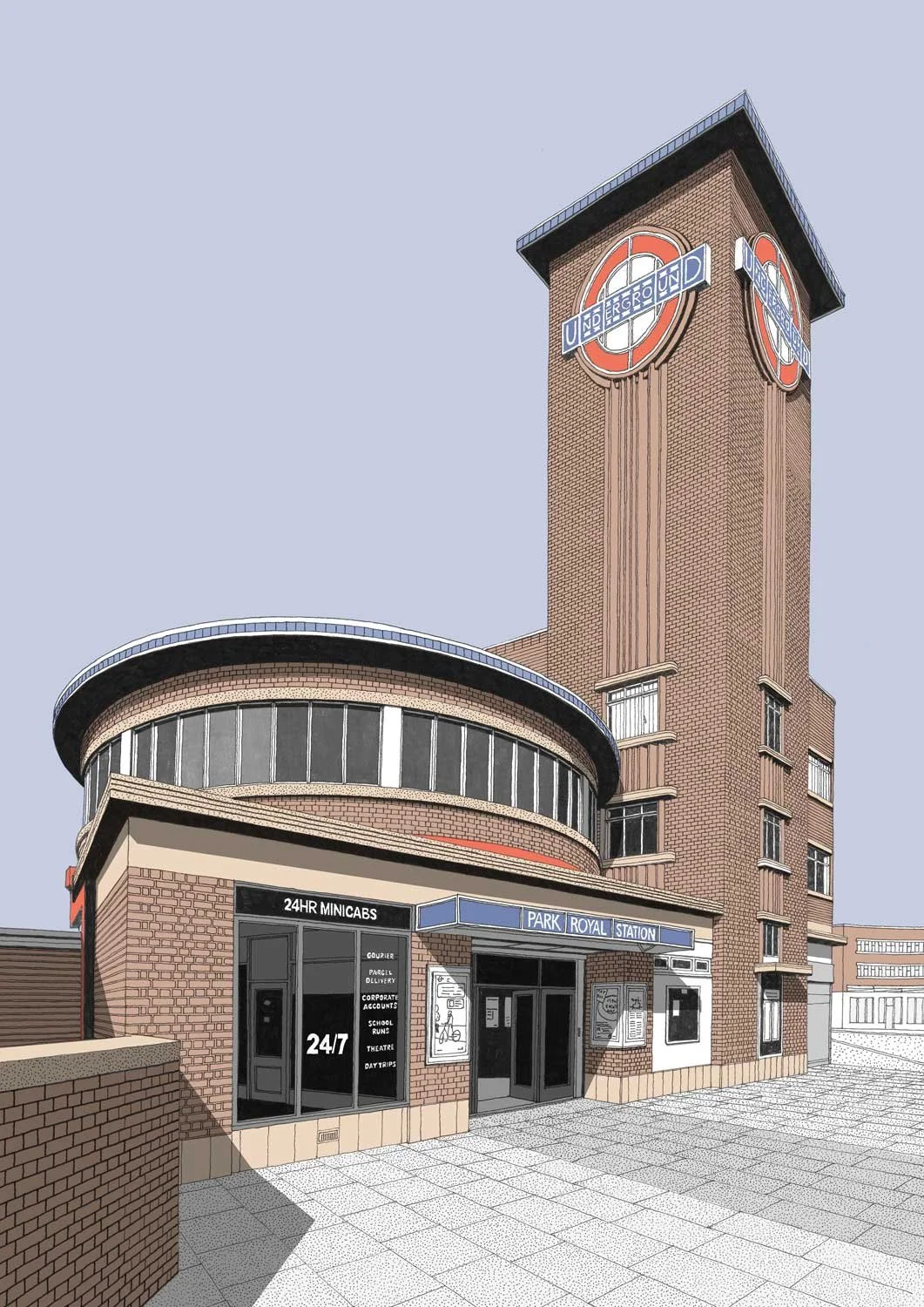
Park Royal Station, Western Avenue, London W5 3EL