LONDON BOROUGH OF CAMDEN
ST. PANCRAS STATION, PANCRAS ROAD, N1C
St. Pancras Station was designed by Sir George Gilbert Scott, a prominent Victorian architect known for his Gothic Revival style and was completed in 1876.
Here he embraced a free Gothic style, combining functionality with aesthetic grandeur with a red brick and terracotta façade that combined elements of Gothic architecture with Renaissance influences.

St. Pancras International Station, Pancras Road, London N1C 4QL
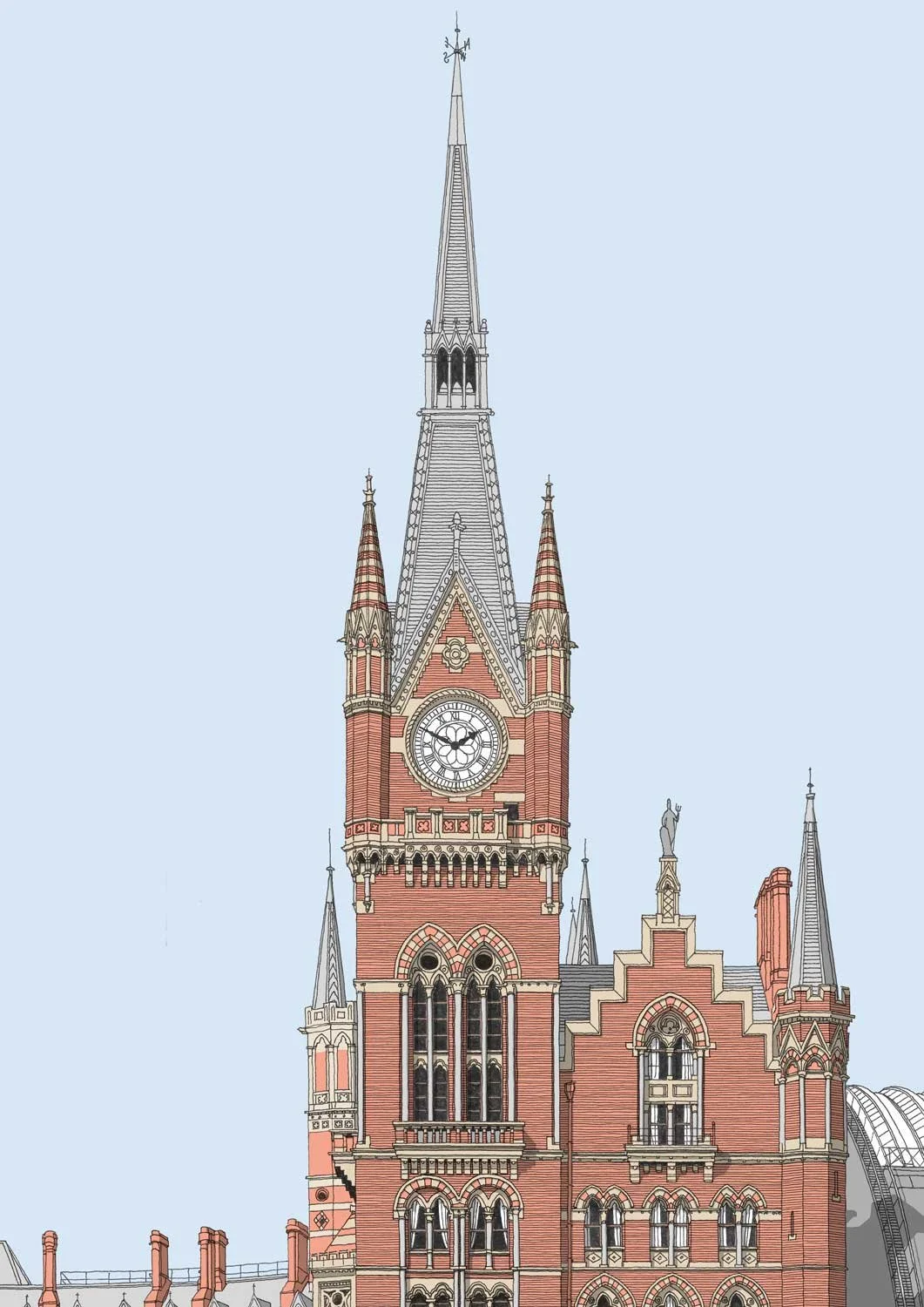
St. Pancras International Station Clock Tower, Pancras Road, London N1C 4QL
ST. PANCRAS RENAISSANCE HOTEL (II), EUSTON ROAD, NW1
The St. Pancras Renaissance Hotel, formerly known as the Midland Hotel, was designed by Sir George Gilbert Scott, a prominent Victorian architect known for his Gothic Revival style.
Here he embraced a free Gothic style, combining functionality with aesthetic grandeur with a red brick and terracotta façade that combined elements of Gothic architecture with Renaissance influences.
His design for St. Pancras Station and the hotel was completed in 1876.

St. Pancras Renaissance Hotel (II), Euston Road, London NW1 2AR
KING’S CROSS STATION (II)
King’s Cross Station was opened to passengers on 14 October 1852. Designed by Lewis Cubitt to be simple and functional it was at the time the largest railway station in Britain.
Two train sheds both 800ft long, 105ft wide and 71ft high are closed by a plain brick screen 216ft long with two large arched windows and with a porch of six arched openings, three each side of the square Italianate clock tower 112ft high which is the stations only ornament.
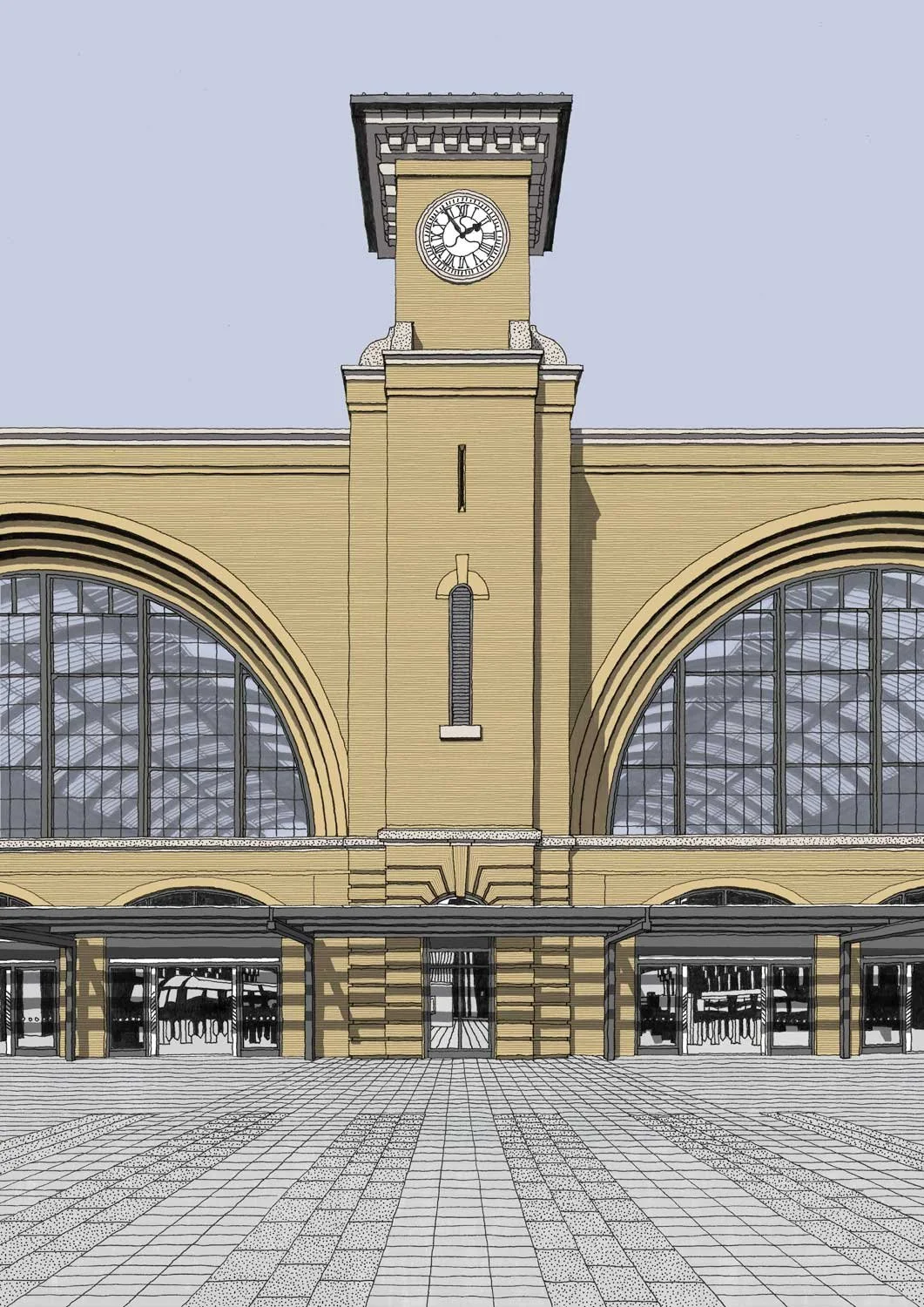
King’s Cross Station, Euston Road, London N1 9AL
The Standard Hotel, Argyle Street, WC1H
The former Camden Town Hall Annexe, built in 1977 to house administrative offices above a ground-floor public library. Its designers; Camden Council’s in-house architecture team, mimicked the façade design of Richard Seifert & Partners’ International Press Centre of 1968.
It was transformed into a landmark hotel by Orms Architects in 2019.

The Standard Hotel, 10 Argyle Street, London, WC1H 8EG
GASHOLDERS (II), KING’S CROSS, N1C
Constructed in 1867, Gasholders Nos. 10, 11 and 12 were built for the storage of town gas for Pancras Gasworks, the largest gasworks in London. The frames are highly decorative with three tiers of hollow cylindrical cast iron columns, cast iron capitals and three tiers of wrought iron riveted lattice girders. The gasholders remained in use until the late 20th Century and were finally decommissioned in 2000.
The frames were dismantled, restored and relocated as part of the King’s Cross redevelopment. Architects Wilkinson Eyre won a competition in 2002 to construct three residential drums within these structures, clad in a delicate and intricate aesthetic of steel and glass panels with a veil of external shutters pierced in a pattern of circles to allow dappled light into the rooms.
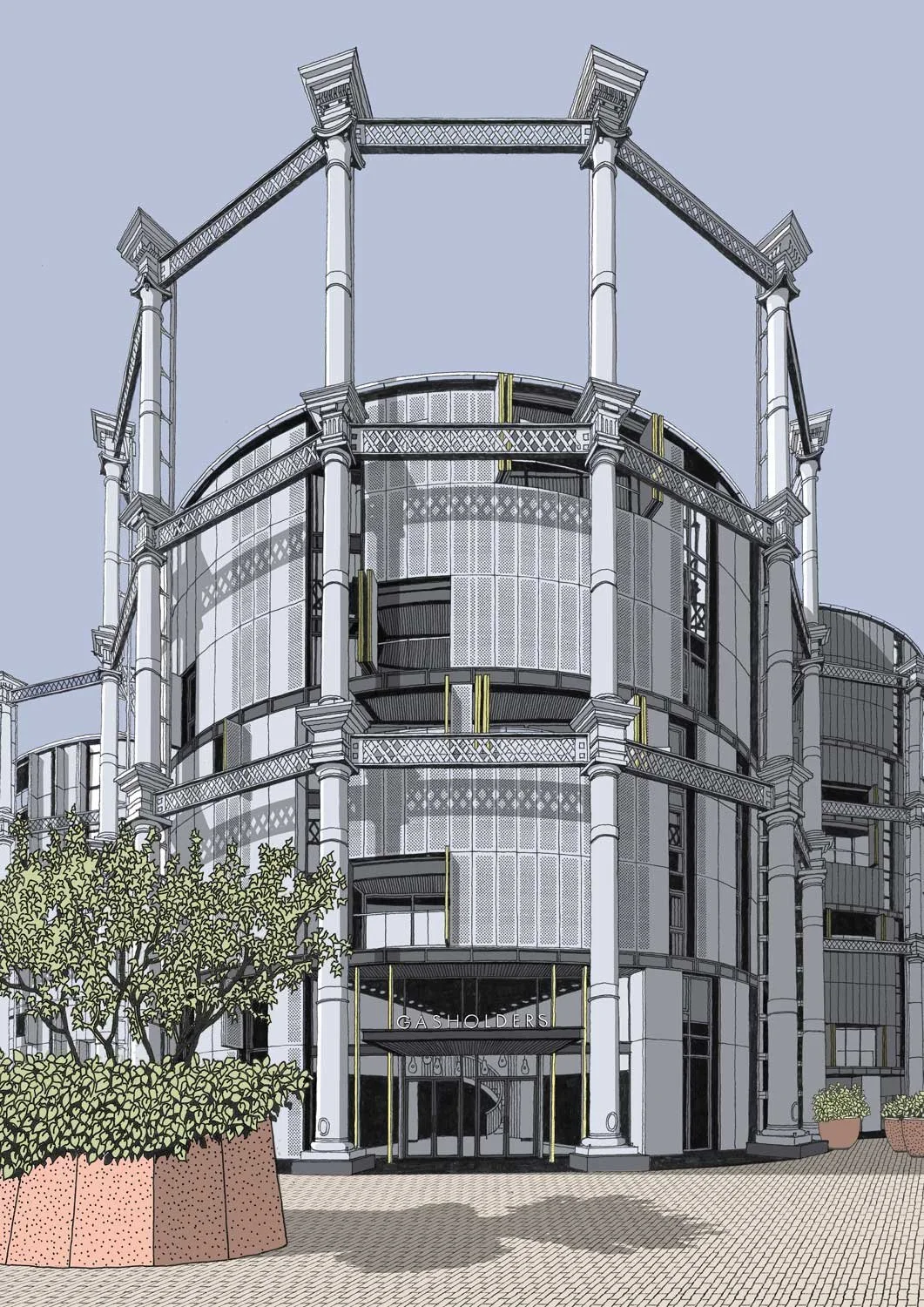
Gasholders (II), 1 Lewis Cubitt Square, King’s Cross, London N1C 4BY
CENTRE POINT, WC1
The distinctive exoskeleton façade to Richard Seifert & Partners celebrated high rise tower in the West End of London, completed in 1966.
The delicately modelled convex facade of pre-cast panels carried on the very visible pilotis can be seen in this view on Charing Cross Road.
The Grade-II listed white-concrete high-rise was recently restored and converted into apartments by architecture firm Conran and Partners.

Centre Point, as seen from Charing Cross Road, London, WC1
13 LINCOLN’S INN FIELDS, WC2A
Soane demolished and rebuilt three houses in succession on the north side of Lincoln's Inn Fields. He began with No. 12 (between 1792 and 1794), externally a plain brick house. After becoming Professor of Architecture at the Royal Academy in 1806, Soane purchased No. 13, the house next door, today the museum, and rebuilt it in two phases in 1808–09 and 1812.
The museum was established during Soane's own lifetime and holds many drawings and architectural models of Soane's projects, and a large collection of paintings, sculptures, drawings and antiquities that he acquired over many years.

Sir John Soane’s Museum, 13 Lincoln's Inn Fields, London WC2A 3BP
12 BEDFORD SQUARE, BLOOMSBURY, WC1B
One of the best preserved set pieces of Georgian architecture in London, Bedford Square was built between 1775 and 1783 as an upper middle class residential area.
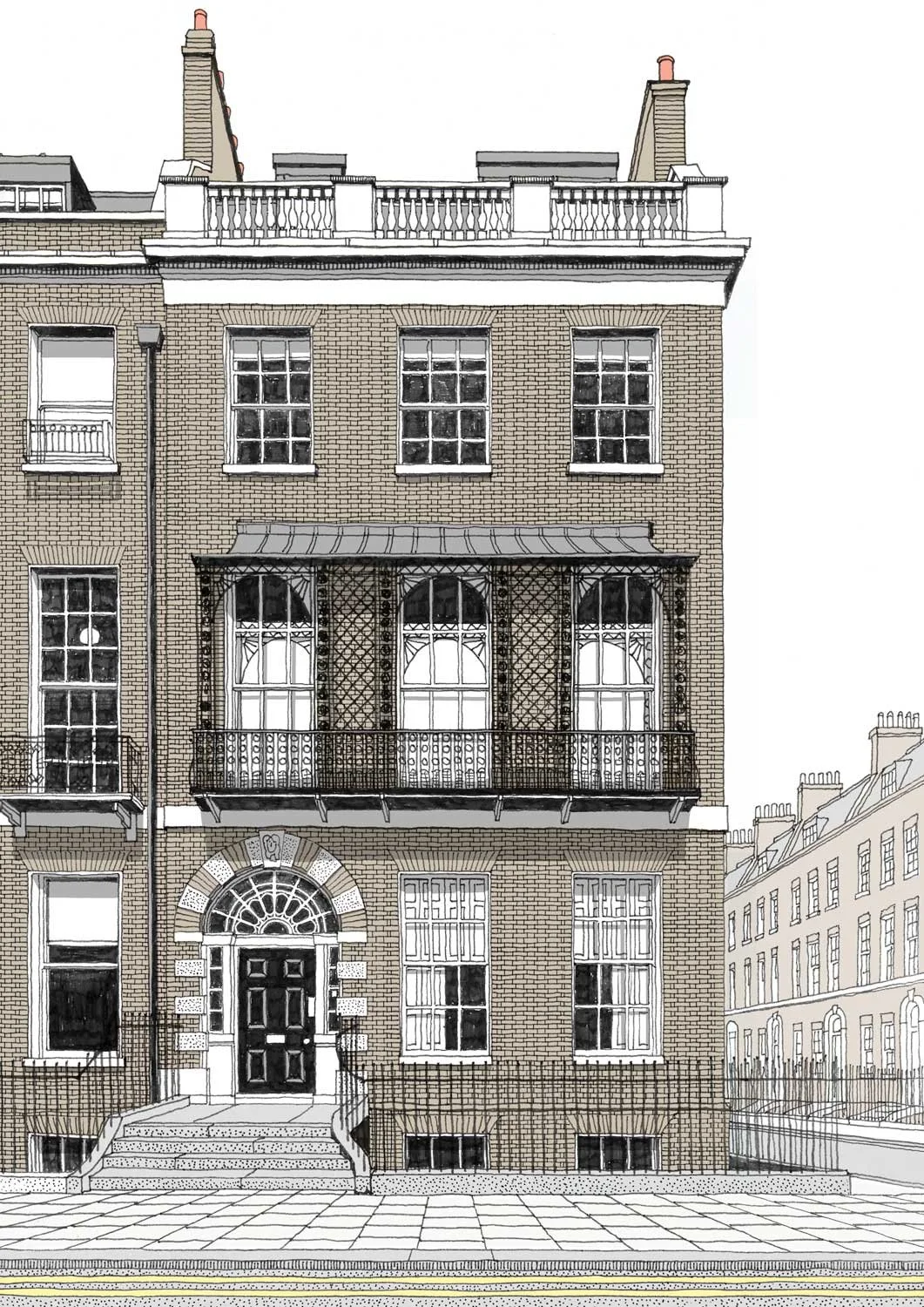
12 Bedford Square, Bloomsbury, London WC1B 3JA
THE BRUNSWICK CENTRE, BLOOMSBURY WC1N
Located in the heart of Georgian Bloomsbury and replacing rows of Georgian houses which still surround the building, the Brunswick Centre is a mixed use residential and shopping centre designed by Patrick Hodgkinson and completed in 1972.
The project is designed to house 1286 people and is now grade 2 listed.
The ventilation towers, as seen here, are a striking architectural and brutalist feature of the building

Marchmont Street, Bloomsbury, London WC1N
THE DAIMLER CAR HIRE GARAGE, BLOOMSBURY, WC1N
Designed by Wallis, Gilbert & Partners in the Streamline Moderne (or Art Deco) style for Daimler Car Hire Limited, who provided a luxury chauffeur-driven limousine hire service from Knightsbridge in London.
Built in 1931, it has since been converted into office space but is now Grade 2 listed.
To the right was the garage’s main entrance with a sweeping spiral ramp provided parking access to the upper storey for the Daimler fleet. The ramp is expressed externally and emphasised by Crittall metal framed windows which follow the rake of the ramp through three storeys.

Daimler Garage Car Hire, 7 Herbrand Street, London WC1N 1EX
MORNINGTON CRESCENT STATION, EVERSHOLT STREET, NW1
Mornington Crescent underground station was designed by architect Leslie Green. It opened in 1907 and serves the Charing Cross branch of the Northern line.
Green was appointed as architect for the Underground Electric Railways Company of London(UERL) to design stations for three underground railway lines then under construction – the Great Northern, Piccadilly and Brompton Railway (GNP&BR), the Baker Street and Waterloo Railway(BS&WR) and the Charing Cross, Euston and Hampstead Railway (CCE&HR), which, respectively, became parts of the present day Piccadilly line, Bakerloo line and Northern line.
Green was commissioned to design 50 new stations, including their external appearance, and internal fittings and decoration. Mornington Crescent Station is a prime example of Green’s signature Modern Style (British Art Nouveau) design, featuring a distinct maroon-glazed faience facade with giant arches and Art Nouveau decorative elements.

Mornington Crescent Station, Eversholt Street, London NW1 2JA
CARRERAS CIGARETTE FACTORY / GREATER LONDON HOUSE, NW1 2JE
The Carreras Cigarette Factory, now officially called Greater London House, is a large art deco building in Camden Town, adjacent to Mornington Crescent Station.
Designed by architects Marcus Evelyn Collins and O.H. Collins and erected in 1926–28, it is noted as a striking example of early 20th Century Egyptian Revival architecture.
Dominating the entrance to the building are two large 2.6 metre high bronze statues of cats, stylised versions of the Egyptian god Bastet (or Bubastis, or Bast), which had been cast at the Haskins Foundry in London. The image of a black cat was a branding device which Carreras used on the packets of their Craven A range of cigarettes.

Carreras Cigarette Factory / Greater London House, Hampstead Road, Camden Town, London NW1 2JE
DIORAMA, PARK SQUARE EAST,MARYLEBONE, NW1
The Diorama, an early French theatre concept which became a precursor to motion picture, was designed by Pugin and Morgan and opened in 1823. It sat behind the centre of this terrace on Park Square East, designed by John Nash (completed 1825).
The terrace completes Nash’s formal approach to Regent's Park from Portland Place and crescent and is Grade 1 listed.

Diorama, Park Square East, Marylebone, London NW1 4LH
MAIDEN LANE ESTATE, CAMDEN, NW1
Located on a former Kings Cross railway goods yard, the modernist Maiden Lane Estate is the final social housing development by the Camden Architects’ Department.
Comprising of 225 dwellings, phase 1 (shown here) was designed and delivered by Gordon Benson and Alan Forsyth between 1976-81. The development, which mixes terraced houses, maisonettes and flats has a distinctly Corbusian feel, where white painted concrete volumes with deeply gridded facades of railed terraces provide a distinctly nautical feel
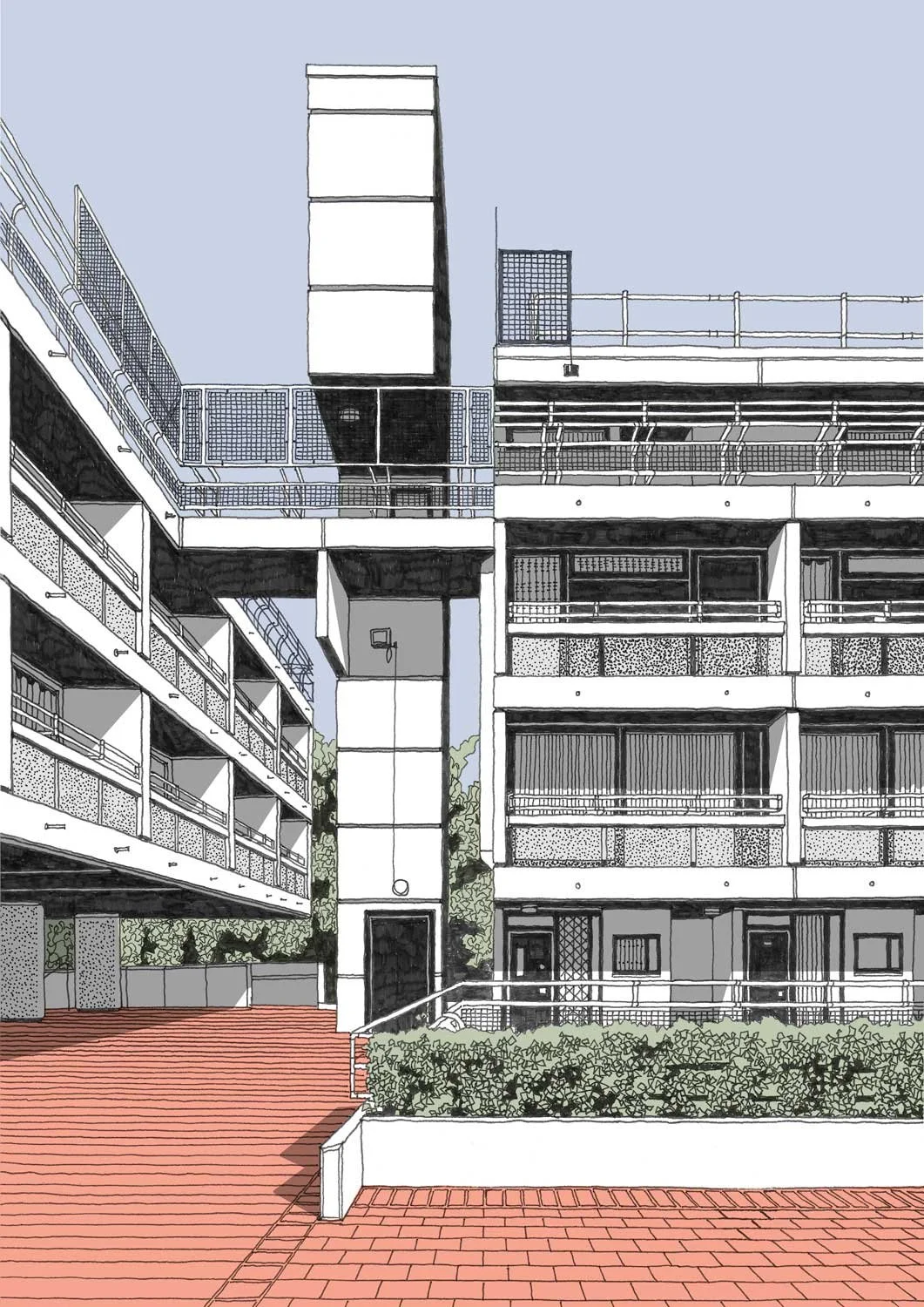
Maiden Lane Estate, Camden, London NW1 9UQ
KENT HOUSE, FERDINAND STREET, CHALK FARM, NW1
An early example of the Modern Movement’s commitment to social housing, designed by Connell Ward & Lucas in 1935. The commission came from the St Pancras Home Improvement Society for two blocks of rent subsidised flats for families of low incomes.
Externally the blocks were originally rendered pink and the balconies a bright Constructivist red.
Grade II listed.

Kent House, Ferdinand Street, Chalk Farm, London NW1 8ET
ALEXANDRA & AINSWORTH ESTATE, SOUTH HAMPSTEAD,NW8
The London Borough of Camden Council was gaining a reputation for progressive social housing design during the 60s and 70s. This estate, designed in 1968 by Neave Brown, comprises of two parallel pedestrianised streets and three, 300 metre long terraces. The largest of the three shown here at seven storeys high and built in a ziggurat-style, backs onto the West Coast mainline to block the noise of passing trains.
It is regarded as an important example of social housing in Europe and is now Grade II* listed.

Alexandra & Ainsworth Estate (II), South Hampstead NW8
ISOKON FLATS, HAMPSTEAD NW3
The clean white modernist lines of the Grade 1 listed Lawn Road Flats / Isokon Flats.
This pioneering modern apartment block was designed by architect Wells Coates and opened in 1934 as an experiment in new ways of urban minimalist living. Most of the flats had very small kitchens as there was a large communal kitchen for the preparation of meals, connected to the residential floors via a dumb water . Services, including laundry and shoe-shining, were provided on site. It was once home to Agatha Christie, Henry Moore, Ben Nicholson and Walter Gropius
The building was left to gradually deteriorate and was eventually abandoned in the 1990’s, but has since been sensitively restored and reopened in 2004 under a co-ownership scheme operated by the Notting Hill Housing Trust.
The former garage, to the right of this illustration, now houses The Isokon Gallery, a permanent exhibition telling the remarkable story of the Isokon building
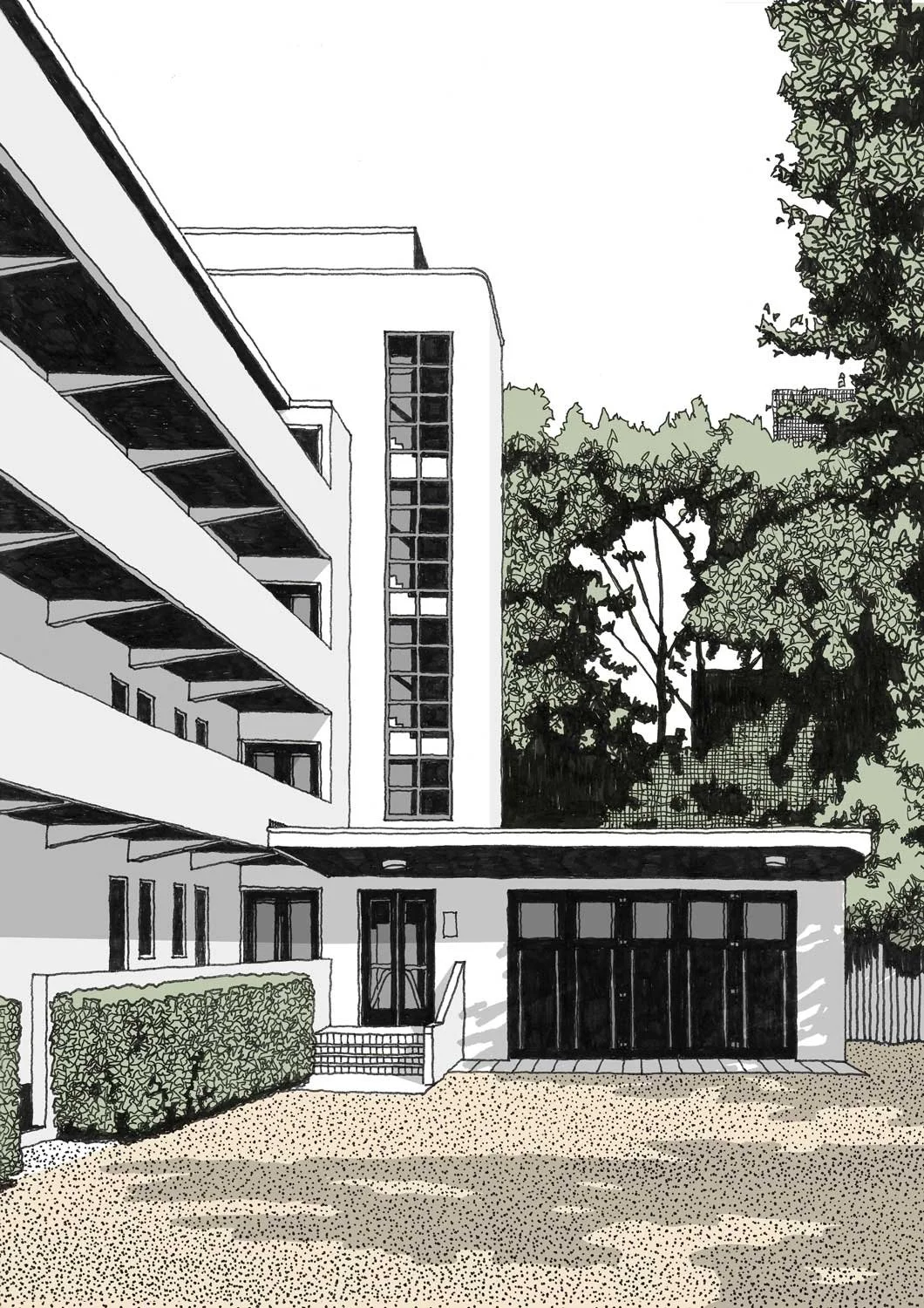
Isokon Flats, Lawn Road, Hampstead NW3
WILLOW ROAD, HAMPSTEAD NW3
No. 1-3 Willow Road forms a terrace of three houses designed by Hungarian architect Ernö Goldfinger and was completed in 1939. They look across to one of London’s largest urban parks, Hampstead Heath.
The houses were constructed from an external concrete frame with exposed load-bearing concrete columns at ground floor and faced in red brick above (a concession to the controversy the design caused at the time) . It comprises of strong clean modernist lines, with a large continuous single white window frame stretching across all three houses at the first floor.
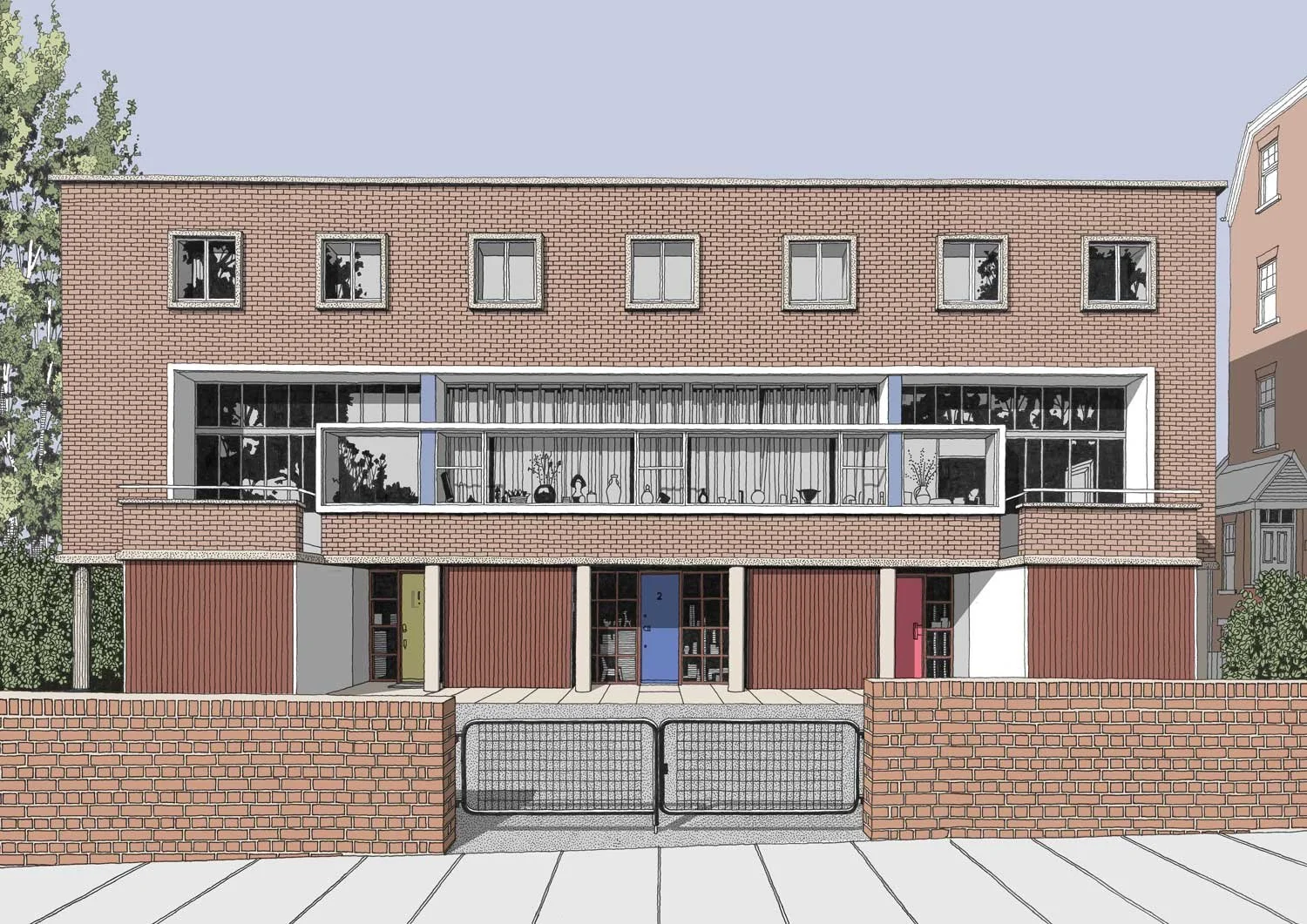
1-3 Willow Road, Hampstead NW3 1TH
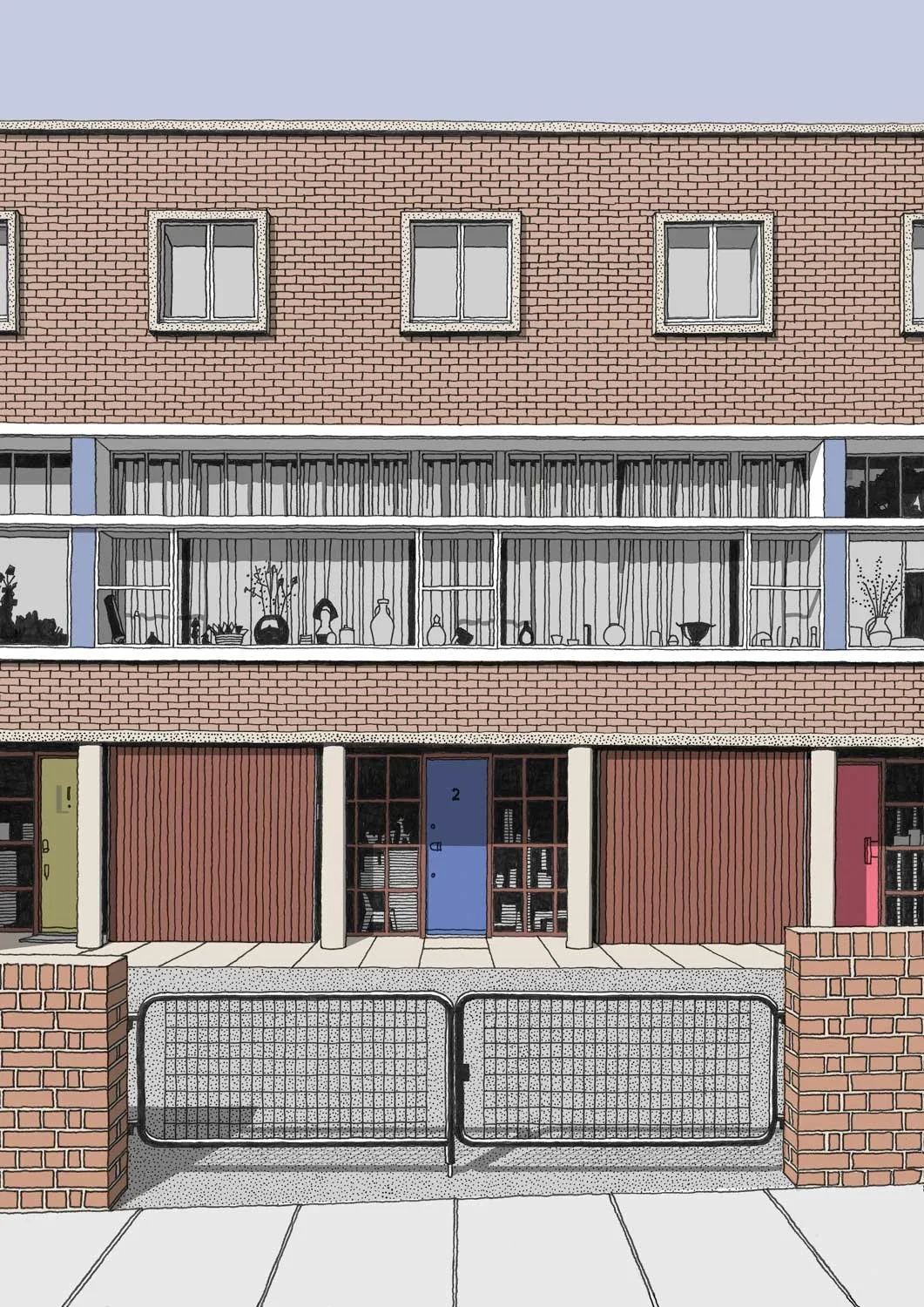
2 Willow Road, Hampstead NW3 1TH
KENWOOD HOUSE , HAMPSTEAD NW3
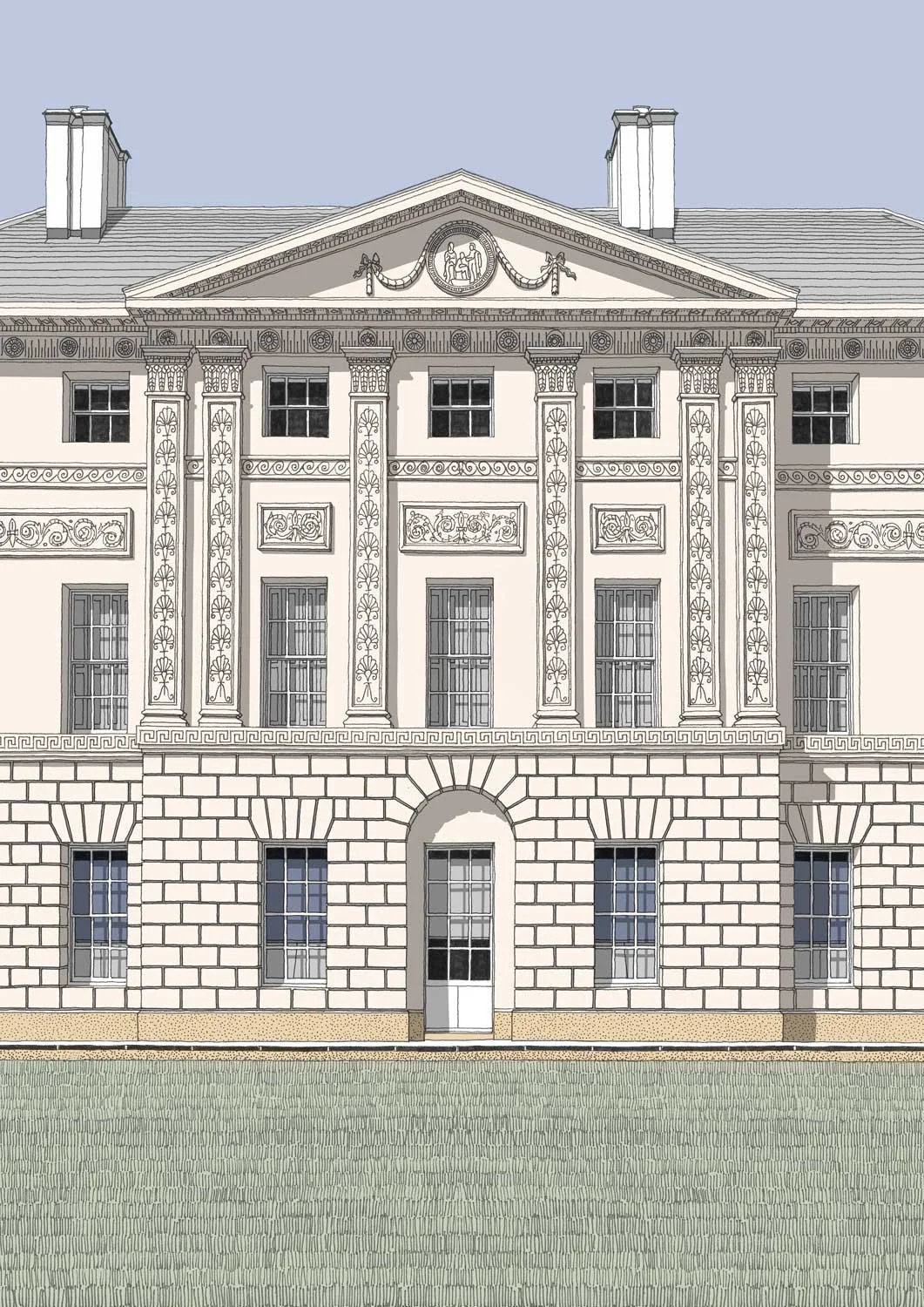
Kenwood House, situated on the edge of London’s expansive Hampstead Heath, was likely first constructed in the early 17th century. Between 1764 and 1779, the renowned architect Robert Adam undertook a significant transformation of the house, redesigning it into a refined neoclassical villa for William Murray, the 1st Earl of Mansfield.
Adam’s visionary design introduced a harmonious blend of classical and neoclassical elements, carefully balancing form and function, which ultimately made the house one of London’s most exquisite and celebrated examples of Georgian architecture. The south front of the house, which faces the beautifully maintained Kenwood garden, is particularly notable for its striking elegance, architectural balance, and perfect symmetry.
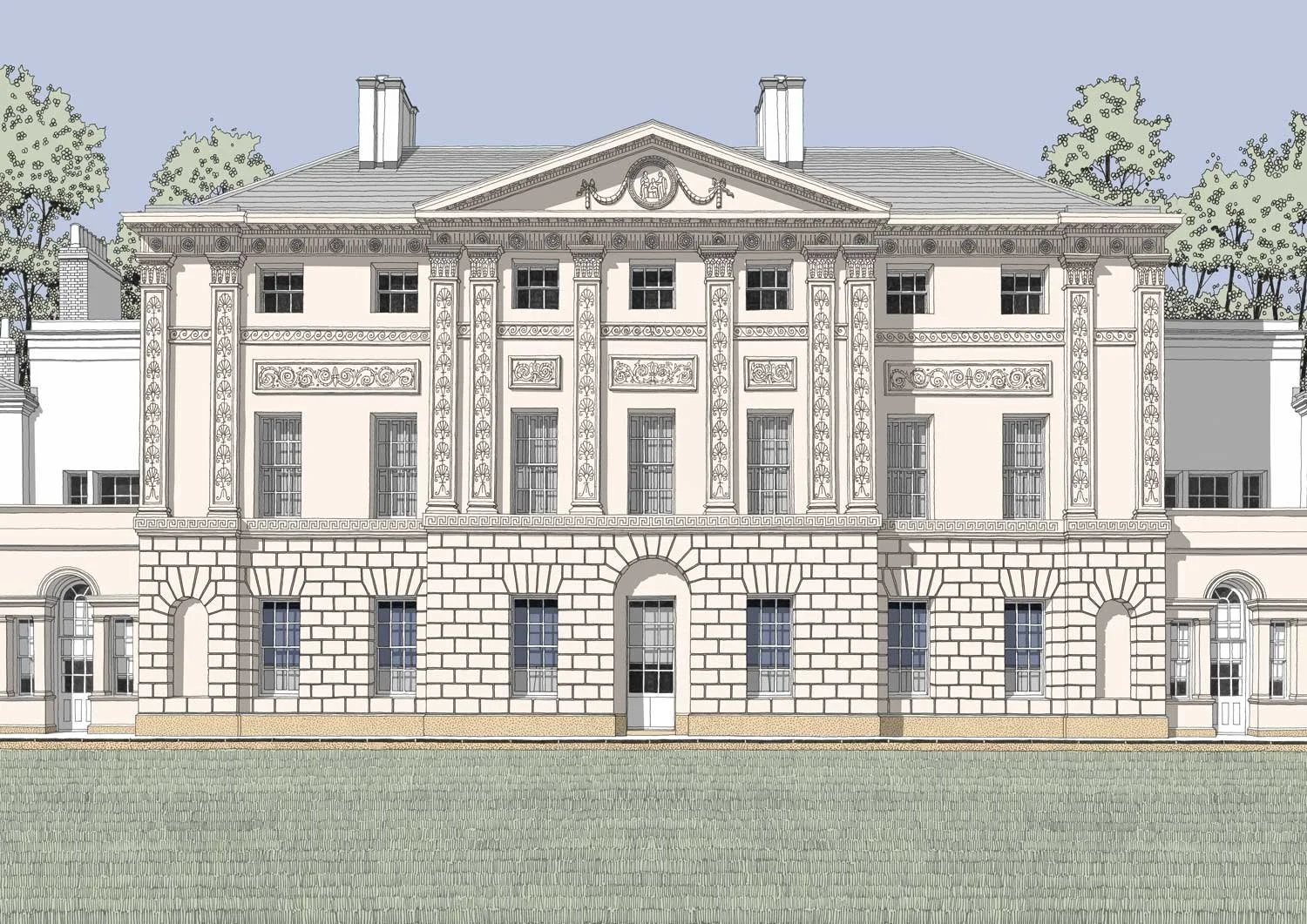
Kenwood House (I), Hampstead Lane, London NW3 7JR