
ROYAL BOROUGH OF KENSINGTON & CHELSEA
PETER JONES DEPARTMENT STORE, SLOANE SQUARE, SW1W
The Peter Jones Department Store on Sloane Square is a landmark of British Modernism, most famous for being one of the first buildings in the UK to feature a glass curtain wall. Designed primarily by William Crabtree and built between 1932 and 1936, the structure's most striking feature is its smooth, curved facade that follows the sweep of the King's Road. This innovative use of a steel frame allowed for continuous vertical bands of glazing, creating a "lucid and tasteful" exterior that stood in stark contrast to the surrounding Victorian architecture of the time.
While the Grade II* listed building appears as a single Modernist entity, it is actually a complex amalgam of structuresfrom different periods, including an 1890s house by A.H. Mackmurdo. A major 2004 refurbishment by John McAslan + Partners modernised the interior by introducing a vast central atrium with escalators, fulfilling Crabtree’s original but previously unrealised design vision.

Peter Jones Department Store, Sloane Square, London SW1W 8EL
CADOGAN HALL, BELGRAVIA SW1X
Located in Chelsea, London, Cadogan Hall is a premier 953-seat concert venue converted from the former First Church of Christ, Scientist, a Grade II listed building completed in 1907. Designed by Robert Fellowes Chisholm, the structure is a notable example of Byzantine Revival architecture, featuring a pale stone exterior, grand arches, and a distinctive tower, which provides a stark contrast to surrounding red-brick residential streets.
Following its disuse in the 1990s, the building was refurbished in 2004 by Paul Davis and Partners for £7.5m, converting the religious space into a world-class auditorium while preserving its ornate structure. It now serves as the permanent home of the Royal Philharmonic Orchestra.
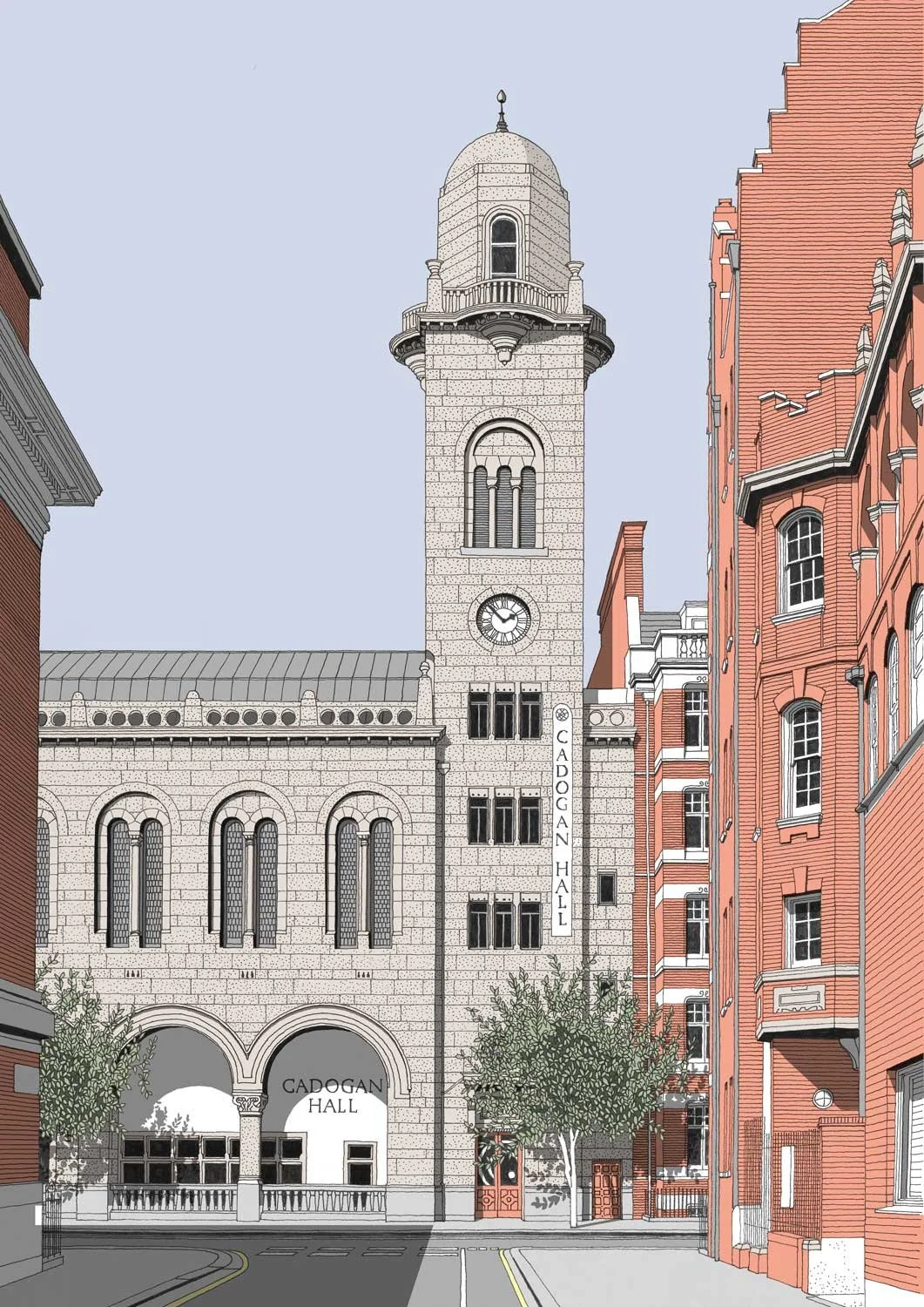
Cadogan Hall, 5 Sloane Terrace, Belgravia, London SW1X 9DQ
CADOGAN SQUARE, CHELSEA SW1X
Built between 1877 and 1888 on the former grounds of the Prince's Club, Cadogan Square in Knightsbridge is a prime example of late-Victorian residential architecture, characterised by its striking red-brick mansions and "Queen Anne Revival" style. Developed under the supervision of the Cadogan Estate, the square features prominent architectural contributions from Norman Shaw, William Young, and J.J. Stevenson, who collectively established a more textured, "Pont Street Dutch" Flemish appearance, a departure from the monotonous white stucco of early Victorian London. The houses are renowned for their varied yet cohesive façades, featuring decorative gables, intricately detailed stonework, and tall, bay-windowed profiles.

Cadogan Square, Chelsea, London SW1X
ROYAL HOSPITAL CHELSEA, SW3
Commissioned by King Charles II in 1682 and designed by Sir Christopher Wren, the Royal Hospital Chelsea is a masterpiece of English Baroque architecture, designed to provide a dignified home for veteran soldiers. The complex is characterized by a stately, disciplined layout, featuring a prominent central quadrangle known as Figure Court, flanked by the Wren Chapel and the Great Hall. The buildings are constructed from distinctive red brick with stone quoins and window surrounds, featuring a central pedimented portico topped with a cupola.
The site, which was largely completed by 1692, is oriented to open toward the River Thames and is celebrated for its harmonious, symmetrical design that blends residential quarters with civic grandeur.
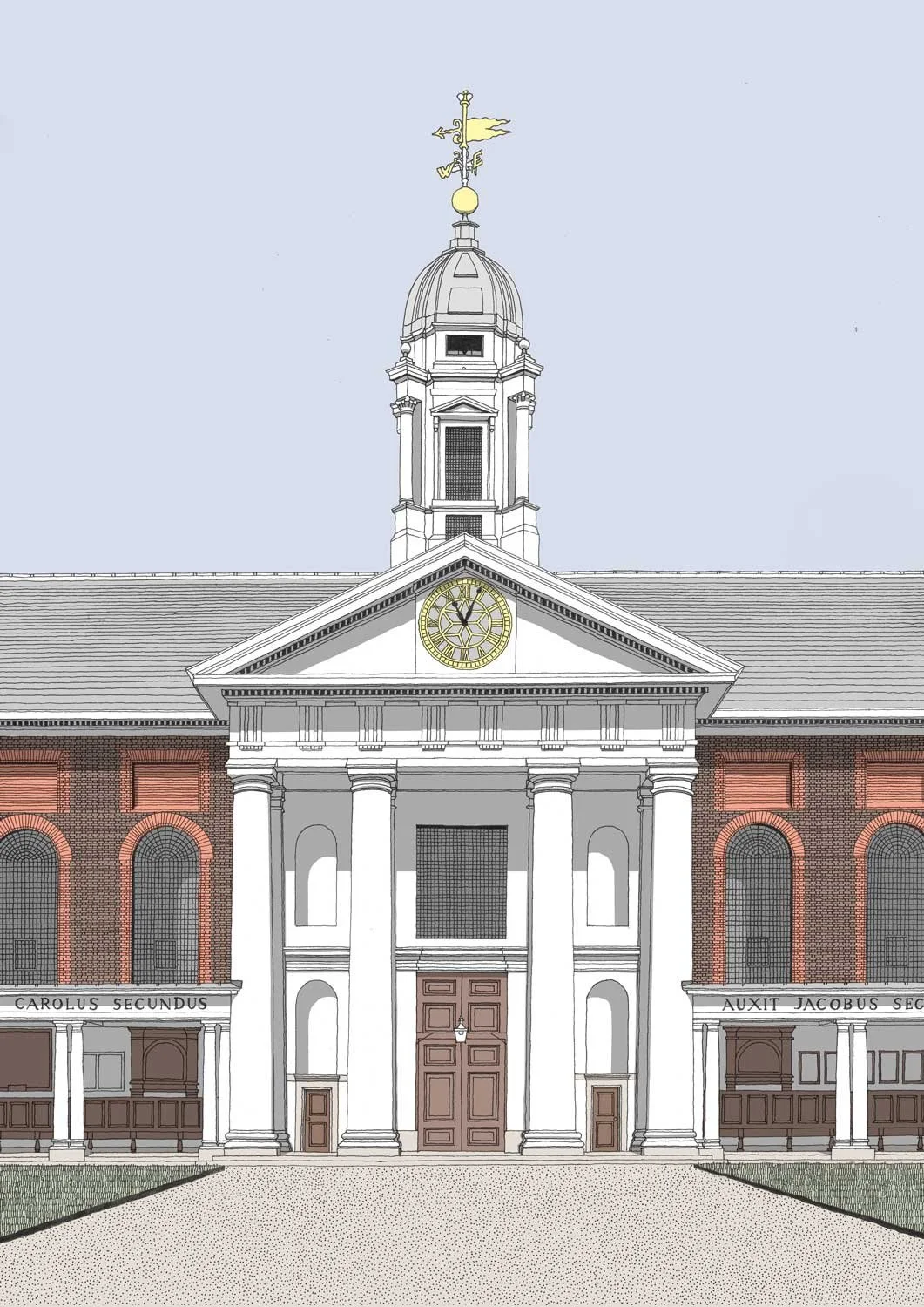
Royal Hospital Chelsea, Royal Hospital Road, London SW3 4SR
KENSINGTON & CHELSEA REGISTRY OFFICE, SW3
Located within the Grade II listed Chelsea Old Town Hall on King’s Road, the Kensington and Chelsea Register Office is a good example of late-Victorian civic architecture. Designed by John McKean Brydon in the Queen Anne revival style and completed in the early 20th century, the building features a distinct red brick and Portland stone façade, high ceilings, and imposing front steps that serve as a classic London wedding backdrop.
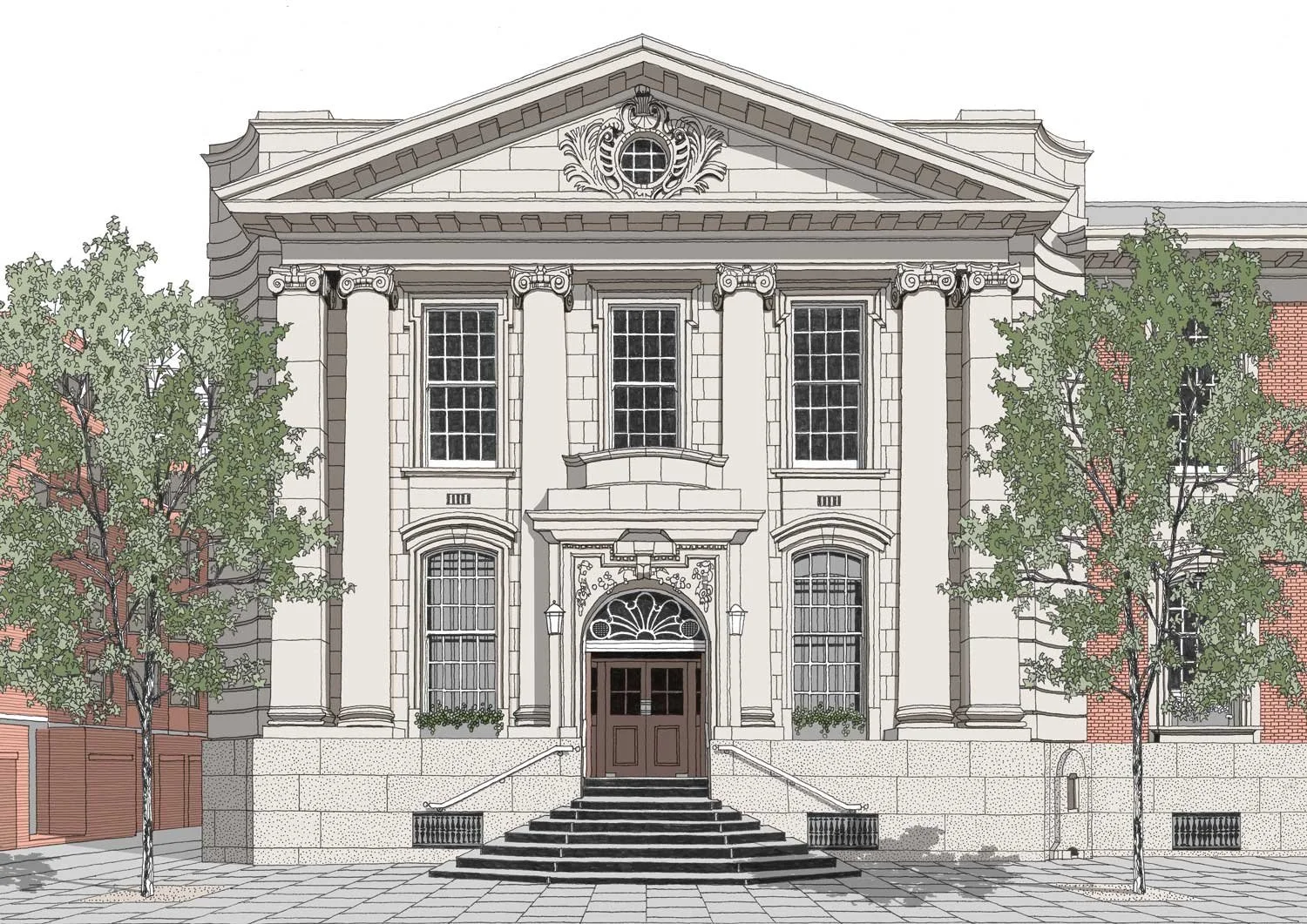
Kensington & Chelsea Registry Office, Chelsea Old Town Hall, King's Road, London SW3 5EE
MICHELIN HOUSE, CHELSEA SW3
Located at 81 Fulham Road in Chelsea, Michelin House (1911) is a celebrated example of early 20th-century Art Nouveau commercial architecture designed by François Espinasse.
Originally the UK headquarters and tyre-fitting station for Michelin, the building is a unique example of late British Art Nouveau Style and early Art Deco. Its white tiled facade, the decorative metal work at the front with the tangling plants, the elaborate stained glass featuring Bibendum (the Michelin Man) and tyre-shaped glass cupolas were designed as a dramatic "tyre temple" for branding. Its prominent roadside position and its strong advertising images and symmetry demonstrate the popular Art Deco style of the 1930’s. In this respect, Michelin House was a building twenty years before its time.
Michelin House has been listed Grade II since April 1969.
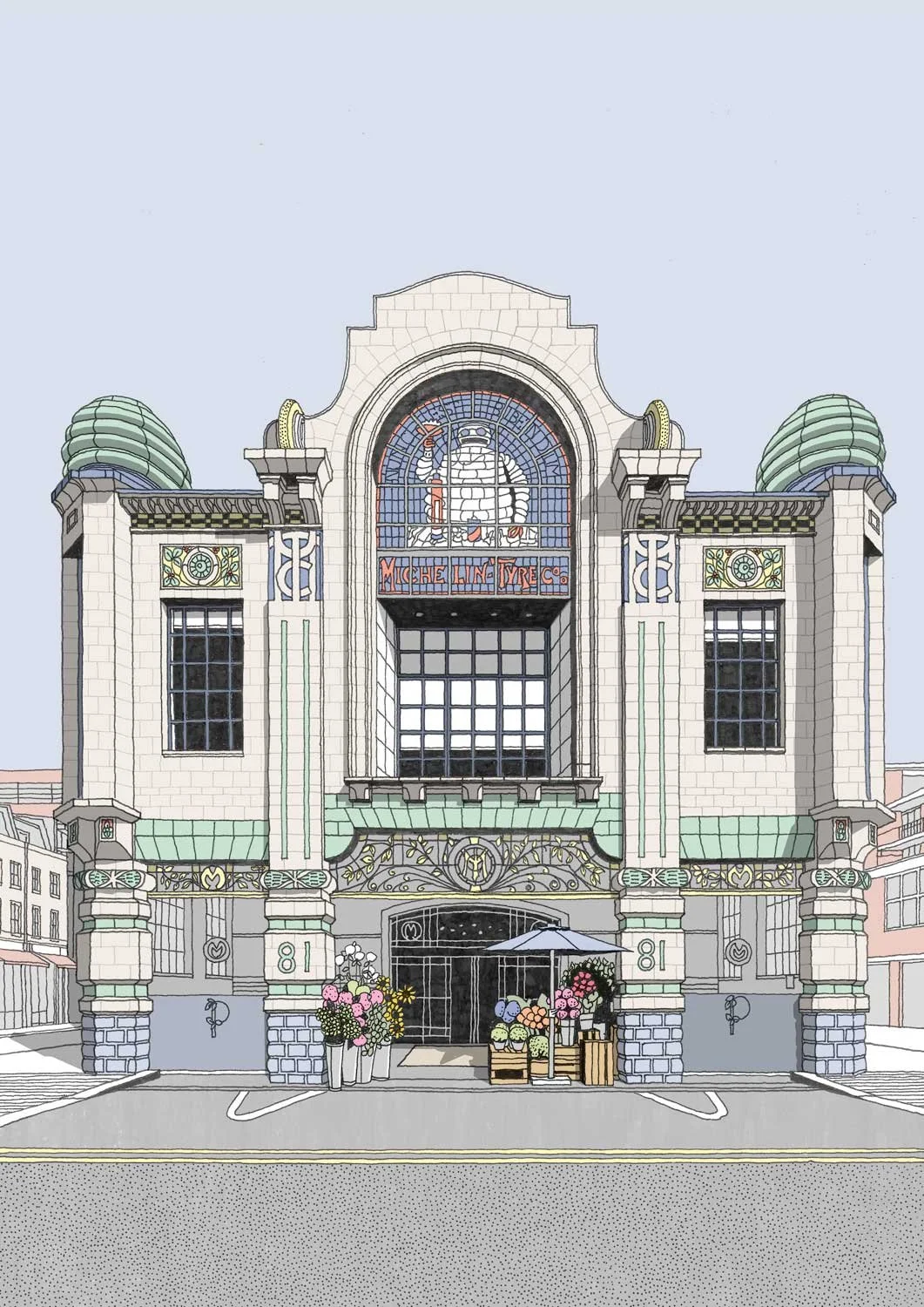
Michelin House, 81 Fulham Road, Chelsea, London SW3 6RD
10 PALACE GATE, SOUTH KENSINGTON, W8
A block of flats designed in 1937 by Wells Coates (see also his earlier design for Embassy Court in Brighton) - one of the most innovative blocks of flats built in Britain in the 1930s, by one of the leading modern architects of the time.
It marks the culmination of Wells Coates' ideas on the planning of flats, arranged on a remarkable 3-2 plan (or 'scissor' plan) with three bedrooms equalling the height of two living rooms, accessed by a corridor and hallway on the second and fifth floors.
The Palace Gate site was not in fact ideally adapted to 'three-two', which requires length rather than depth, and to make full use of the land and provide a symmetrical composition, a projecting, slightly concave entrance block of seven storeys was built on the west side, planned on conventional lines, and joined to the main block by a glazed staircase and lift shaft. The concave front and its relation to the main block strengthen the recollection, on this side, of Corbusier's Pavillion Suisse.
Built in reinforced concrete with a novel artificial stone cladding they were completed and first occupied in 1939. Intending residents had a wide choice, and rents ranged from £175 to £425 for the flats and £700 for a penthouse.
Its was Grade II* Listed in 1982.
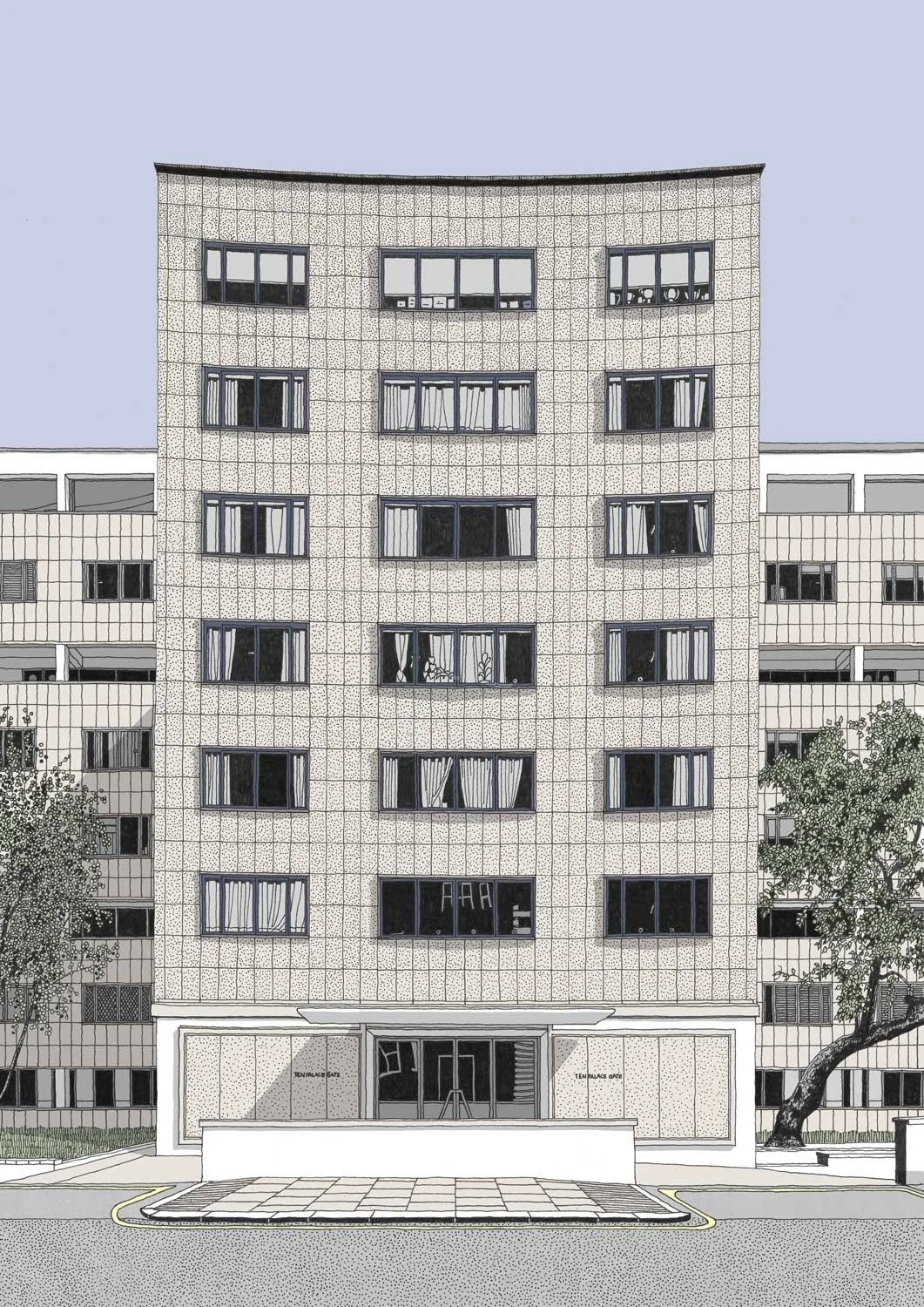
10 Palace Gate, South Kensington, London W8 5NF
TRELLICK TOWER BLOCK B, NORTH KENSINGTON W10
The adjoining perpendicular seven-story block to the iconic 31 storey tower, with the same brutal concrete characteristics.
Ernö Goldfinger’s concrete masterpiece was completed in 1972 and was granted Grade II* listing in 1998.
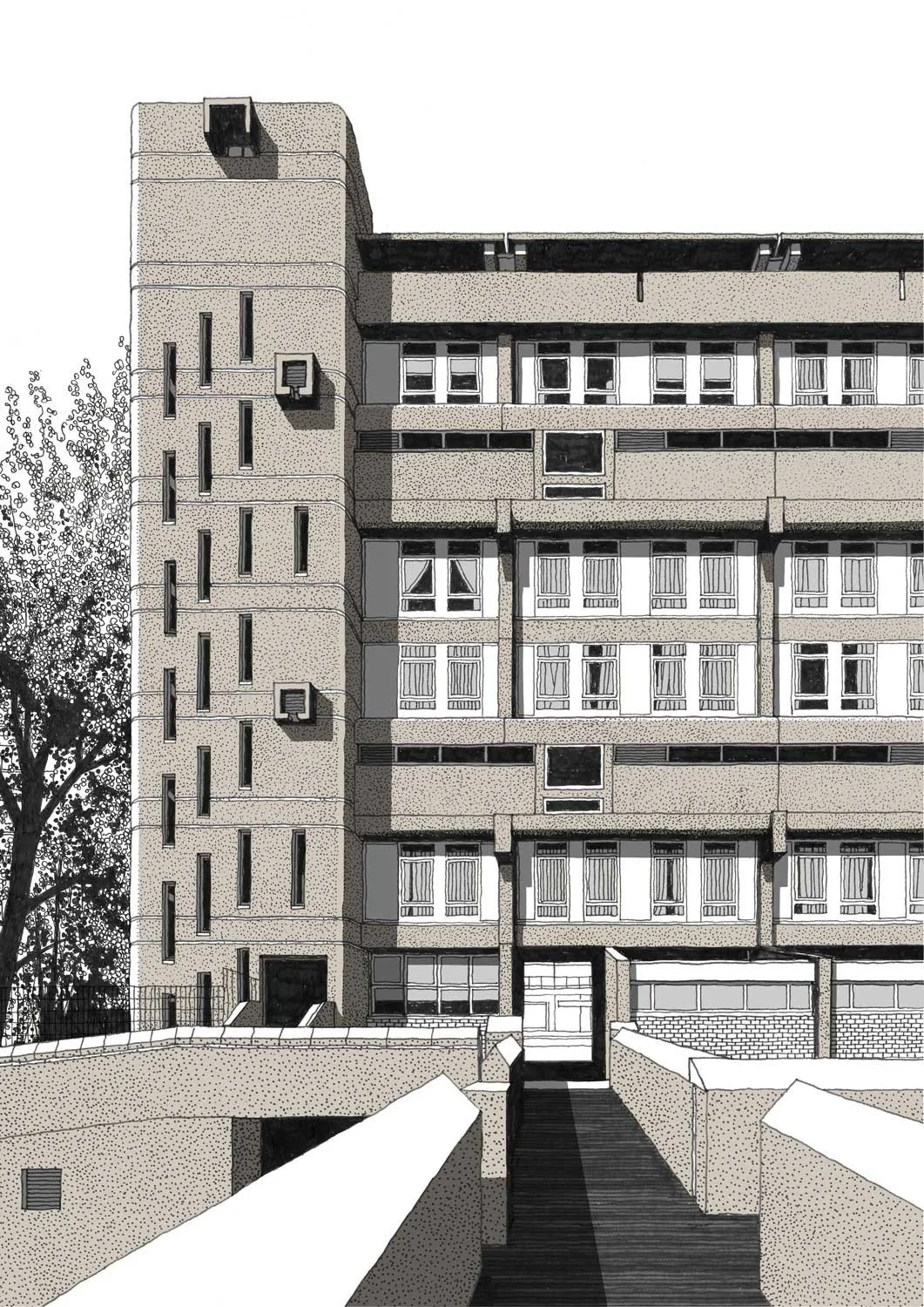
Trellick Tower Block B, Golborne Road, London W10 5PB
BYWATER STREET, CHELSEA SW3
A 1930’s art deco facade set within a well maintained 1860’s stuccoed row of terraces, on a narrow cut-de-sac off the Kings Road.

Bywater Street, Chelsea SW3