
LONDON BOROUGH OF LAMBETH
THE NATIONAL THEATRE, SE1
Designed by Sir Denys Lasdun and completed in 1976, the National Theatre on London’s South Bank is a landmark of British Brutalist architecture. Lasdun conceived the building as "architecture as urban landscape," rejecting a traditional front-facing facade in favour of a complex system of interlocking horizontal terraces and vertical fly towers. These strata were intended to function as an extension of the city itself, allowing the public to freely traverse the building’s various levels and enjoy panoramic views of the Thames and St Paul’s Cathedral.
The structure is famed for its extensive use of béton brut (raw concrete), which retains the tactile imprints of the rough timber planks used for its formwork. While famously derided by King Charles III as looking like a "nuclear power station," the building’s design is deeply thoughtful, housing three distinct performance spaces—the Olivier, Lyttelton, and Dorfman theatres—each modelled on different historical theatrical forms. Its Grade II* listed status reflects a late-century re-evaluation of the site as one of Britain’s most significant and generous civic spaces
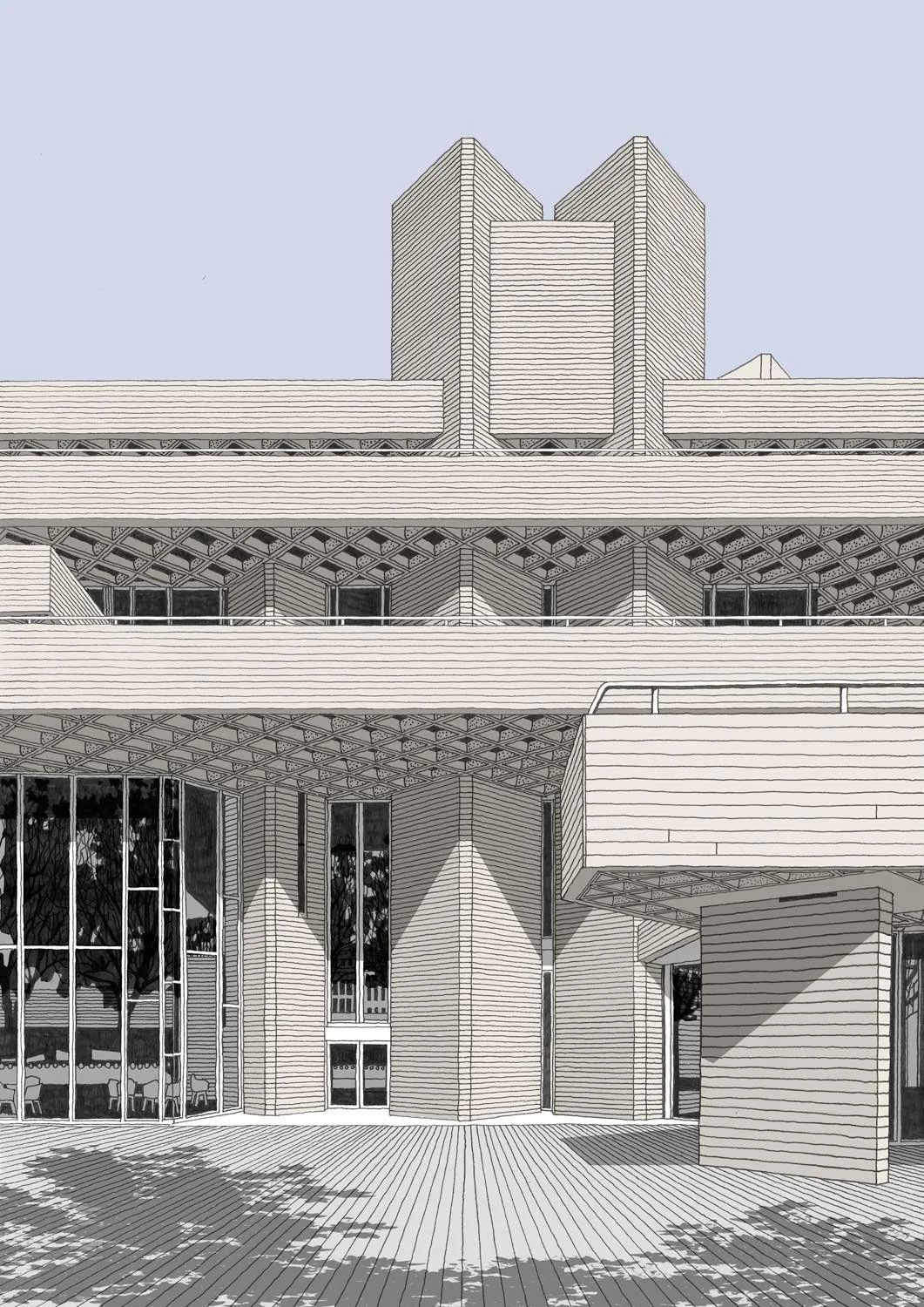
The National Theatre (III), South Bank, SE1
THE HAYWARD GALLERY - 01, SOUTHBANK SE1
A gallery for contemporary arts built by Higgs and Hill and opened on 9 July 1968.
The initial concept was designed, with the Queen Elizabeth Hall and Purcell Room, as an addition to the Southbank Centre arts complex by team leader Norman Engleback, assisted by Ron Herron and Warren Chalk, two members of the later founded group Archigram.
It demonstrates a robustness of the massing with extensive use of concrete and precast concrete panels with exposed Cornish granite that typifies brutalist architecture.
The pyramids provide natural light to the upper gallery and have become a distinctive feature of the London skyline.
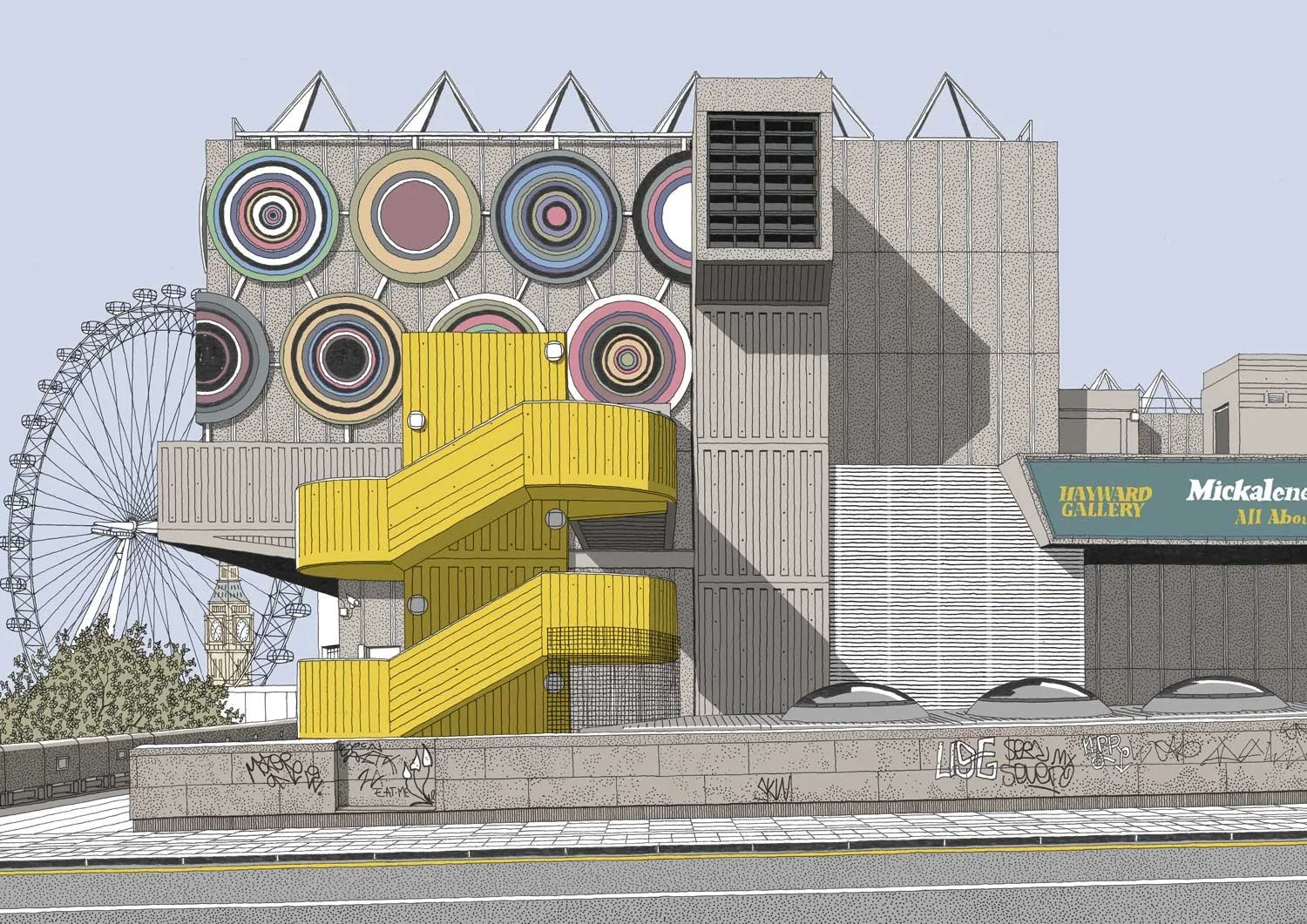
The Hayward Gallery, Southbank Centre, Viewed from Waterloo Bridge, London SE1 8XX
THE HAYWARD GALLERY - 02,
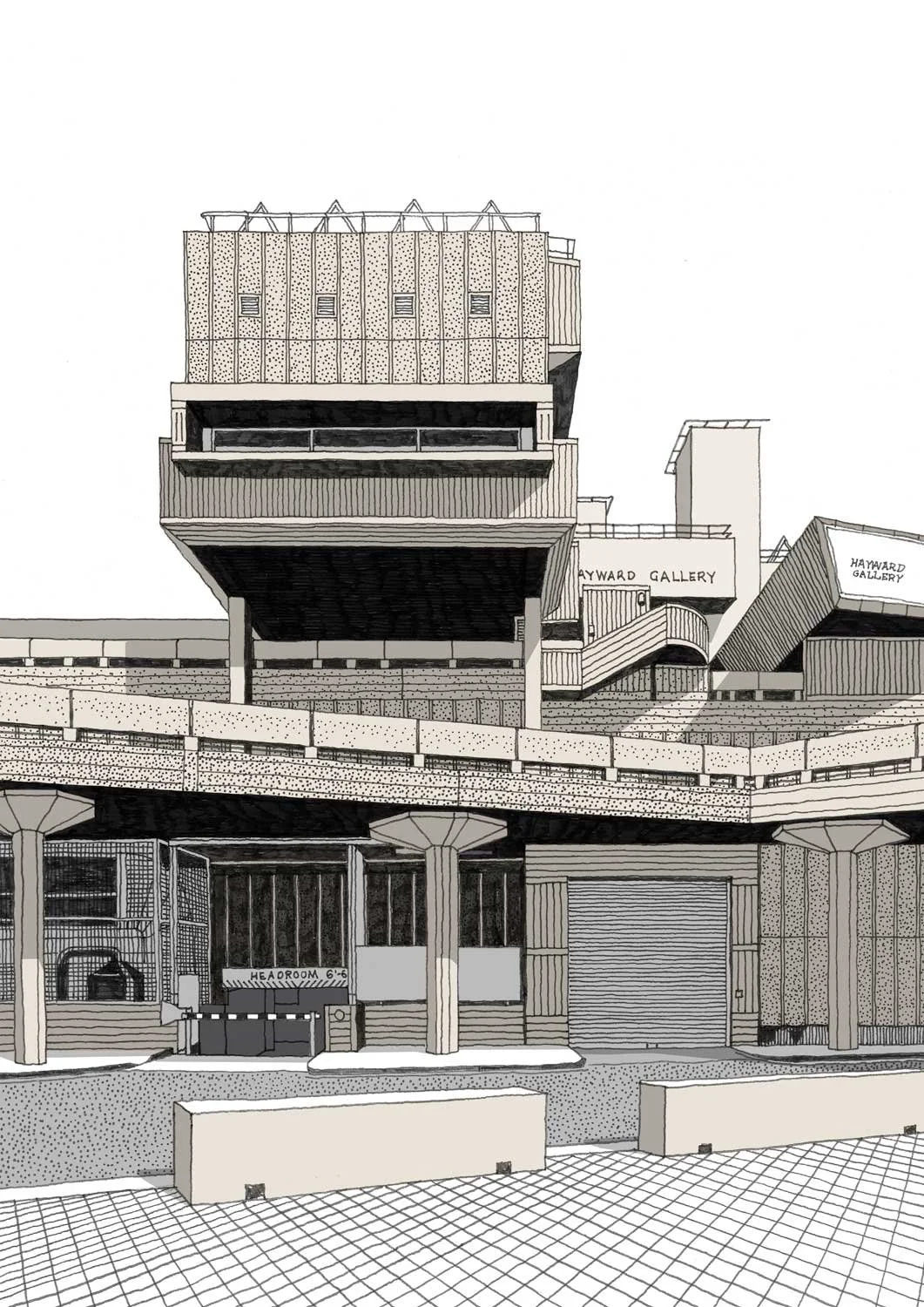
The undercroft to the Hayward Gallery, Southbank Centre, Belvedere Road, London SE1 8XX
ROUPELL STREET, WATERLOO SE1
Roupell Street is a remarkably preserved Grade II listed enclave in Waterloo, originally developed in the 1820s and 1830s by John Palmer Roupell. Built on former marshland to house artisans and skilled workers, the street is celebrated as one of London’s most intact examples of late Georgian domestic architecture. Its uniform rows of two-storey houses feature warm, brown London stock brick and distinctive "butterfly" roofs, many of which are cleverly hidden behind high parapets to make the modest cottages appear grander from the street.

Roupell Street, Waterloo SE1 8SP
LAMBETH TOWERS, LAMBETH ROAD / KENNINGTON ROAD, LONDON SE11
Designed by George Finch of the Lambeth Architect’s Department between 1964 and 1972, Lambeth Towers in North Lambeth is a seminal example of British Brutalist social housing. Located near the Imperial War Museum, the 11-story complex is celebrated for its irregular, "cranked" concrete frame and interlocking, dual-aspect maisonettes, offering a high-quality residential design that avoids the monolithic feel of contemporary projects.
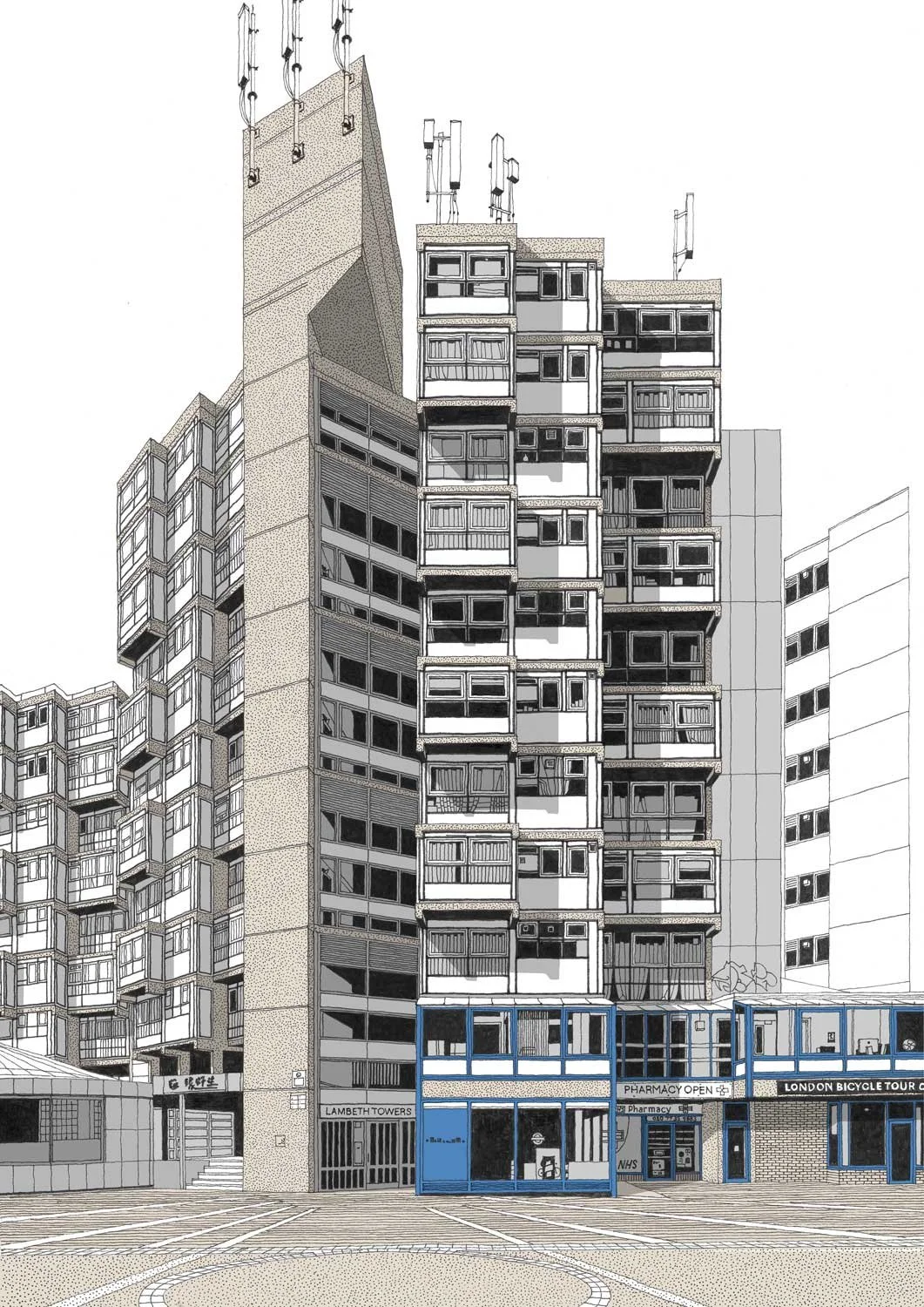
Lambeth Towers, Lambeth Road / Kennington Road, London SE11 6NL
COVERLEY POINT, VAUXHALL SE11
Coverley Point, situated on Vauxhall Walk, is a 13-storey residential tower built in 1966 as a key component of the Vauxhall Gardens Estate. Designed during the height of post-war municipal development, this Brutalist-inspired tower features a reinforced concrete structure, typical of 1960s British council housing efforts to replace dense, bombed-out Victorian terraces with modern amenities. Its design is characterised by a stacked duplex apartment arrangement with interior access corridors accented by pilotis—a raised structure reminiscent of Corbusian Modernism.
.
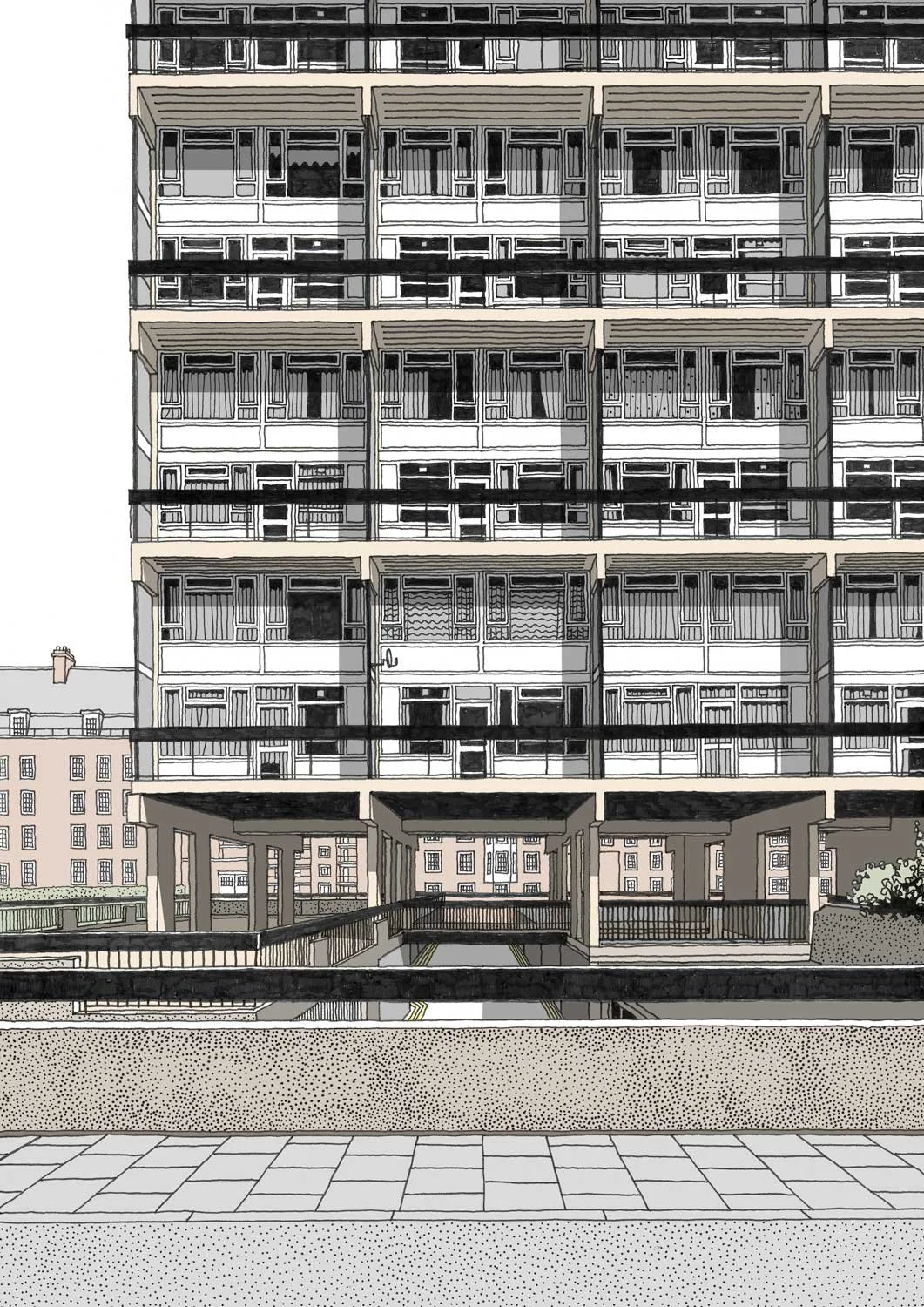
Coverley Point, Vauxhall Walk, Vauxhall SE11 5NS
KENNINGTON PARK ROAD, KENNINGTON SE11
The end of a long, near-symmetrical terrace of late 18th or early 19th century.
Grade II listed.
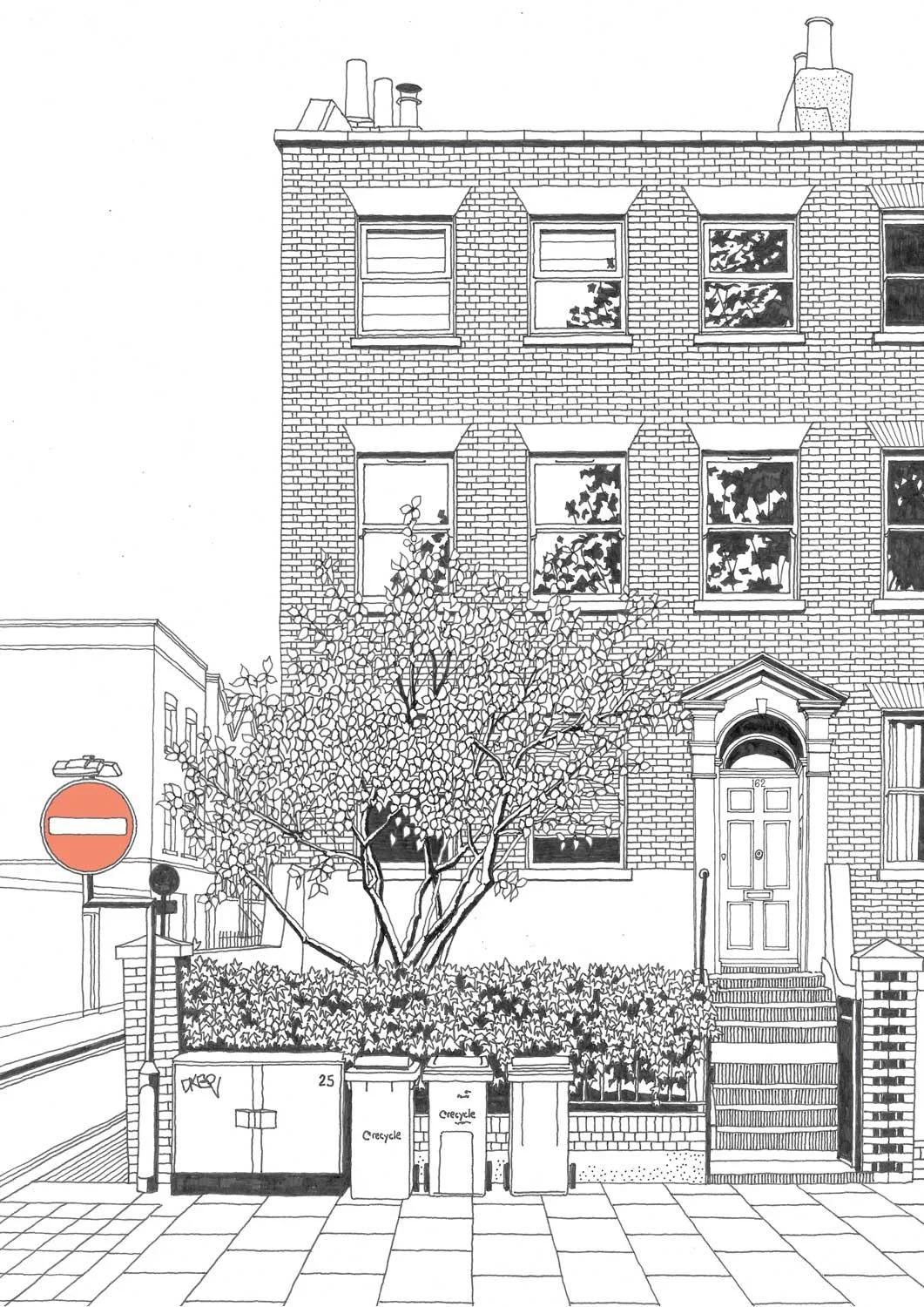
(Commissioned) 162 Kennington Park Road, London SE11 4DJ
WINDMILL FISH BAR, OVAL, SE11
Shopfront on the corner of Windmill Row and Kennington Lane. The Kennington Conservation Area Statement (2012) states:
This short street of commercial premises is aligned northwest-southeast and connects Kennington Road with Kennington Lane. It is characterised by three-storey mid 19thCentury shops (Nos. 4-10 might be earlier but have been heavily altered). The general character is of an historic environment degraded by inappropriate incremental changes. A number of properties suffer heavily from inappropriate alterations including uPVC replacement windows. Many premises retain historic shopfronts detailing (pilasters, cornices, consoles etc) but the majority of shopfronts are modern and inappropriate with aluminium frames, externally mounted security shutters and garish plastic signs.
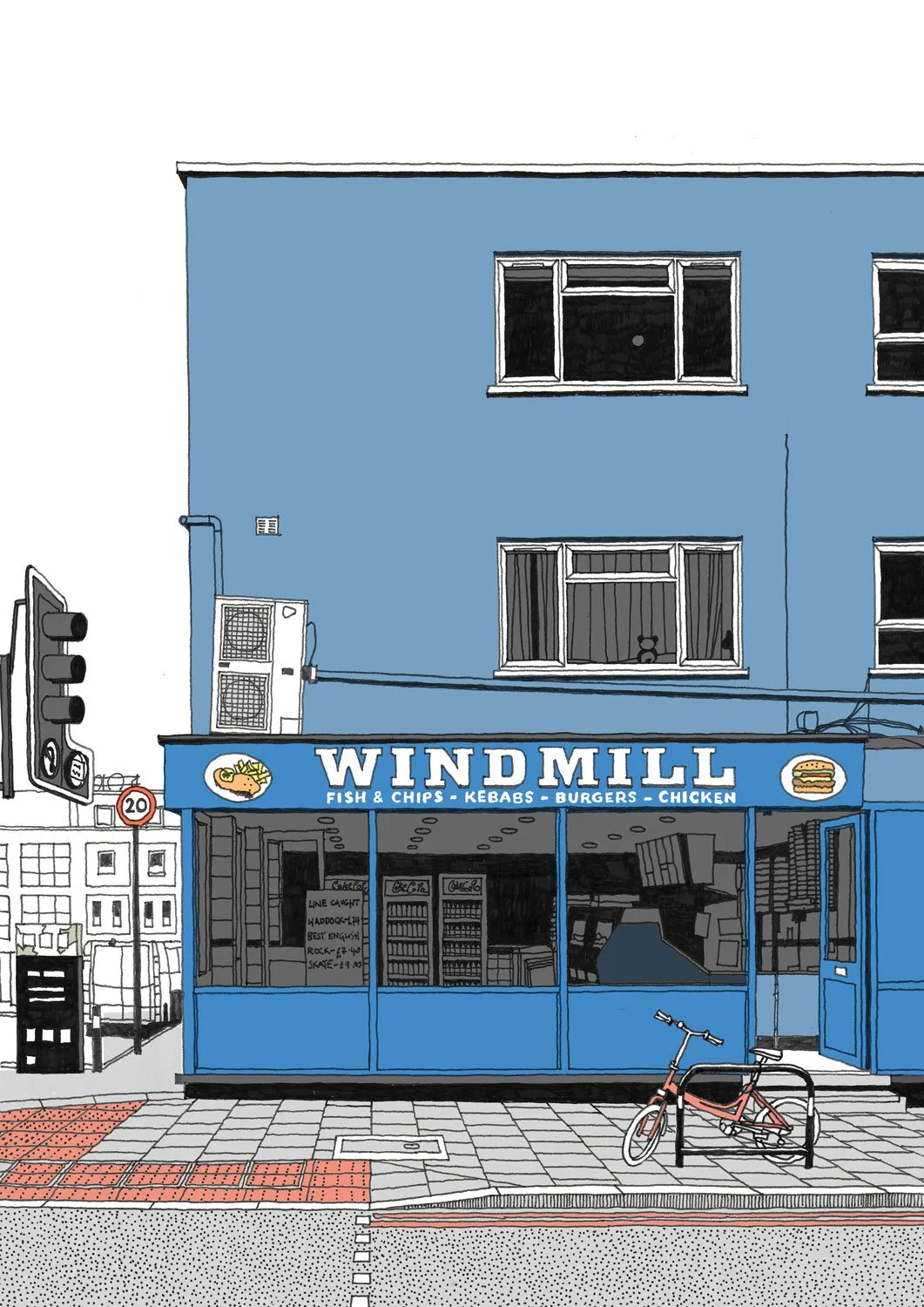
Windmill Fish Bar, 211 Kennington Lane, Oval, London SE11 5QS
ST GABRIEL’S MANOR, CAMBERWELL, SE5
St Gabriel's Manor on Cormont Road, Camberwell, is a striking Grade II-listed former teacher training college dating from 1900, which has been successfully converted into a gated residential community. Architecturally, it is defined as a large Art Nouveau structure boasting a symmetrical red brick facade with two-toned brick bands, featuring distinctive canted oriel bays set on brackets that frame a central bay. Originally four storeys, a fifth floor was later added.
The building’s entrance features a prominent projecting gabled porch adorned with freely-adapted Tudor styling and a statue of the Angel Gabriel, reflecting its original academic and religious purpose.
Grade 2 listed.

St. Gabriel’s Manor, Cormont Road, Camberwell SE5
GUTHRIE CLINIC, KING’S COLLEGE HOSPITAL SE5
Completed in 1937, the Guthrie Clinic (now known as the Guthrie Wing) at King’s College Hospital is a notable example of Beaux-Deco architecture, designed by architects Colcutt & Hamp and funded by the Stock Exchange Dramatic and Operatic Society. The building is distinguished by its brick tower, described by Pevsner as having "mannered" Neo-Georgian and Art Deco elements, featuring a distinctive entrance with a cantilevered hood and carved stone panels. Originally intended as a private, less crowded wing for patients, the building operates as a landmark, aesthetic anomaly within the wider, more traditional hospital campus along Denmark Hill.
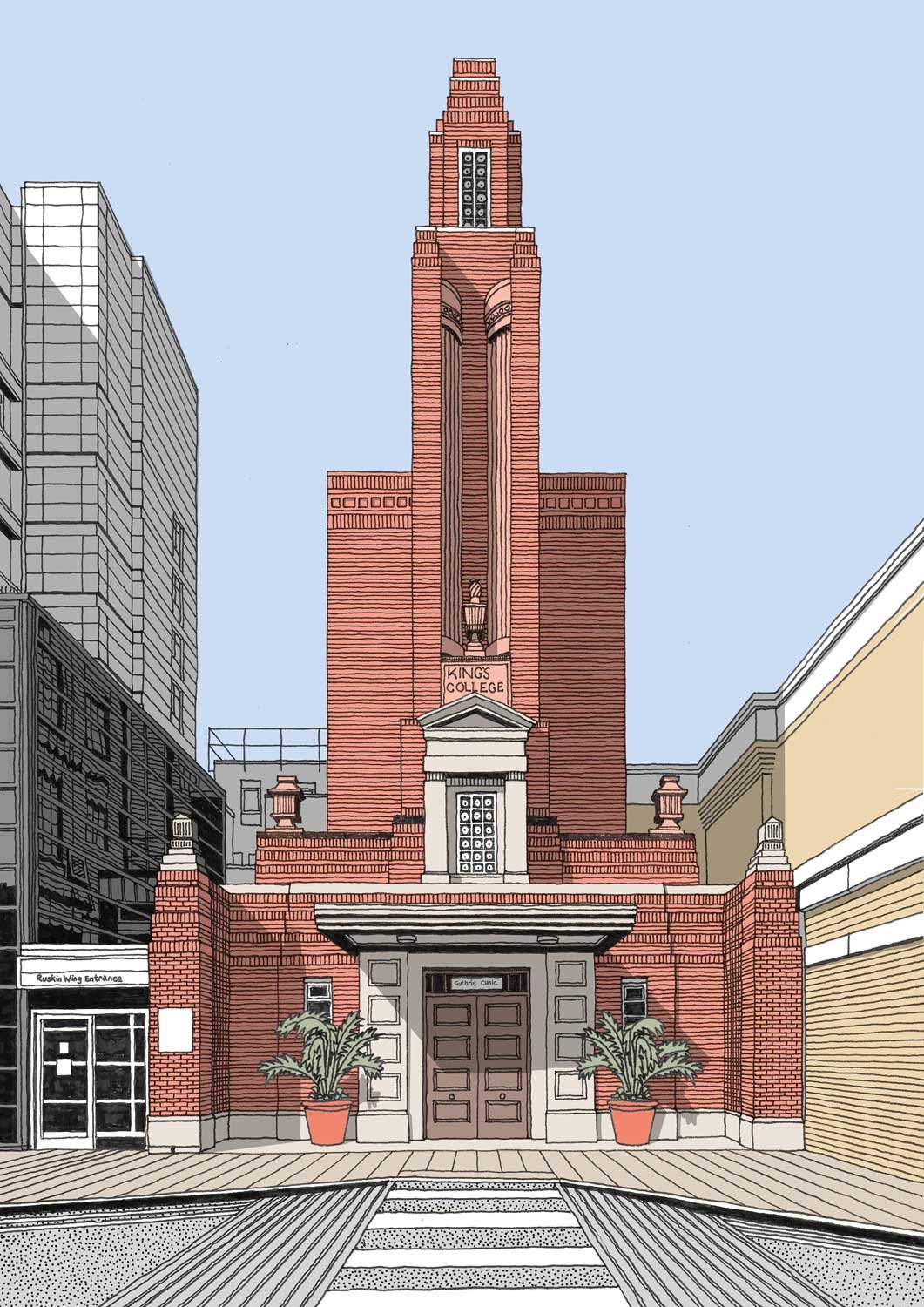
Guthrie Clinic, King’s College Hospital, Denmark Hill, London SE5 9RS
NEVIL HOUSE, LOUGHBOROUGH ESTATE, BRIXTON, SW9
Built between 1954 and 1957, the Loughborough Estate contained over 1,000 dwellings spread over high and low-rise buildings, including nine eleven-storey 'slab' blocks.
Designed by a small team in the Housing Division of the London County Council Architect’s Department, they had a strikingly modernist aesthetic.
The slab blocks later became a standard model for the housing programme, and were arguably built to greatest effect on the Alton Estate in Roehampton.
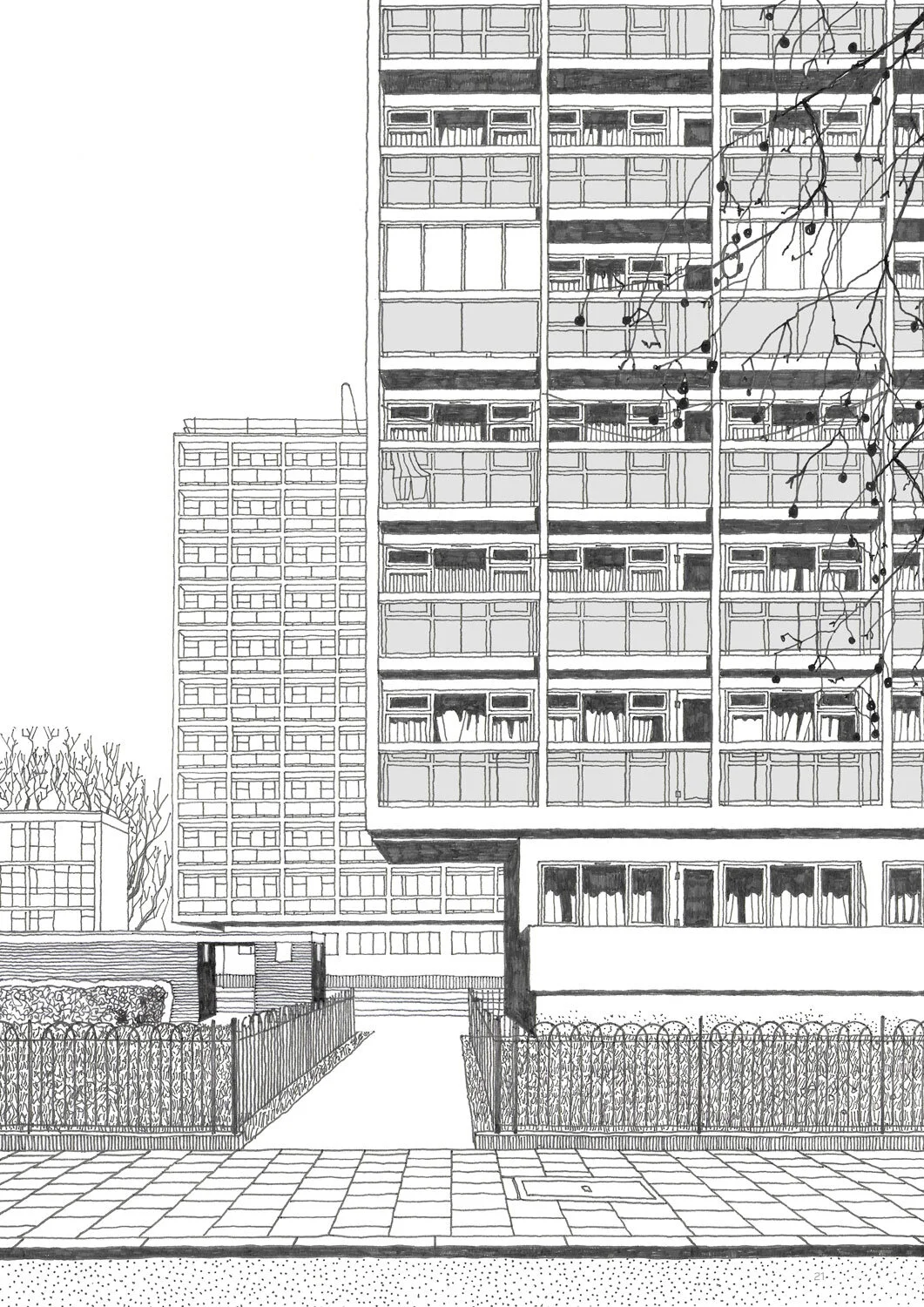
Nevil House, Rupert Gardens, Brixton SW9 7TW
BRIXTON MARKET, ELECTRIC AVENUE, SW9
Foxes and Cherries - a sculpture created by local artist Lucy Casson in 2010, found above a 1960’s two storey concrete infill on a war bombed site on Brixton’s historic Electric Avenue.

Brixton Market, Electric Avenue, Brixton, London SW9 8JX
BRIXTON HILL, BRIXTON SW2
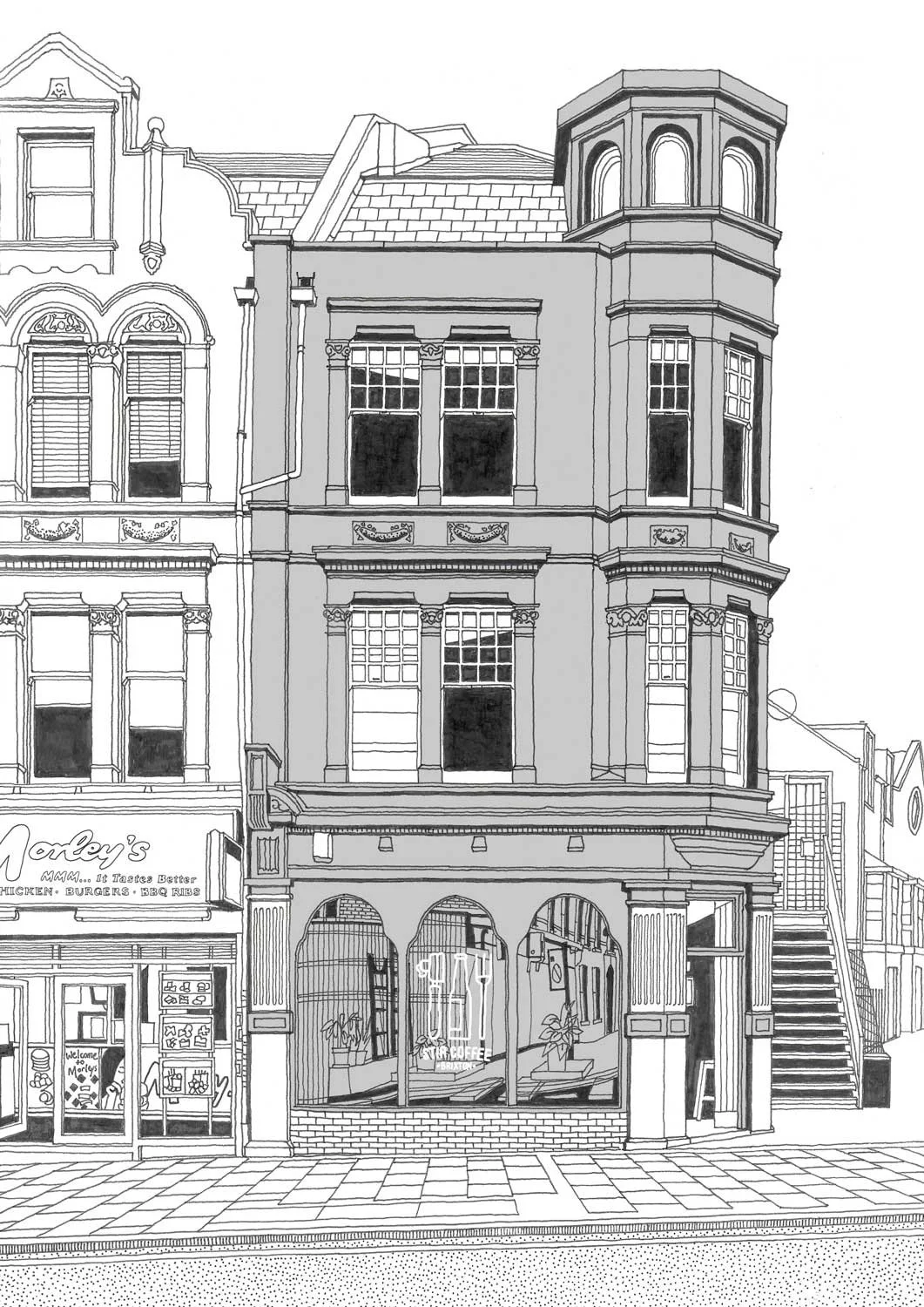
(Commissioned) Brixton Hill, Brixton, London SW2 1AA
DORCHESTER COURT, HERNE HILL SE24
Dorchester Court (1933-34) is evocative of the 1930’s era for streamline modernism, with its strong horizontal flowing lines, metal windows and corner glazing.
It was developed by H C Morrell as luxury apartments. There are eight blocks containing 96 flats set around a central garden. When first opened, residents enjoyed the services of a doorman in each block.
The architects of this building, Leslie H Kemp and Frederick E Tasker, were famous for their designs for art deco cinemas throughout the U.K.
Dorchester Court is Grade II listed, but there are some areas that are in a worrying state of disrepair, where timber propping is now required to support some of the cantilever concrete balconies and corner windows.
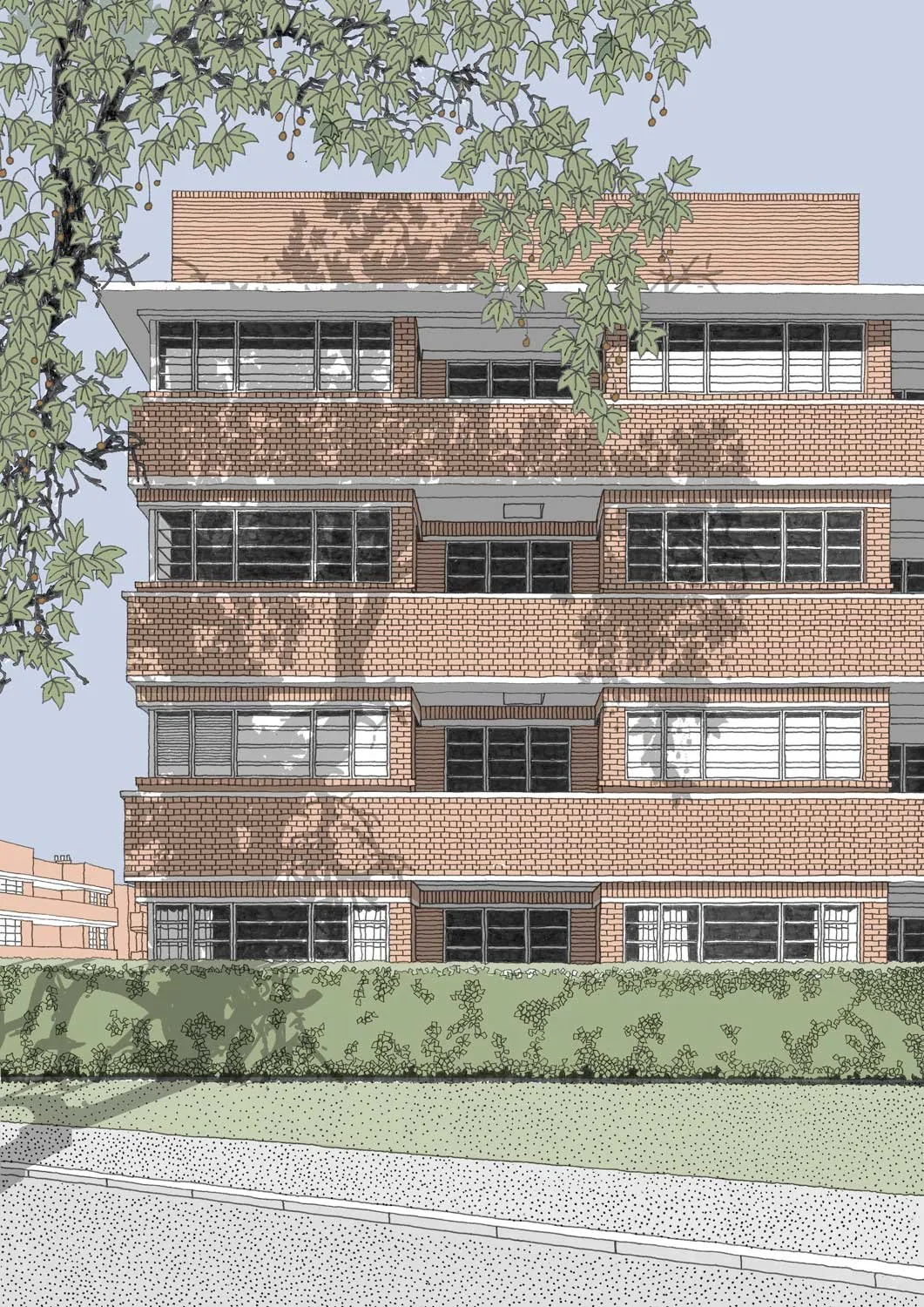
Dorchester Court, Herne Hill, SE24 9QY
PULLMAN COURT, STREATHAM HILL
Pullman Court in Streatham Hill, completed in 1936, is a pioneering example of International Modernism in Britain, designed by Sir Frederick Gibberd at the age of only 23. Commissioned by developer William Bernstein to cater to young professionals, the 218-flat estate was a direct response to the inter-war housing shortage, emphasizing light, air, and "labour-saving" design. The architectural layout, influenced heavily by Bauhaus principles, consists of three and five storey blocks towards the front and a seven-storey cruciform block at the rear, all meticulously arranged around central courtyard gardens to maximize natural light and protect existing mature trees.
Architecturally, Pullman Court is characterised by its white-walled, reinforced concrete frame, originally featuring a more avant-garde palette of pastel pinks, blues, and browns that were used to manage perspective. The buildings exude a "streamline moderne" aesthetic, featuring long balcony walkways, Crittall steel-framed windows, and metal railings that create an illusion of an ocean liner. Internally, the flats were equally modern, featuring built-in furniture, streamlined kitchens, and unique sliding wooden walls between the two-room units. In 1995, following extensive repairs, its importance was recognized by raising its status to a Grade II* listed building.
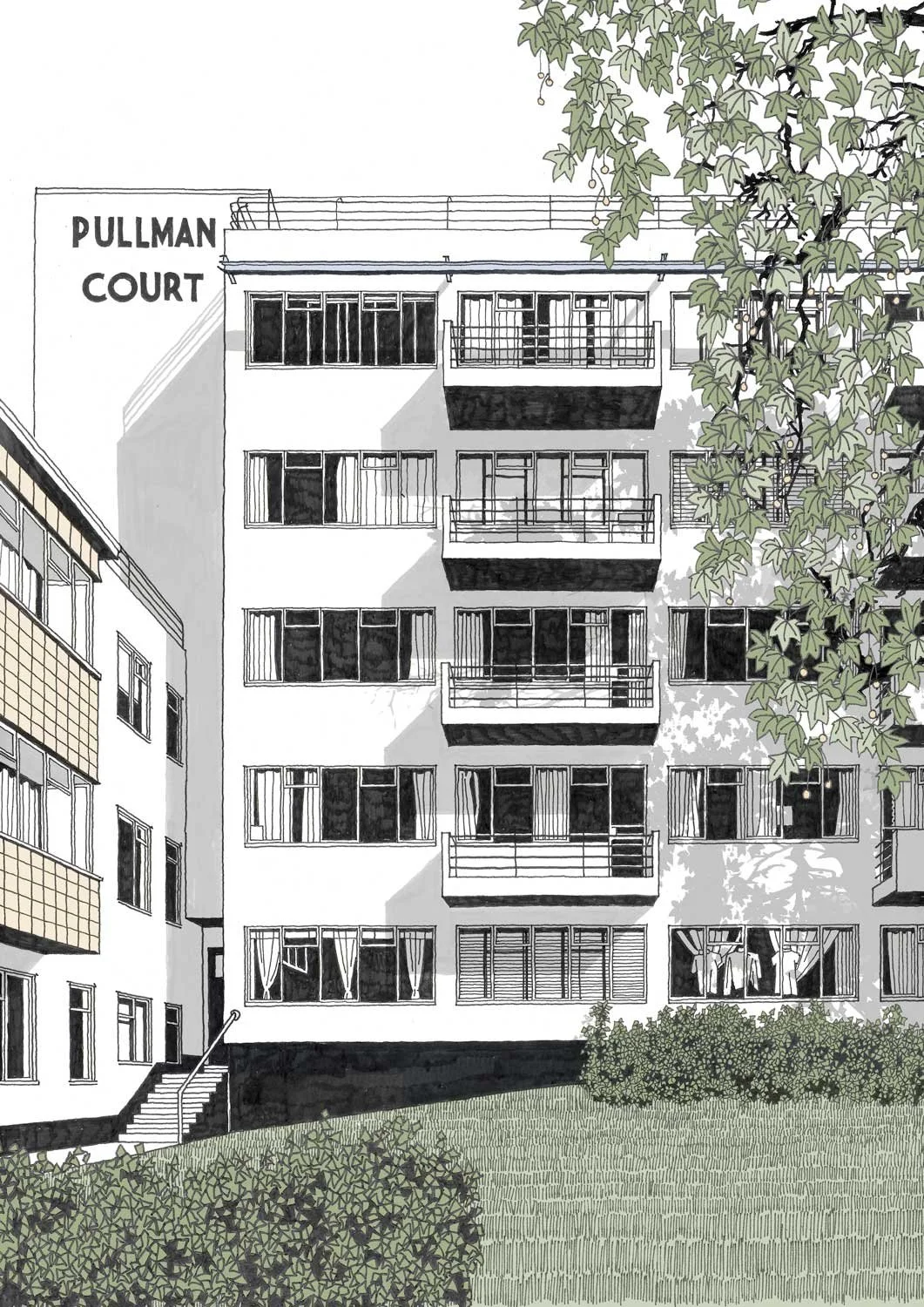
Pullman Court, Streatham Hill SW2 4SZ