
LONDON BOROUGH OF SOUTHWARK
TATE MODERN - EXTENSION, BANKSIDE, SE1
The Switch House, a ten-storey tower forming the extension to the original conversion of the former Bankside Power Station which opened in 2000.
Designed by Swiss architects Herzog & de Meuron and opened in 2016, the extension features an exterior of latticed brickwork and folded surfaces.
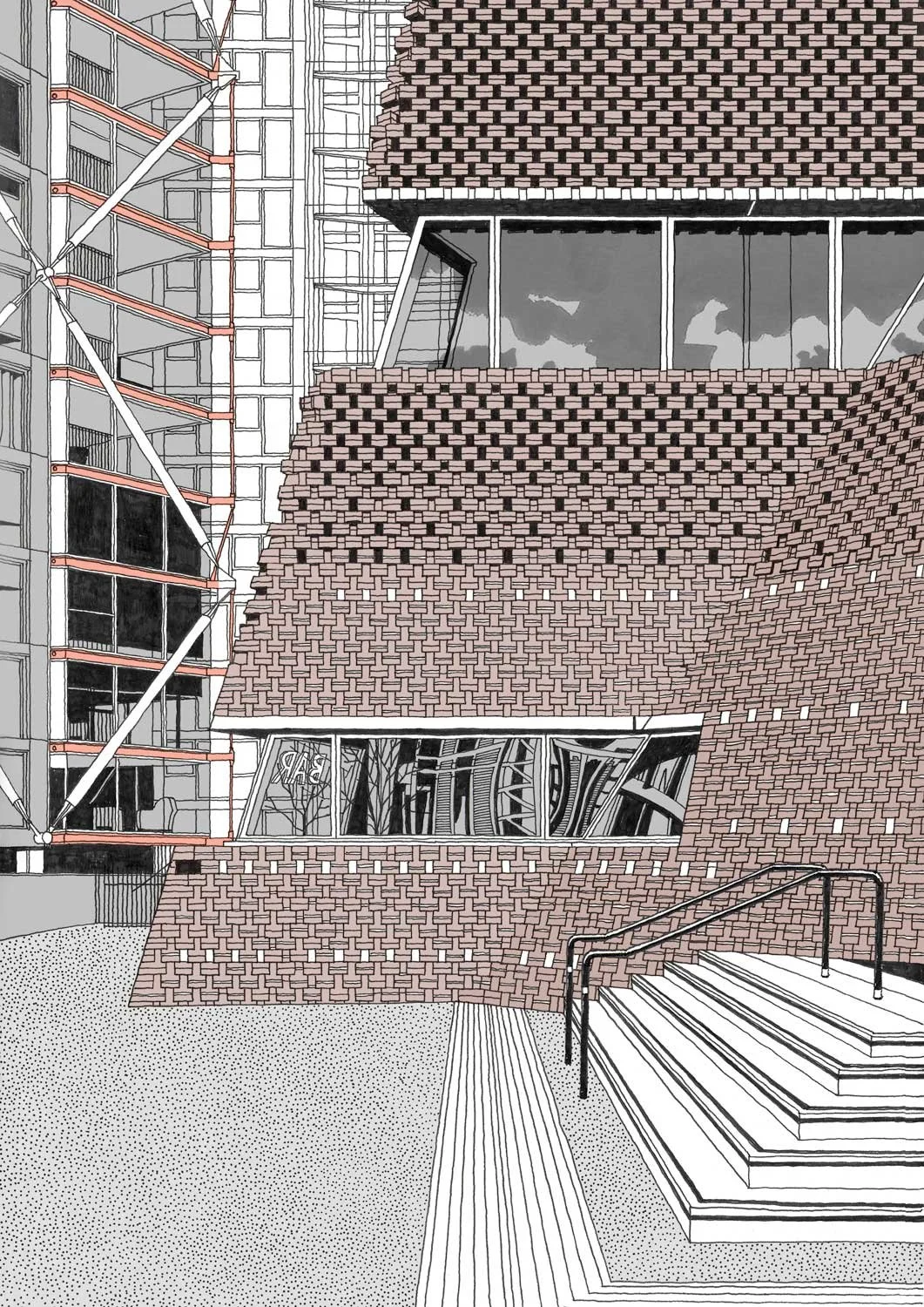
Tate Modern Extension, Bankside, London SE1 9TG
ELEPHANT & CASTLE SHOPPING CENTRE, SE1
This was the first covered shopping mall in Europe, with 120 shops on three levels and a two-storey underground car-park. Designed by Boissevain & Osmond and opened in March 1965, it represented an entirely new approach to retailing, setting standards for the sixties that would revolutionise shopping concepts throughout Britain.
The centre has now been demolished to make way for a new development which is part a £4 billion regeneration programme scheme by Southwark Council.
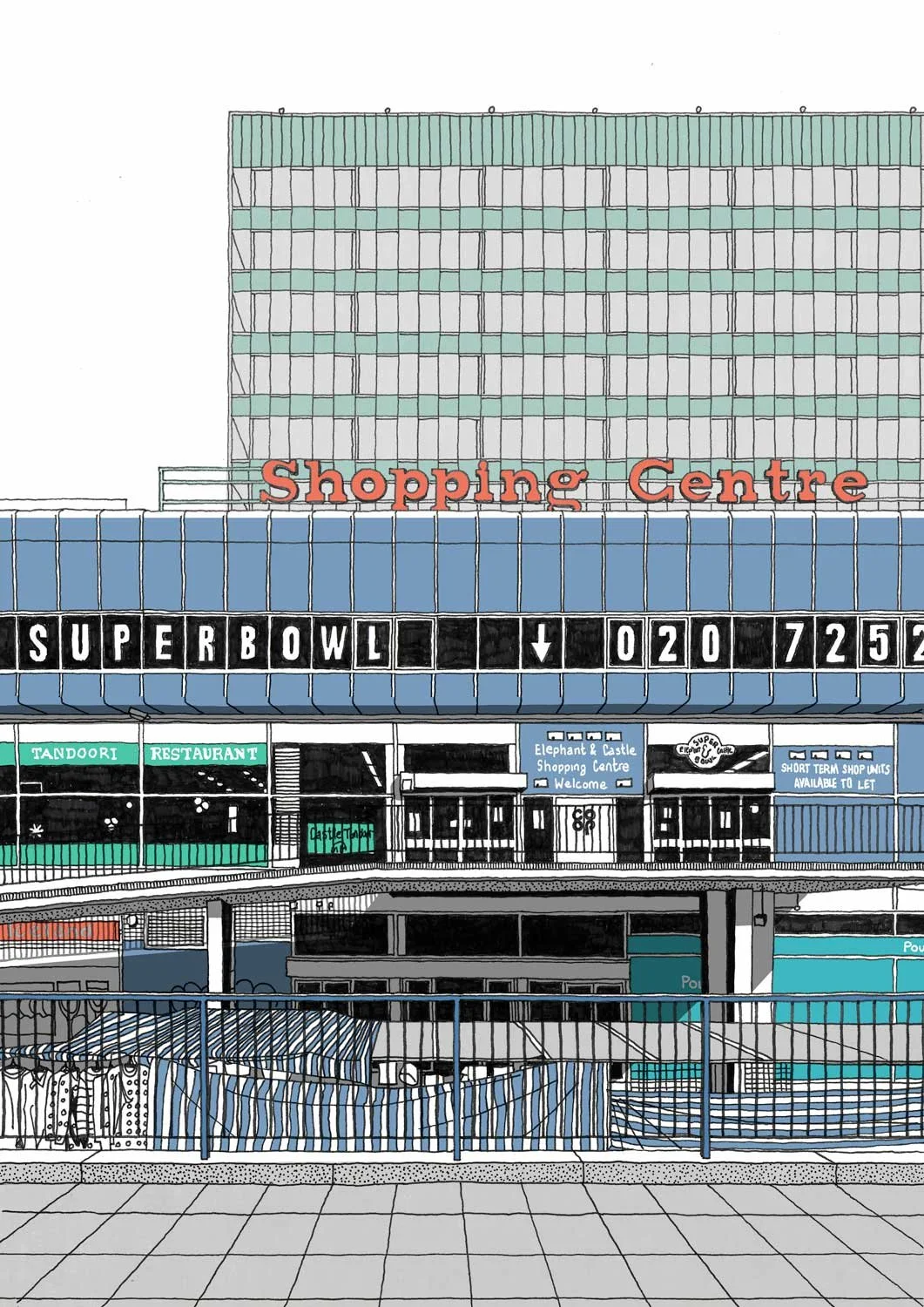
New Kent Road, Elephant and Castle, London SE1 6TE
METRO CENTRAL HEIGHTS, ELEPHANT AND CASTLE, SE1
Metro Central Heights, formerly Alexander Fleming House, was built in 1959-67 as the offices for the Ministry of Health by the architect and designer Ernö Goldfinger RA.
Converted into housing in 2002 and designated as Grade II* Listed in July of 2013.
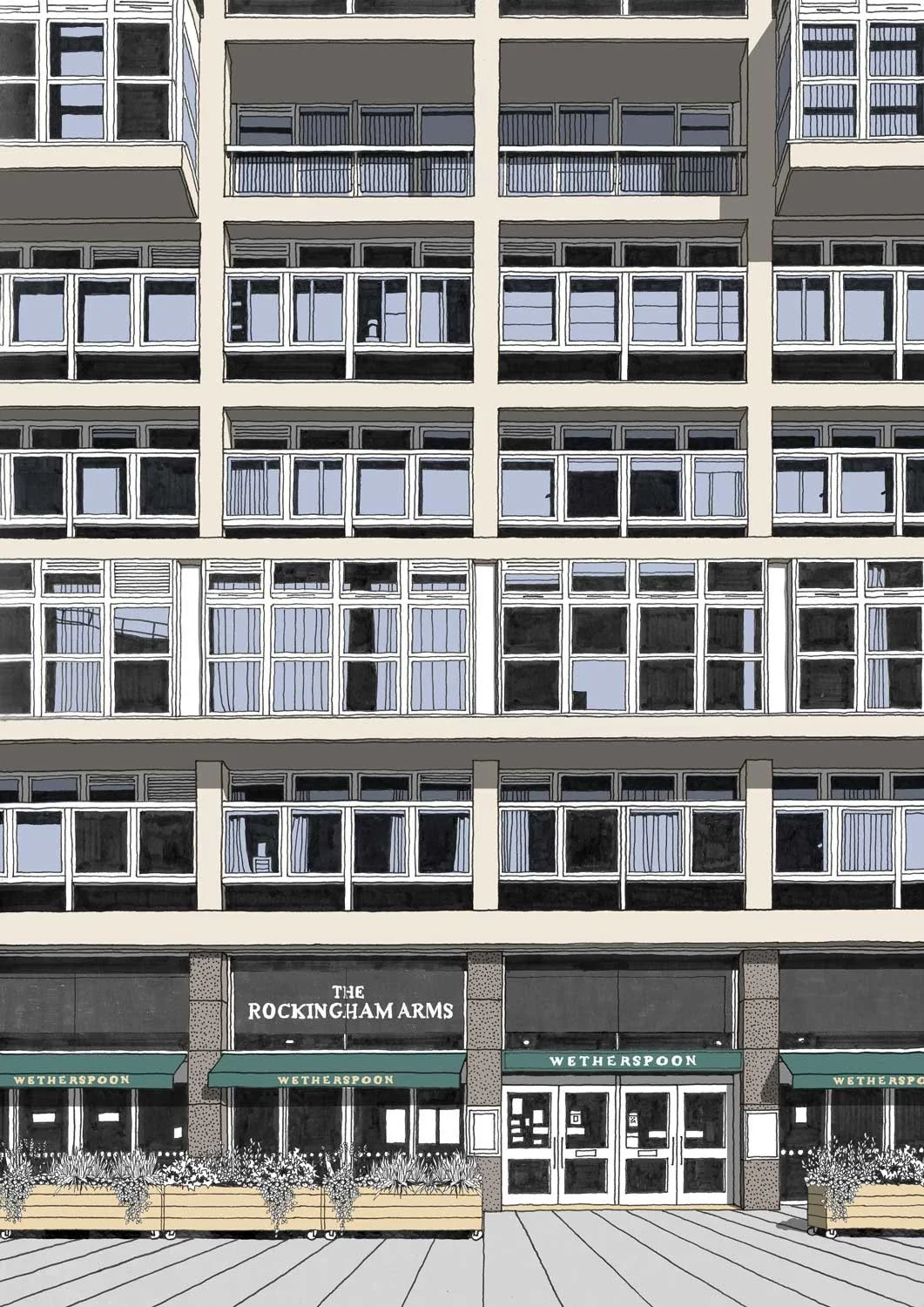
Metro Central Heights, 119 Newington Causeway, Elephant & Castle, London, SE1 6BX
PERRONET HOUSE, ELEPHANT & CASTLE, SE1
High density social housing designed by architect Sir Roger Walters KBE, commissioned by the Greater London Council and built in 1969 for Southwark Council.
It was one of the last mid twentieth century comprehensive redevelopments at the Elephant and Castle that had begun a decade earlier and included high rise commercial, educational and government establishments.
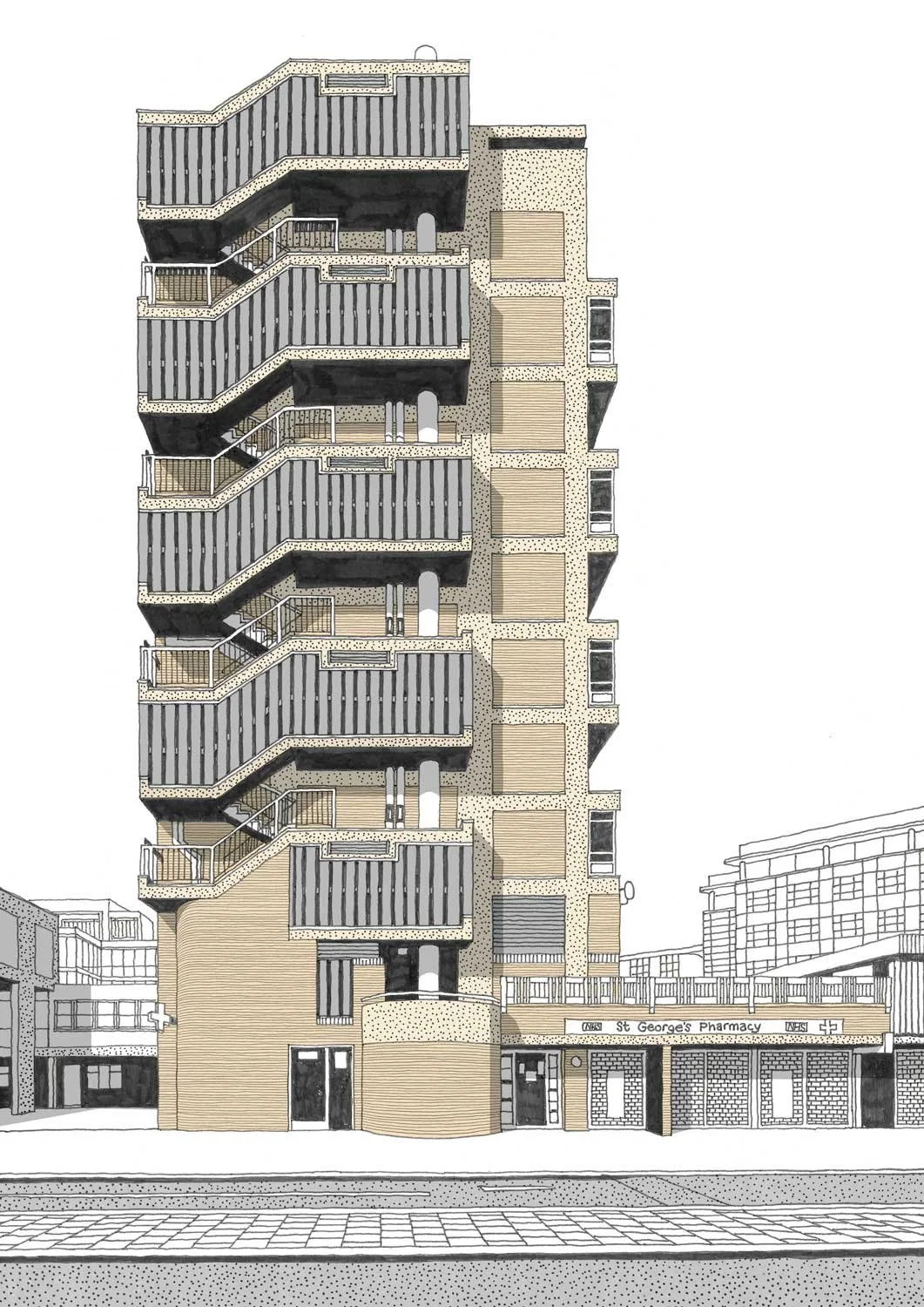
Perronet House, 44 Princess St, Elephant and Castle, London SE1 6JR
MEAKIN ESTATE, BERMONDSEY, SE1
Built in 1935 for the Metropolitan Borough of Bermondsey.

Meakin Estate, Rothsay Street, Bermondsey, London SE1 4QN
WESTLAKE, SILVERLOCK ESTATE, SOUTH BERMONDSEY SE16
Completed in 1979, by the London Borough of Southwark Architects’ Department under Hans Peter Trenton, the Silverlock Estate consists of numerous mid-rise blocks of flats between 4 and 6 storeys in height.
The blocks are constructed out of concrete with brick masonry facings. The length of Westlake creates an imposing frontage onto Rotherhithe New Road.

Westlake, Silverlock Estate, Rotherhithe New Road, London SE16 2BW
WENDOVER HOUSE, THE AYLESBURY ESTATE, WALWORTH SE17
Built between 1963 -77 the design of this large housing estate in south London, by the London Borough of Southwark Architects’ Department under Hans Peter Trenton, embraced concrete prefabrication, the separate circulation of pedestrians and traffic and generous access to sunlight and natural ventilation. Concrete maisonettes have dedicated garages along the ground floor, a communal stair leading up to deck access from where access to maisonettes above and below is gained.
Unfortunately many of these design principles have lead to the estate’s decline and it is therefore being slowly regenerated.

Wendover, Thurlow Street, Aylesbury Estate, Walworth SE17
BRAWNE HOUSE, KENNINGTON, SE17
Situated to the east of Kennington Park, the Brandon Estate was built in 1958 by the London County Council to designs by Edward Hollamby. At the time it was an attempt to regenerate ‘the decaying and lifeless south bank of the Thames’.
Brawne House, one of six 18 storey towers, shows a textural mix of bush hammered and precast concrete finishes, with strong horizontals and tripartite vertical patterns, along with a range of solid and glazed balconies.

Brawne House, Brandon Estate, Kennington, London, SE17 3PJ
LAIRD HOUSE, WYNDHAM ESTATE, SE5
The Wyndham Estate project was approved in two stages in 1964 and 1965 on land formerly occupied by bomb-damaged terraced housing in Camberwell. The estate saw the reconfiguration of the traditional road layout and the construction of five 21 storey tower blocks and three low-rise blocks of 30 flats aimed at elderly residents.
Laird House, one of five 21 storey towers on the Wyndham Estate. was designed by architect Colin Lucas for the Greater London Council in 1966. Similar tower designs were repeated on other estates around South London, including Wandsworth and Rotherhithe.

Laird House, Wyndham Estate, Camberwell SE5
1ST PLACE FAMILY HUB AT CHUMLEIGH GARDENS, SE5
The 1st Place Family Hub at Chumleigh Gardens is a masterclass in modern, child-centric architecture. Designed by the renowned Avanti Architects and opened in 2005, this purpose-built pavilion sits harmoniously within the leafy, therapeutic landscape of Burgess Park in Camberwell, South London. The building was born out of a successful grassroots campaign by local families who fought to have their children learn surrounded by nature rather than beneath an urban housing block.
Architecturally, the hub is celebrated for its low-profile, eco-conscious design that prioritises physical transparency and fluid boundaries. Influenced heavily by the Reggio Emilia educational approach, the built environment acts as a "third teacher," offering flexible, open-plan spaces flooded with changing natural light.
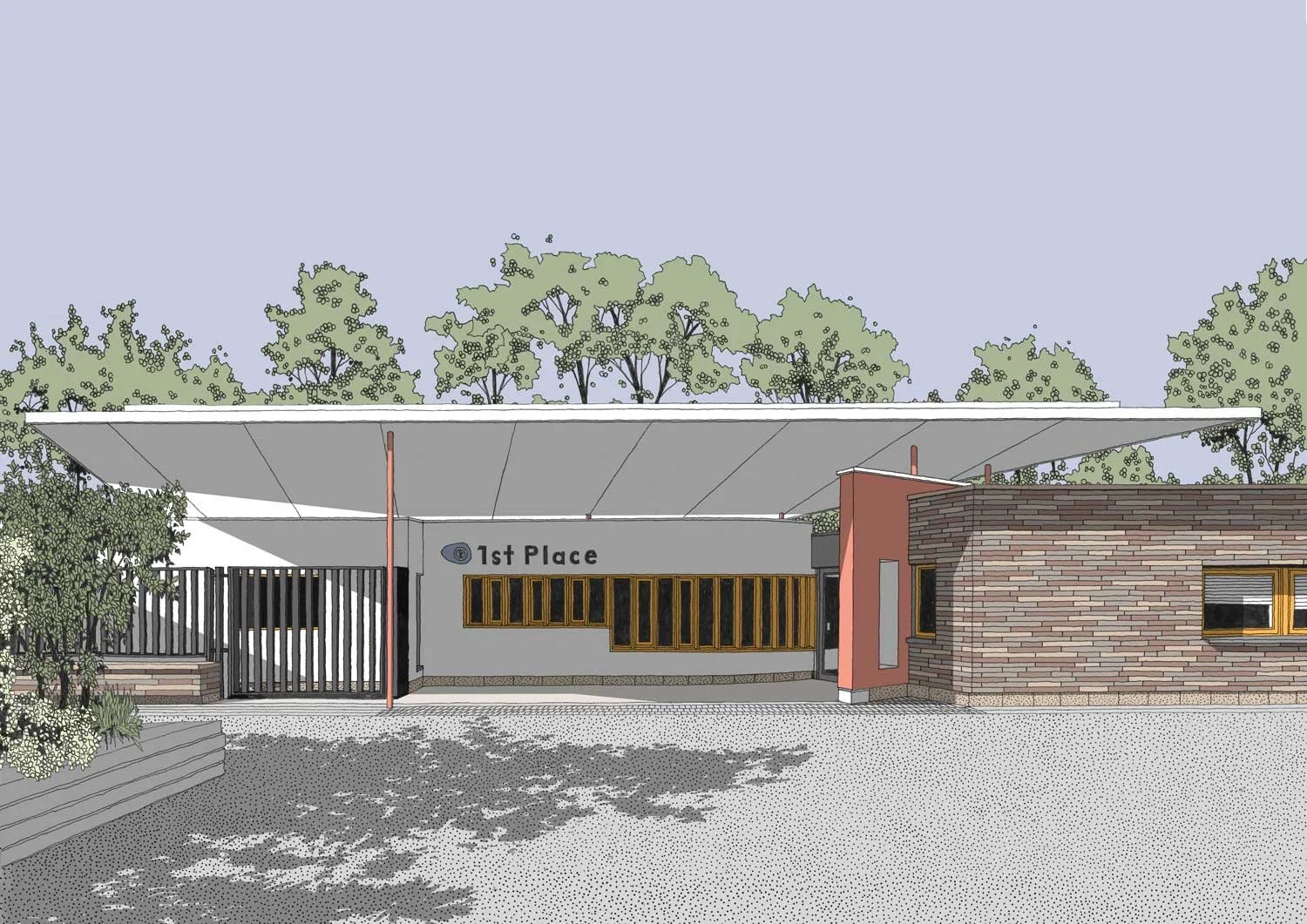
(Commissioned) 1st Place Family Hub at Chumleigh Gardens, Camberwell, London SE5 0RN
17 CAMBERWELL GREEN, CAMBERWELL SE5
An impressive turreted Grade II Listed corner building, built in 1899 in the Baroque Revival style as a branch of the London County Bank, now a doctors surgery.
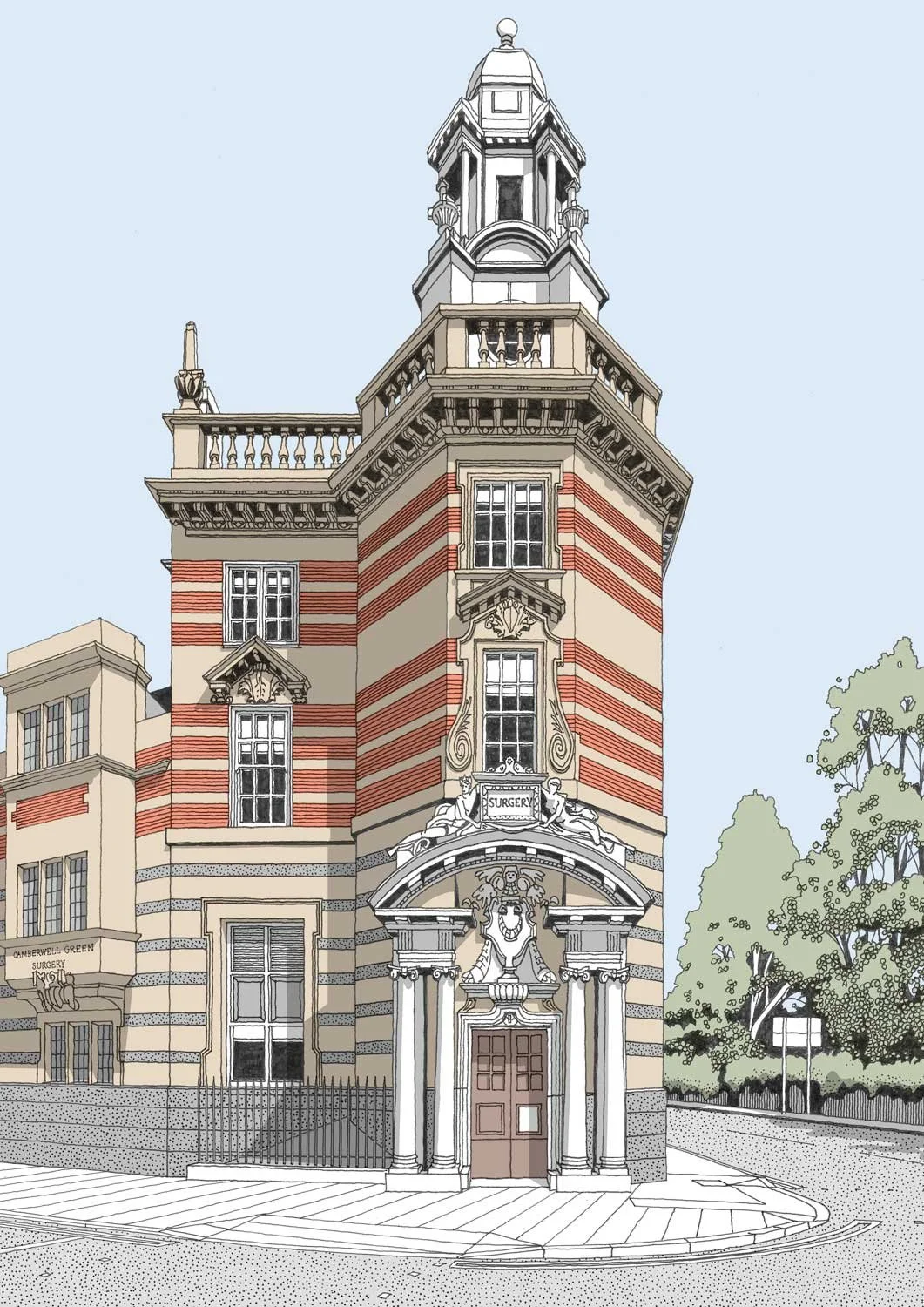
17 Camberwell Green, London SE5 7AF
SOUTHWARK REGISTER OFFICE, SE5
Southwark Register Office has records of all birth, death, marriage and civil partnership certificates registered in Southwark from 1837 to the present.
The building is one of three; now linked, houses dating circa1790. The entrance is flanked by fluted Tuscan columns and a decorative fanlight.

Southwark Register Office, 34 Peckham Road, Camberwell, London SE5 8QA
UAL CAMBERWELL COLLEGE OF ARTS, SE5
Camberwell College of Arts (formerly known as Camberwell School of Arts and Crafts) is a constituent college of the University of the Arts London, The college occupies a series of buildings in Camberwell dating back to 1891.
Shown here are two examples:
The Art school and gallery dating from 1896-8 by Maurice Adams. An exuberantly detailed Baroque frontage of brick and stone dressings, bandings and sculptured ornament.
The most recent studio shown here was built in 1964 and is an extreme example of British Brutalism. The building was recently refurbished and expanded by Stephen Marshall Architects in 2017.

UAL Camberwell College of Arts, 45-65 Peckham Road, London SE5 8UF

UAL Camberwell College of Arts, 45-65 Peckham Road, London SE5 8UF
CAMBERWELL GROVE, SE5
Camberwell Grove forms one of London’s most elegant and well-preserved row of Georgian and Victorian houses.
Seen here, A late eighteenth century Georgian terrace, grade 2 listed. These ones have concrete lintels over the windows and doors, which replaced brick arches after war damage.

Terraces on Camberwell Grove, Camberwell SE5
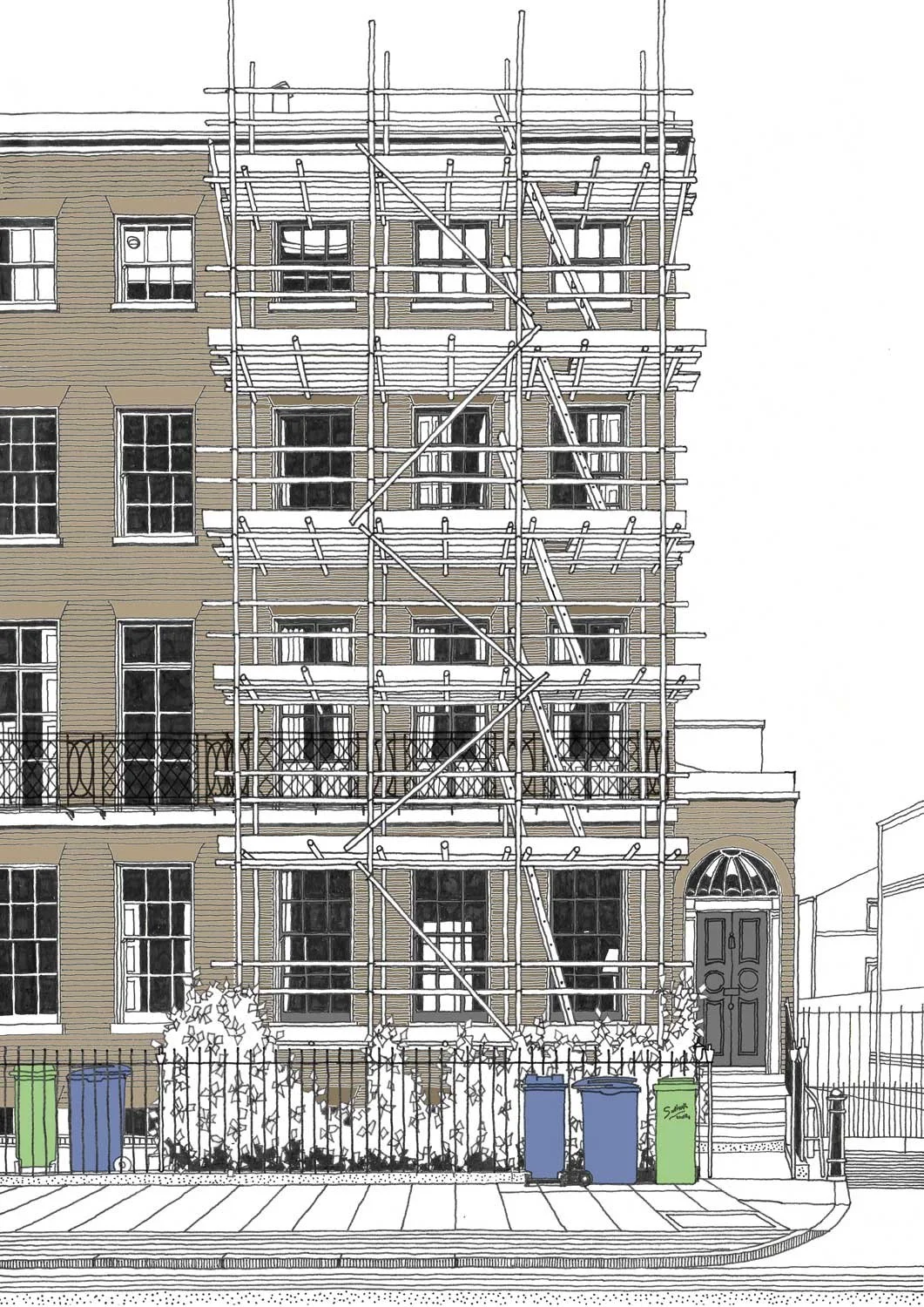
Scaffolding on Camberwell Grove, Camberwell SE5
RUSKIN PARK HOUSE, DENMARK HILL, SE5
Designed by Watkins Grey Architects around 1936-7, Ruskin Park House was initially intended as a private development. The misfortune of the developer’s insolvency and the outbreak of World War Two meant that the site was subsequently purchased by the London County Council in 1947 and the development was eventually completed and occupied by ‘higher rent’ tenants from 1954.
At Ruskin Park House the bay windows are a distinctive feature of this collection of 241 apartments.

Ruskin Park House, Champion Hill, SE5 8TH
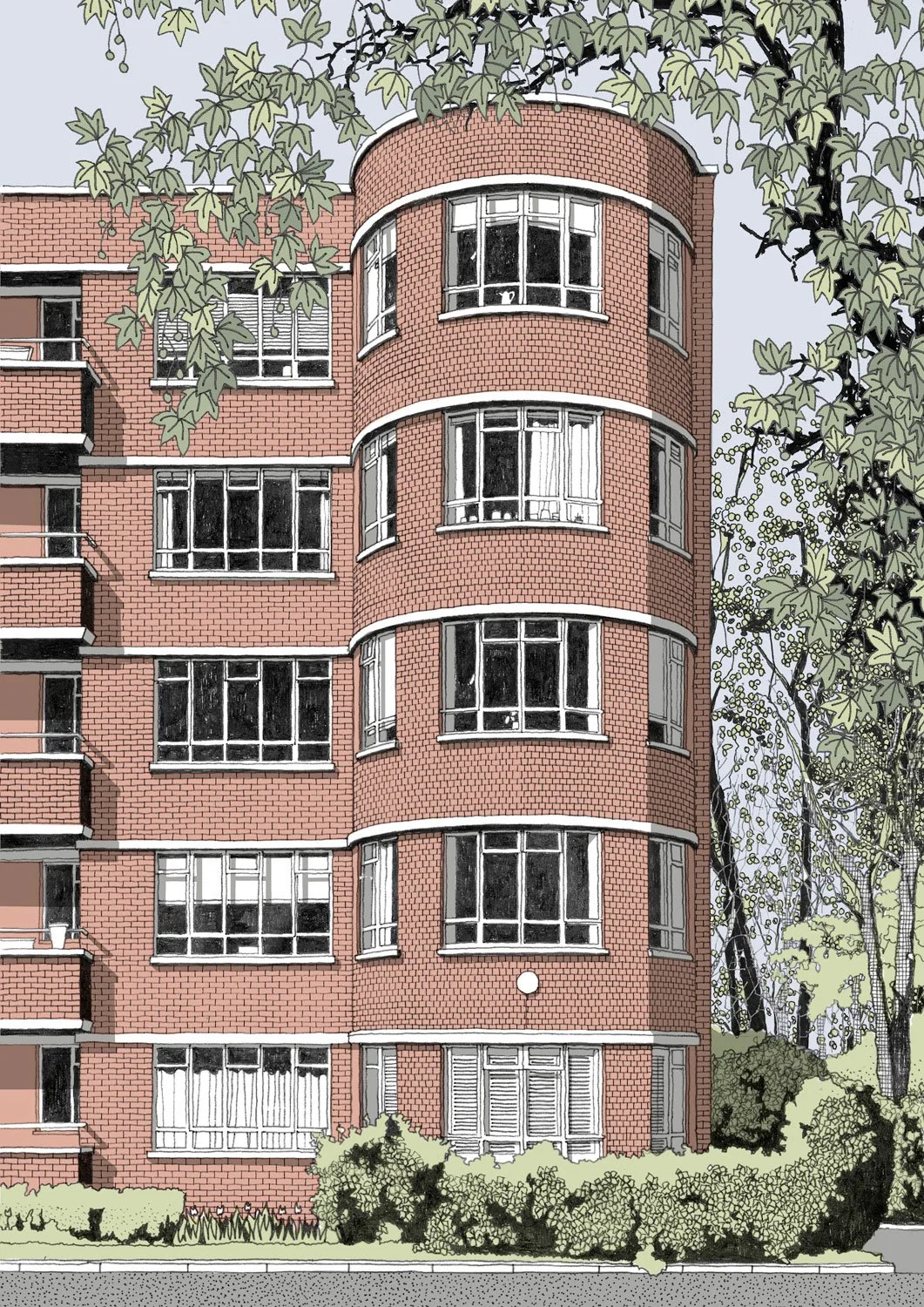
(Commissioned) Ruskin Park House, Champion Hill, SE5 8TL
TORRENS COURT, DENMARK HILL, SE5
After World War II the Camberwell Metropolitan Borough Council embarked upon a vigorous programme of home building. commissioning the Denmark Hill Estate in 1950 to provide 682 homes.
This six storey block of flats featured individual balconies accessed from the kitchens, useful for clothes drying.

Torrens Court, Blanchedownw, Denmark Hill Estate, London SE5 8HJ
95 PECKHAM ROAD, PECKHAM, LONDON SE15
A new tenement style mansion block designed by Peter Barber Architects and completed in 2020.
Located in a prominent location on the North side of Peckham Road in Southwark, the building’s stepped profile creates a sunny south facing roof terrace for each apartment.

95 Peckham Road, Peckham, London SE15 5FA
THE AYLESHAM CENTRE, PECKHAM, SE15
Shopping Centre, built in 1985 and replacing the Jones & Higgins department store.

The Aylesham Centre, Rye Lane, Peckham, London SE15 5EW
78A RYE LANE, PECKHAM SE15
Designed by the Southern Railway in-house architects in 1935, this building forms a cluster of deco buildings on Rye Lane that once contributed towards making Peckham south London’s premier shopping destination.
This particular art deco building, with its narrow, cluttered and dimly lit concourse leads to the impressively grand Peckham Rye Station behind. It looks destined to be demolished at some point to make way for a new public square to the station.

78A Rye Lane, Peckham, London SE15 4RY
KHAN’S, RYE LANE, PECKHAM SE15
Rye Lane developed into one of South London's major shopping destinations during the early part of the twentieth century.
This department store was originally called ’Holdrons’ and undoubtedly would have made an eye catching and progressive architectural statement with its magnificent art deco frontage. It is now occupied by Khan’s Bargains Limited, selling everything and anything that might be useful to the local community.

Khan’s Bargains Limited, 35 Rye Lane, Peckham, London SE15 4ST
LAMBROOK HOUSE, PECKHAM, SE15
Lambrook House, a linear 6 storey block facing Peckham High Street, containing 39 dwellings and forms part of the Clifton Estate.
Approved for construction in 1967.
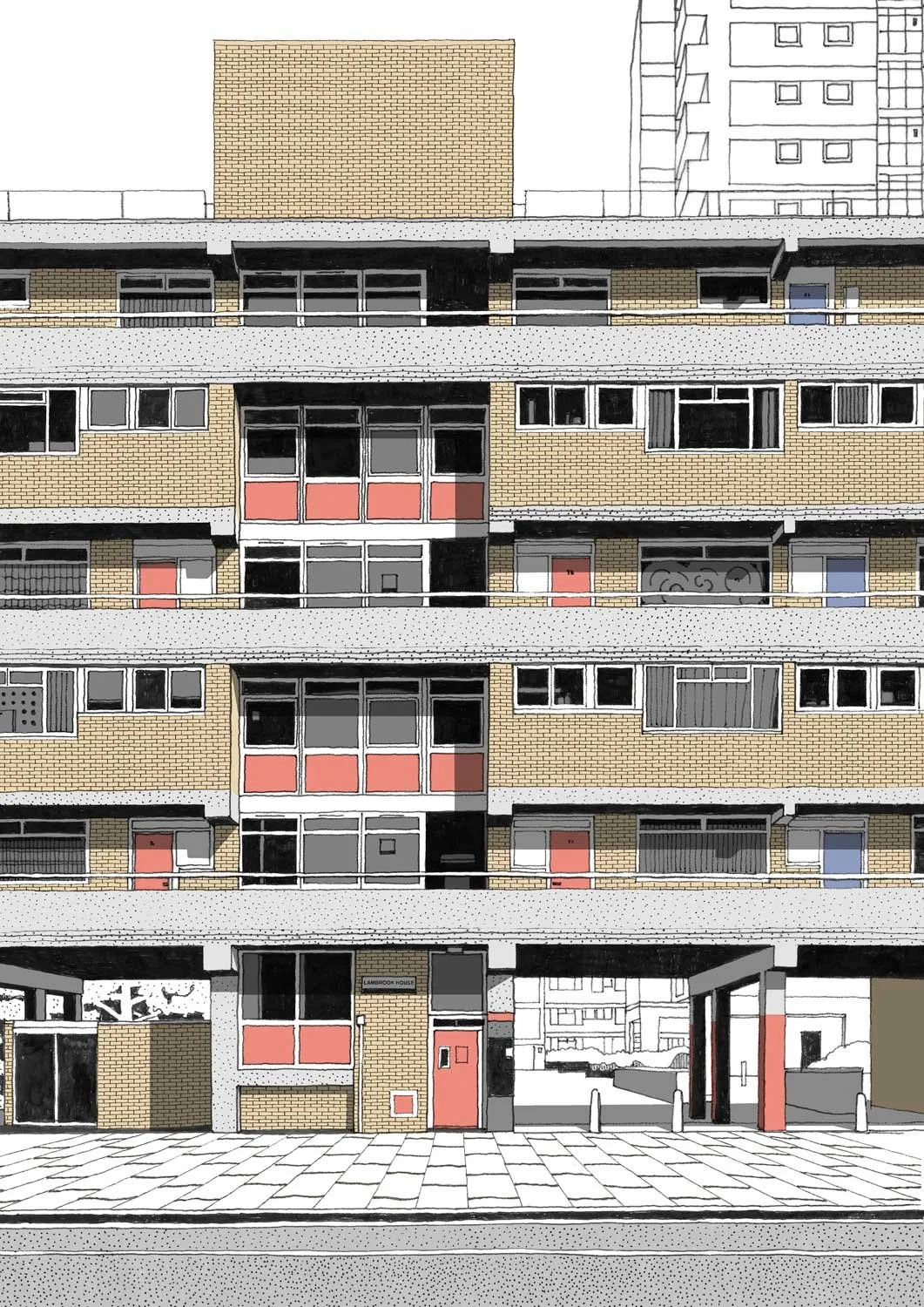
Lambrook House, 186 Peckham High Street, Peckham, London SE15 5EG
114 PECKHAM RYE, SE15
The Rye Apartments is a development of ten apartments in two buildings, overlooking Peckham Rye Park.
A facade of clay shingles wrap the buildings in a way that is monolithic and sculptural, whilst different-shaped windows interrupt the facade and a unifying concrete plinth to the buildings extends to form privacy fencing at street level.
The client, architect and main contractor are Tikari Works and the development was completed in 2020.

(Commissioned) 114 Peckham Rye, London SE15 4HA
MUNDANIA COURT, PECKHAM RYE, SE22
Mundania Court, a large art deco block of flats at the corner of Forest Hill Road and Mundania Road.
Although more streamlined than some more decorative Art Deco buildings, it has distinguishing characteristics that hark back to the 1930s movement: long horizontal lines, a smooth surface, curved Crittall windows a clean symmetrical design. The building’s architect and date of construction is unknown.
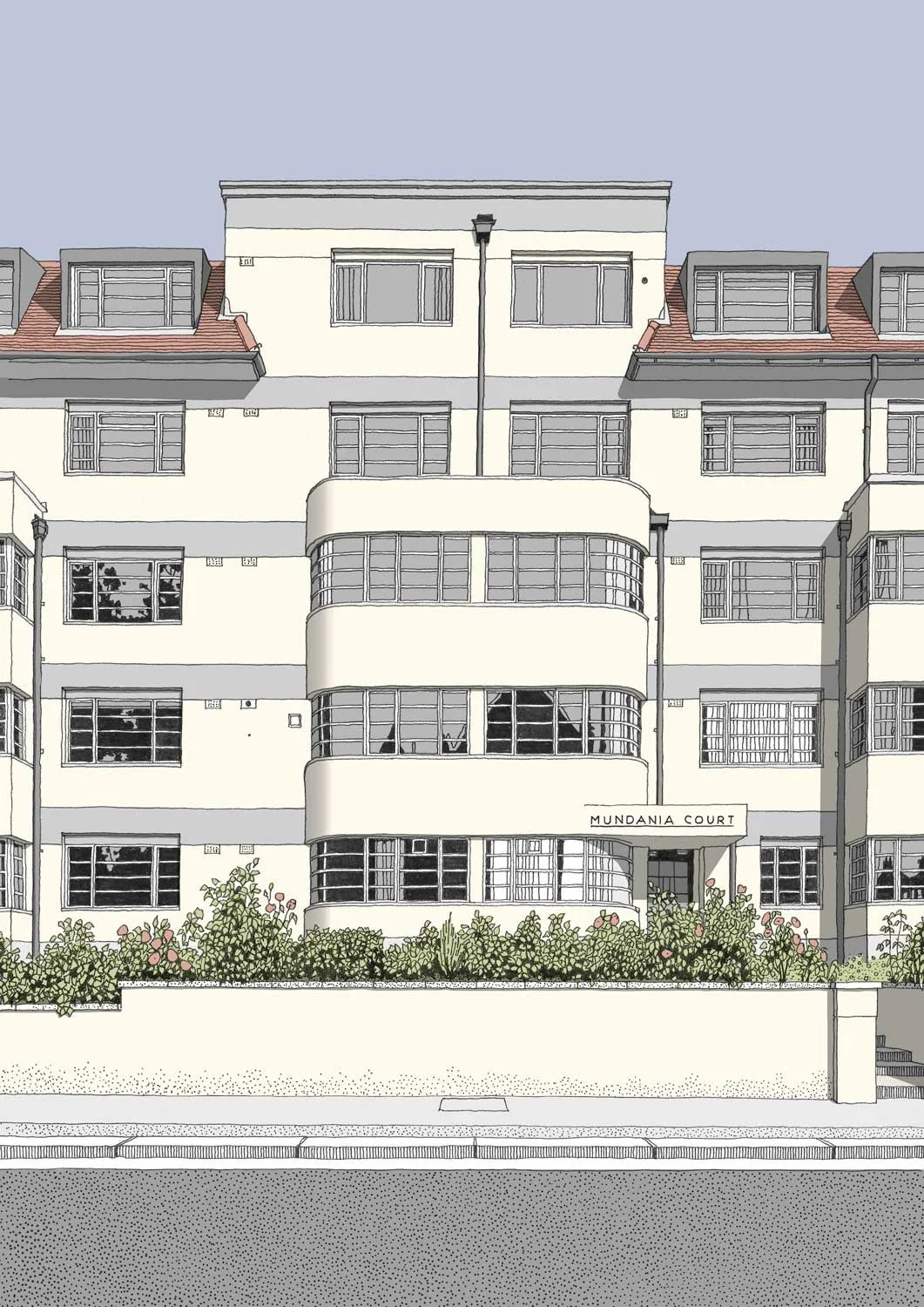
(Commissioned) Mundania Court, 43 Forest Hill Road, London SE22 0NQ
THE PIONEER CENTRE, PECKHAM, SE15
The Pioneer Health Centre was opened in Peckham in south east London in 1926 by Dr George Scott Williamson and Dr Innes Hope Pearse. Known as the ‘Peckham Experiment’, they sought to observe families in a typically diverse metropolitan community setting and to monitor the factors that contributed to human health.. The first phase of the project closed in 1929, but funding was then sought to build a larger centre that was more suitably designed for purpose. In 1935 the project moved to its new home - a purpose-built Modern building on St Mary’s Road.
Designed by Sir Owen Williams, at the centre of the building is a large swimming pool, surrounded by rooms with large areas of glazing that allowed plenty of natural light into the building.. Originally some of these windows were retractable and could be fully opened to circulate fresh air into the building.
Since its innovative approach did not fit well with the newly formed National Health Service the building closed in 1950 and it later transferred to council ownership, operating as a leisure centre and Southwark Adult Education Institute. Listed grade 2* in 1972, the building was sold In the 1990’s and converted into apartments.

The Pioneer Centre, Frobisher Place, St Mary’s Road, Peckham, London SE15 2EE
FORMER DULWICH COMMUNITY HOSPITAL, SE22
Opened in April 1887 and designed by local architects Henry Jarvis & Son, the hospital reflected latest thinking in medical practice, where the high patient mortality rate could be reduced with good ventilation and sunlight.
The hospital had a symmetrical pavilion layout consisting of a large central administrative block (illustrated here) flanked by two ward blocks on either side that linked by an open walkway acting as a spine. The Nightingale wards were designed as narrow blocks with tall windows at regular intervals along both sides to allow cross-ventilation.

Former Dulwich Community Hospital, East Dulwich Grove, London SE22 8PT
DAWSON’S HEIGHTS, SE22
Ladlands, part of a large social housing estate of nearly 300 flats that sits on top of Dawson’s Hill in Dulwich. Designed by Kate Macintosh and built between 1964 and 1972, the ziggurat-style brick scheme forms a dramatic landmark in South London.
The varied height of the blocks, rising to twelve storeys at their central peak, ensures that every flat receives sunlight even in deepest midwinter, that two thirds of the flats have views in both directions and all have views north towards the city.

Ladlands, Dawson’s Heights, Overhill Road, Dulwich, SE22 0PP