
LONDON BOROUGH OF TOWER HAMLETS
WHITECHAPEL GALLERY, WHITECHAPEL, E1
Founded in 1901 to 'bring great art to the people of the East End of London', the Whitechapel Gallery occupies a distinctive Art Nouveau style building designed by Charles Harrison Townsend.
Rachel Whiteread's commission for the facade of the building, ‘Tree of Life’, was unveiled in June 2012.

Whitechapel Gallery , 77-82 Whitechapel High Street, London E1 7QX
FOURNIER STREET, SPITALFIELDS E1
An early eighteenth century terrace, forming part of an exceptional group of Georgian houses.
The area was developed by Charles Wood and Simon Michell between 1718 and 1728. The houses were developed to a higher standard than previous residential developments in the area and, although intended as domestic houses, many were occupied or partially occupied by industry. Silk-weaving occupied the uppermost floors for the best light for the looms - hence the development of the highly glazed lofts in these houses.
Grade 2 listed.

17 Fournier Street, Spitalfields, London E1 6QE
WATNEY MARKET, SHADWELL, E1
Since the late 19th century Watney Street Market in Shadwell has offered East Enders food, clothing, and community. Being so close to the river, the market also attracted dockers, warehouse workers, sailors, and their families.
Watney Street was bombed in multiple locations during the Blitz of 1940-41 and in 1967 the street was flattened to make way for a new marketplace and high-rise house development. The project took over a decade to complete due to construction delays and during the redevelopment, the market’s activity declined substantially.
Tower Hamlets Council identified Watney Market as a crucial shopping centre in 1991. This marked the beginning of a series of regeneration projects, which is still a work progress.

Watney Market, Watney Street, Shadwell, London E1 2PR
MAYNARDS QUAY, SHADWELL BASIN, WAPPING, E1
These waterfront flats at Maynards Quay are part of the Shadwell Basin redevelopment commissioned by the London Docklands Development Corporation.
The scheme was built between 1986 and 1988 to designs by MacCormac Jamieson Prichard and Wright. The design incorporates historical references and draws on the architecture of Victorian docks with arches inspired by the Albert Dock in Liverpool.
Grade II listed in April 2018.
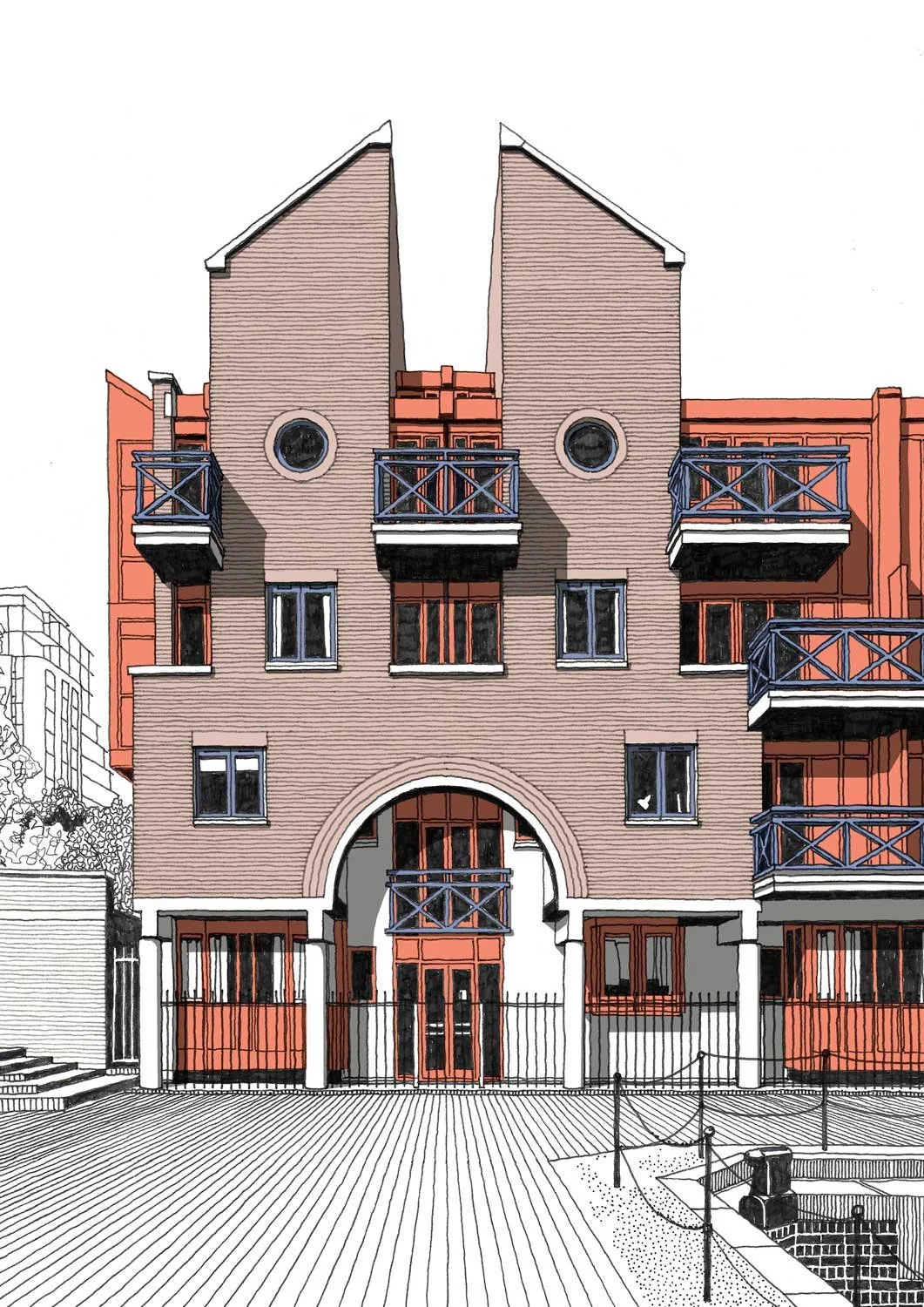
Maynards Quay, Shadwell Basin, Wapping, London E1W 3RY
SANDFORD HOUSE, SHOREDITCH E2
The Boundary Street Estate was built between 1894-1900 after the London County Council had taken control over social housing in London in 1889 - it was one of the earliest social housing schemes built by a local government authority.
The estate spirals outwards from Arnold Circus, a central circus and Sandford House, a grade II listed five storey mansion block, has a modest but dignified curve and embellishments.
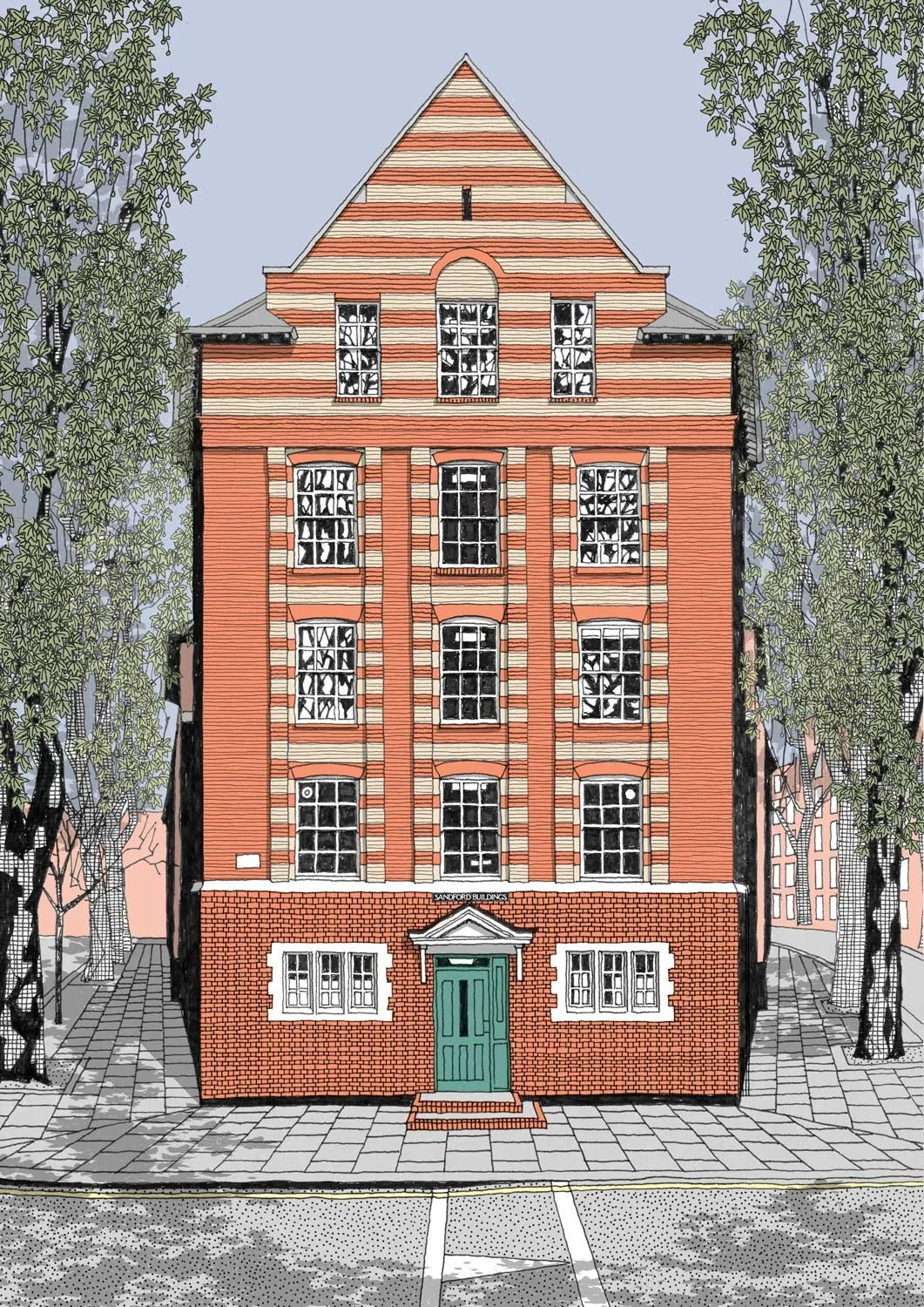
Sandford House, Arnold Circus, Shoreditch, London E2 7JT
JAMES HAMMETT HOUSE, DORSET ESTATE, BETHNAL GREEN, E2
The Dorset Estate was a designed by Skinner, Bailey & Lubetkin and completed in 1957.
Lubetkin’s use of large concrete rectangular slabs on the exterior of the building creates a decorative pattern. It reflected a style of Modernism that would soon be overtaken by the undecorated Brutalist style, which would dominate the design of council housing.

James Hammett House, Ravenscroft Street, Bethnal Green, London, E2 7QJ
CRANBROOK ESTATE, BETHNAL GREEN, E2
Built in 1955-1966 and located on nearly 17 acres of slum-cleared land between Old Ford and Roman Road at the south-west corner of Victoria Park, Cranbrook Estate was one the largest housing redevelopments of its time.
Putueaux House is one of the six higher blocks are named after towns from around the world that Bethnal Green is twinned.
Designed by Francis Skinner, Douglas Bailey and Berthold Lubetkin. Lubetkin was a Russian émigré architect who pioneered modernist design in Britain in the 1930s.

Puteaux House, Mace Street, Bethnal Green, London E2 0RF
TREVELYAN & SULKIN HOUSE, GLOBE TOWN, E2
Trevelyan and Sulkin House; designed by Denys Lasdun in 1952 and completed in 1958, are two eight storey tower blocks arranged in a butterfly plan. The blocks are built in a cluster style, where-by several blocks protrude from a central service shaft.

Trevelyan House, Morpeth Street, Globe Town, London E2 0PY

Sulkin House, 45 Knottisford Street, Globe Town, London E2 0PR
POPLAR TECHNICAL COLLEGE, POPLAR, LONDON E14
The college was established by the London County Council as the School of Marine Engineering and Navigation and dates from 1906. It was designed by W E Riley and the London County Council architects department.
It consists of a Portland stone faced elevation with a restrained use of Classical-Renaissance orders and ornament to dress the principal openings. The first floor almost semi-circular windows have finely dressed voussoir arches and are articulated by coupled engagelboric columns rising from sill course. the main entrance to the right consists of a rosette studded gadrooned architrave with an over-door light framed by well carved putti (also known as chubby male children! ) standing on dolphins.
The building now houses Tower Hamlets College and is Grade II listed.
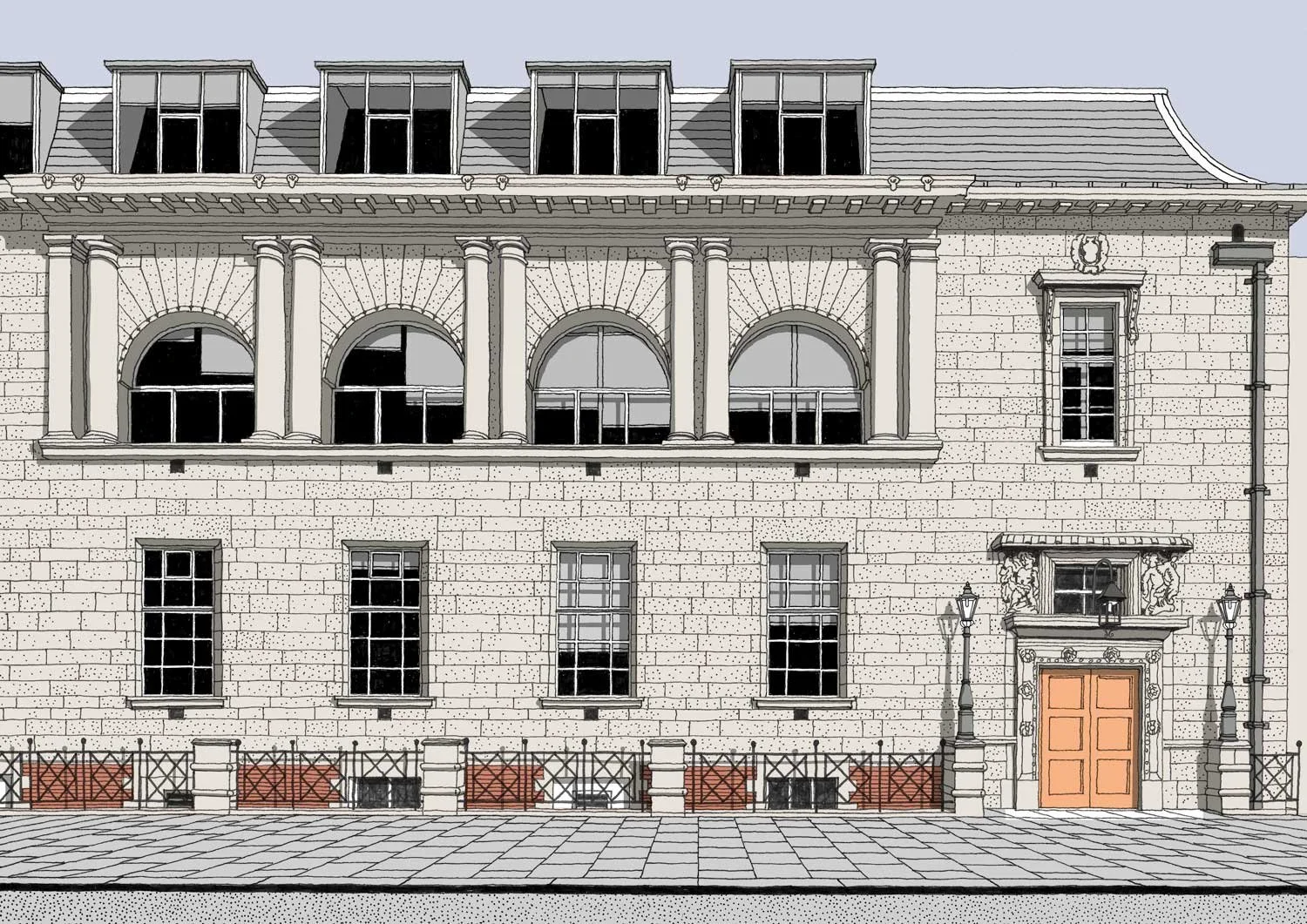
(Commissioned) Poplar Technical College, (New City College) 112 Poplar High Street, London E14 0AF
ONE PARK DRIVE, WOOD WHARF, E14
A residential skyscraper situated in the south west corner of Wood Wharf, within the Canary Wharf financial estate on the Isle of Dogs, London.
Designed by Swiss-based architecture firm Herzog & de Meuron and completed in 2022, it is the ninth-tallest building in the United Kingdom at 205 metres tall.
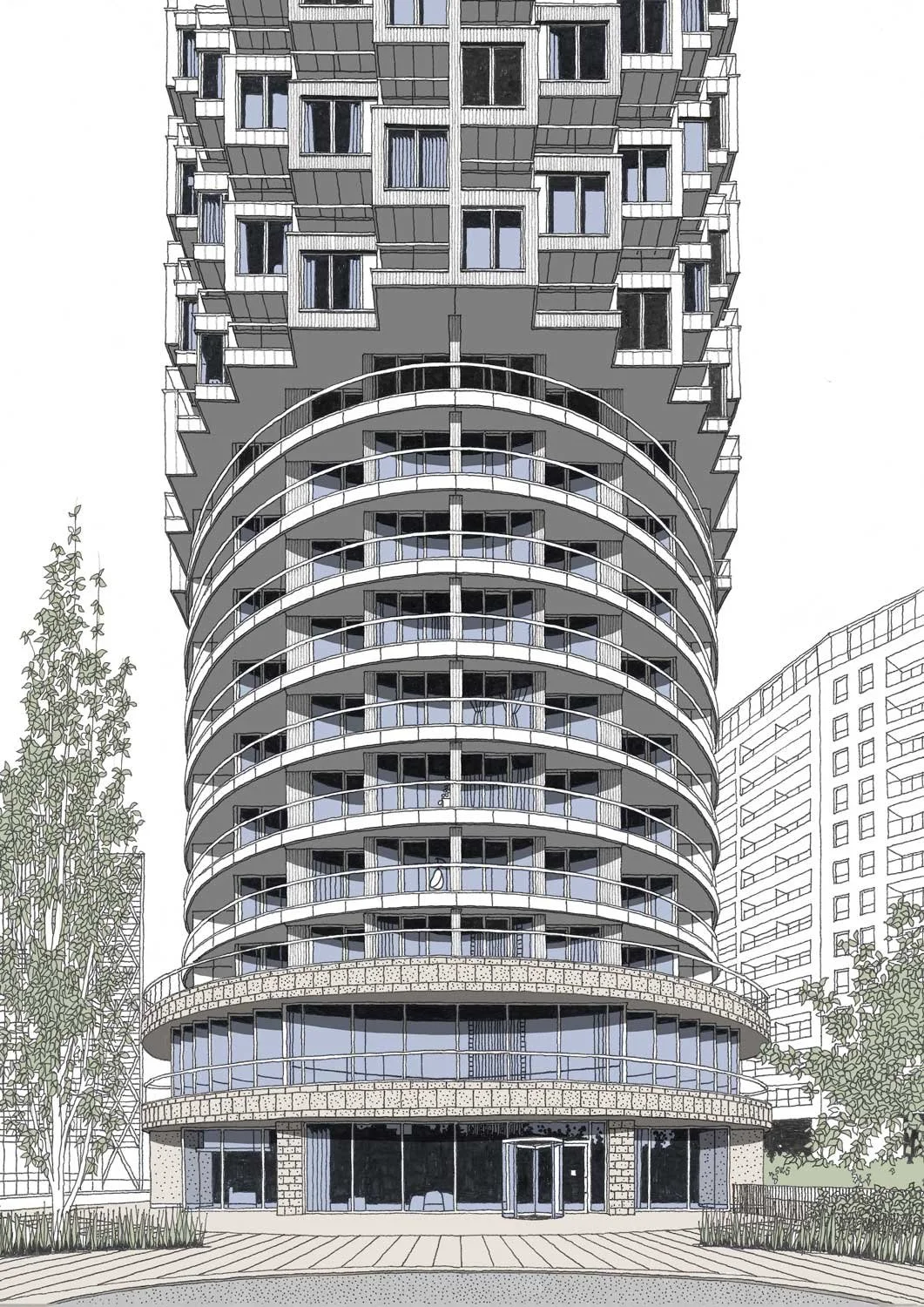
1 Park Drive, Wood Wharf, Isle of Dogs, London E14
CHRISP STREET MARKET CLOCK TOWER, POPLAR E14
The clock tower was conceived as part of Chrisp Street Market, a pedestrianised shopping precinct and open-air market place, designed in 1949 by Frederick Gibberd as the commercial centre of the new Lansbury estate and a key element of the Live Architecture Exhibition held as part of the Festival of Britain.
It is a striking example of early post-war architecture and a primary example of the aesthetic which became known as ‘Festival style’.

Market Square, Chrisp Street, Poplar, Tower Hamlets, London, E14
ROBIN HOOD GARDENS, POPLAR, E14
Designed in the late 1960’s by Alison and Peter Smithson and completed in 1972, this major housing scheme consisted of two long linear blocks with homes spread across ‘streets in the sky’, one at 10 storeys (shown here) the other at 7.
An unsuccessful attempt to get a listing status in 2009 unfortunately means that the whole estate is now being redeveloped - the 7 storey block has now been demolished.

Robin Hood Gardens (I), Poplar, London E14

Robin Hood Gardens (II), Poplar, London E14