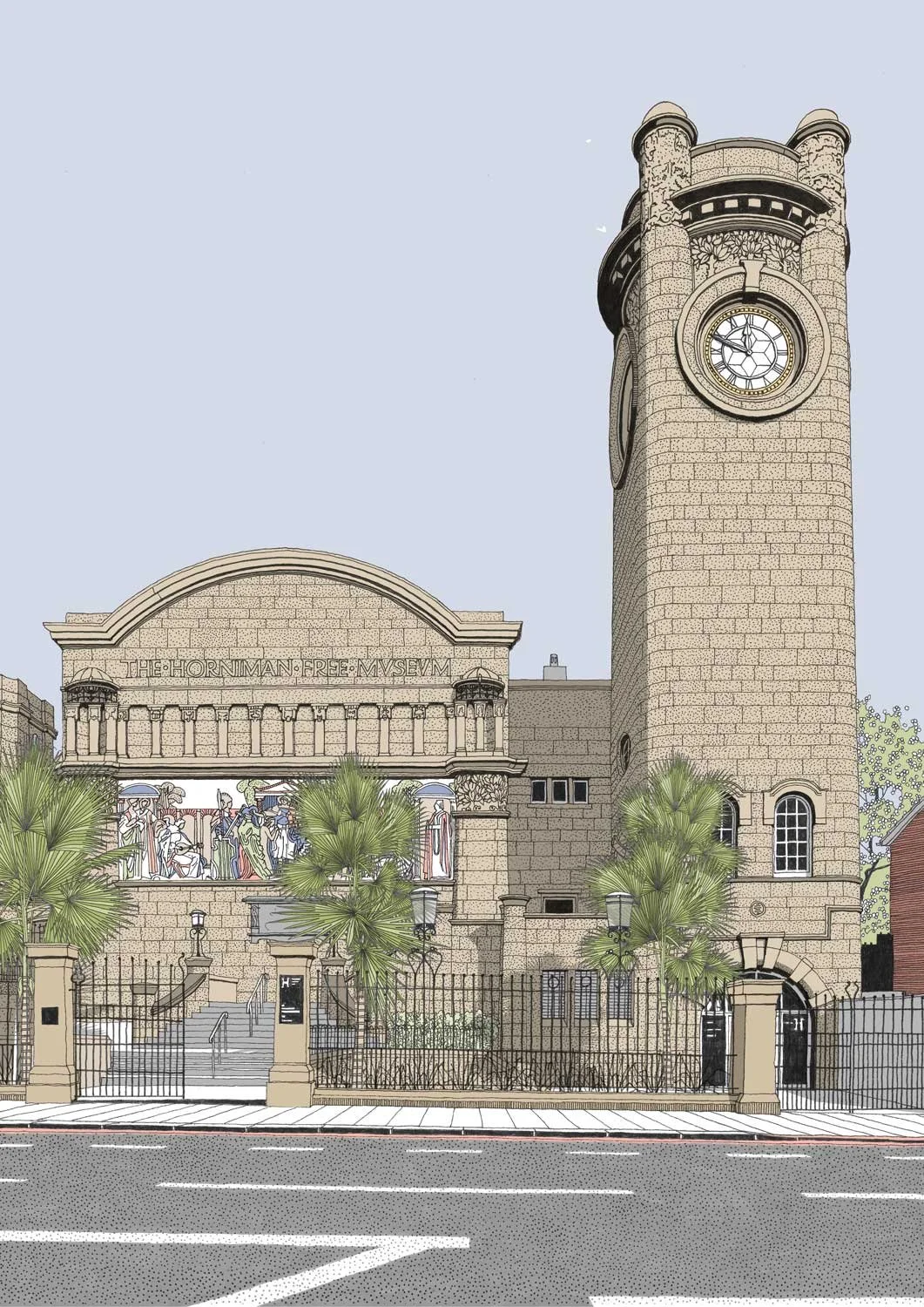
Horniman Museum, 100 London Road, Forest Hill, London SE23 3PQ

from £65.00
Size:

Illustration by Andrew Cadey

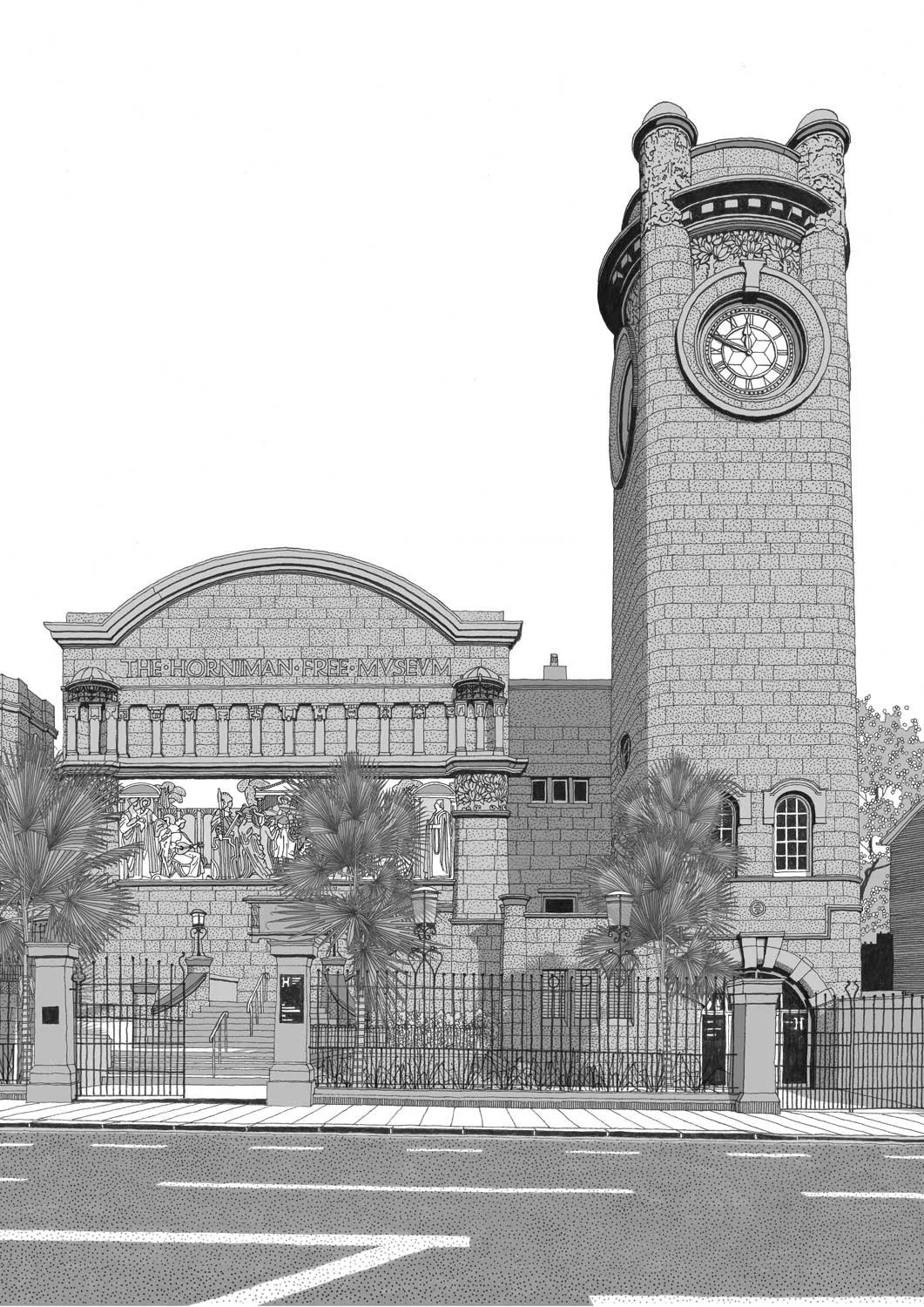
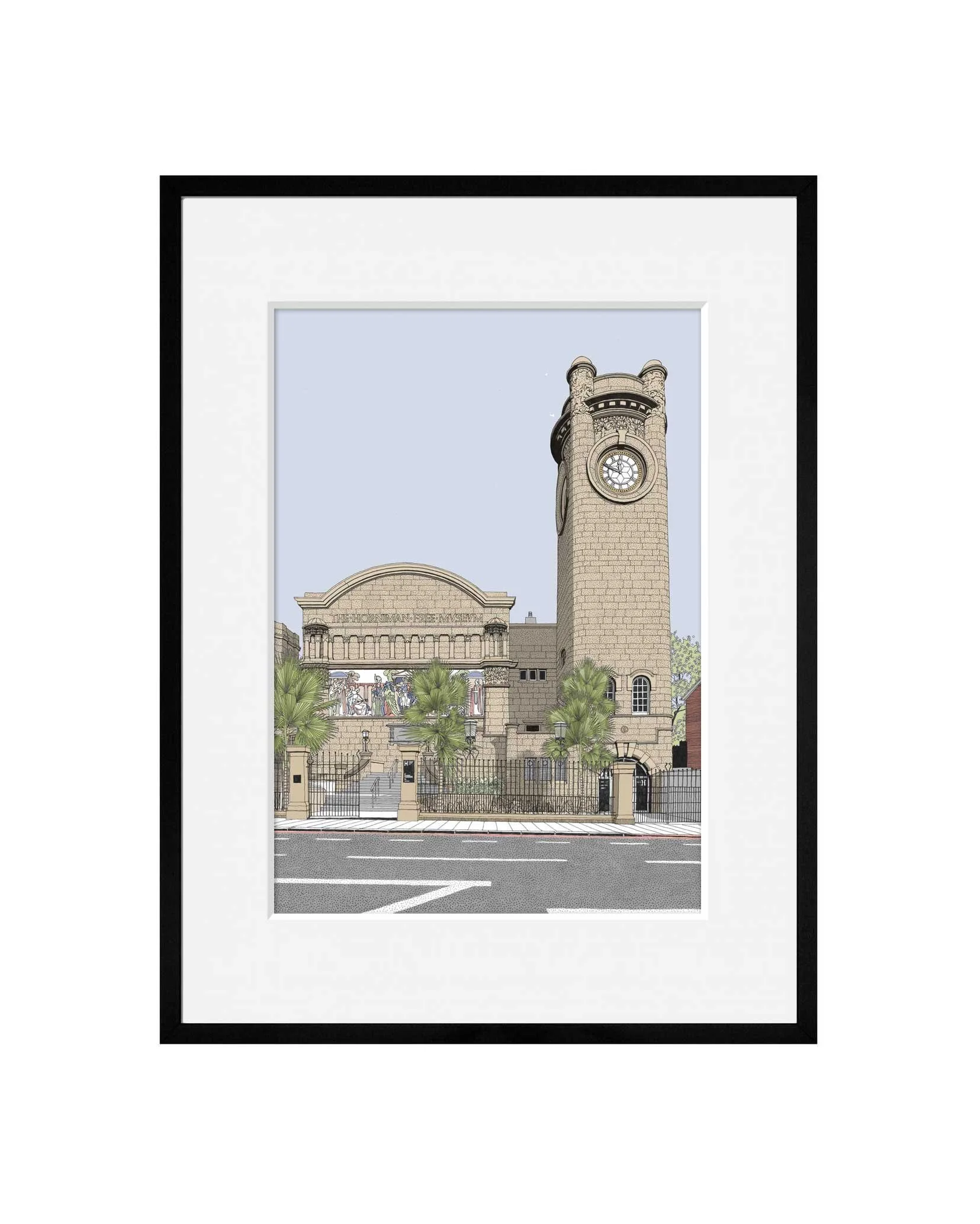
The Horniman Museum was founded in 1901 by Frederick John Horniman who had inherited his father's Horniman’s Tea business, which by 1891 had become the world's biggest tea trading business. The proceeds from the business allowed Horniman to indulge his lifelong passion for collecting, which after travelling extensively had some 30,000 items in his various collections, covering natural history, cultural artefacts and musical instruments.

The museum was built from 1898-1901 at a cost of about £40,000 and was designed by Charles Harrison Townsend (also architect to the Whitechapel Gallery). It has both an Arts and Crafts and Art Nouveau influences, incorporating a tree motif and Romanesque arches. Unique to the Horniman is Robert Anning Bell’s mosaic “Humanity in the house of circumstance” and the Clocktower. The Clocktower, with its rounded edges, is meant to evoke the natural world, and to reflect Frederick Horniman’s desire that the collections, Gardens and buildings be unified in one theme.

Its unique style has made the Horniman a landmark in South London.

Limited first edition print run of 20

Illustration by Andrew Cadey

The Horniman Museum was founded in 1901 by Frederick John Horniman who had inherited his father's Horniman’s Tea business, which by 1891 had become the world's biggest tea trading business. The proceeds from the business allowed Horniman to indulge his lifelong passion for collecting, which after travelling extensively had some 30,000 items in his various collections, covering natural history, cultural artefacts and musical instruments.

The museum was built from 1898-1901 at a cost of about £40,000 and was designed by Charles Harrison Townsend (also architect to the Whitechapel Gallery). It has both an Arts and Crafts and Art Nouveau influences, incorporating a tree motif and Romanesque arches. Unique to the Horniman is Robert Anning Bell’s mosaic “Humanity in the house of circumstance” and the Clocktower. The Clocktower, with its rounded edges, is meant to evoke the natural world, and to reflect Frederick Horniman’s desire that the collections, Gardens and buildings be unified in one theme.

Its unique style has made the Horniman a landmark in South London.

Limited first edition print run of 20

Product Details

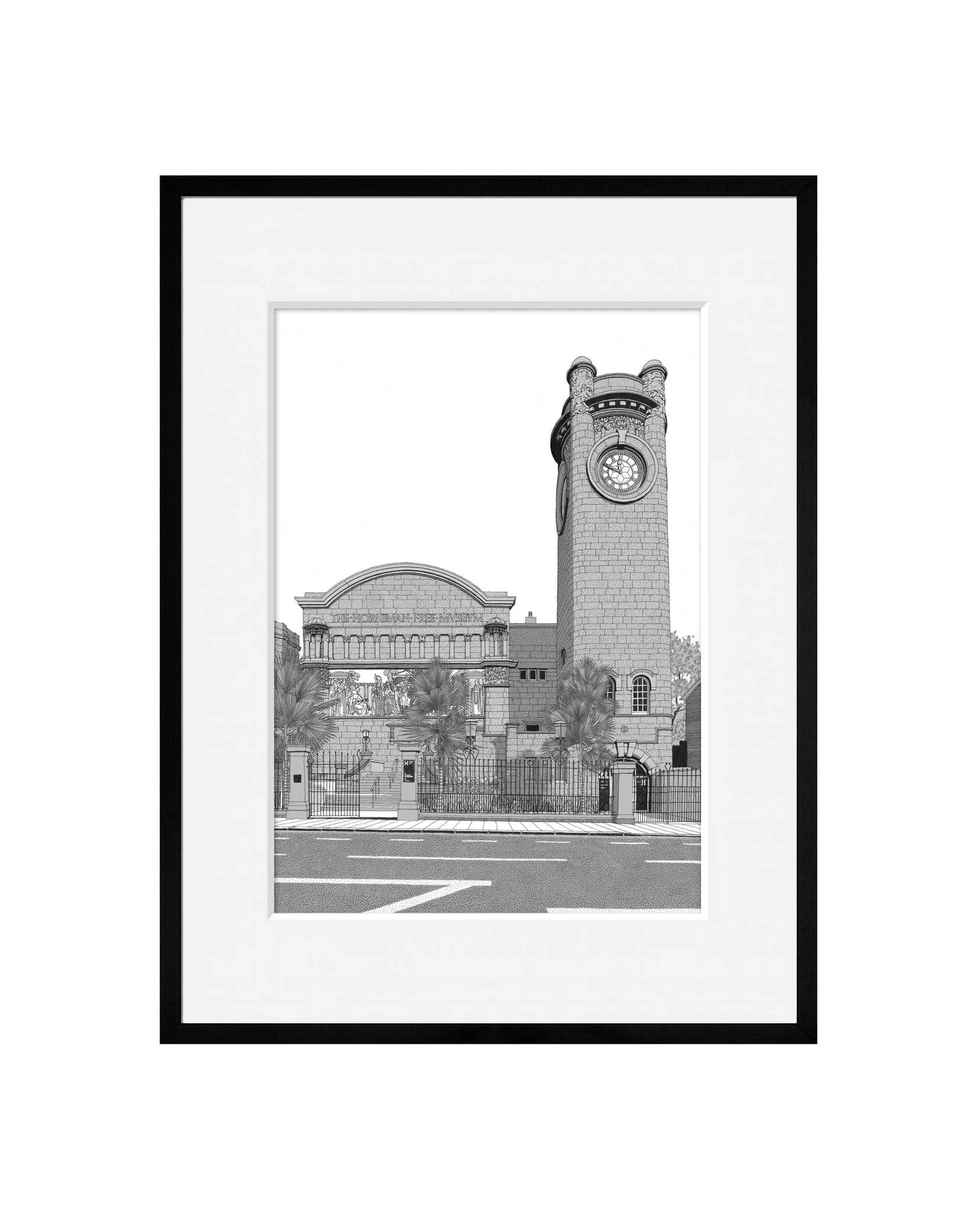
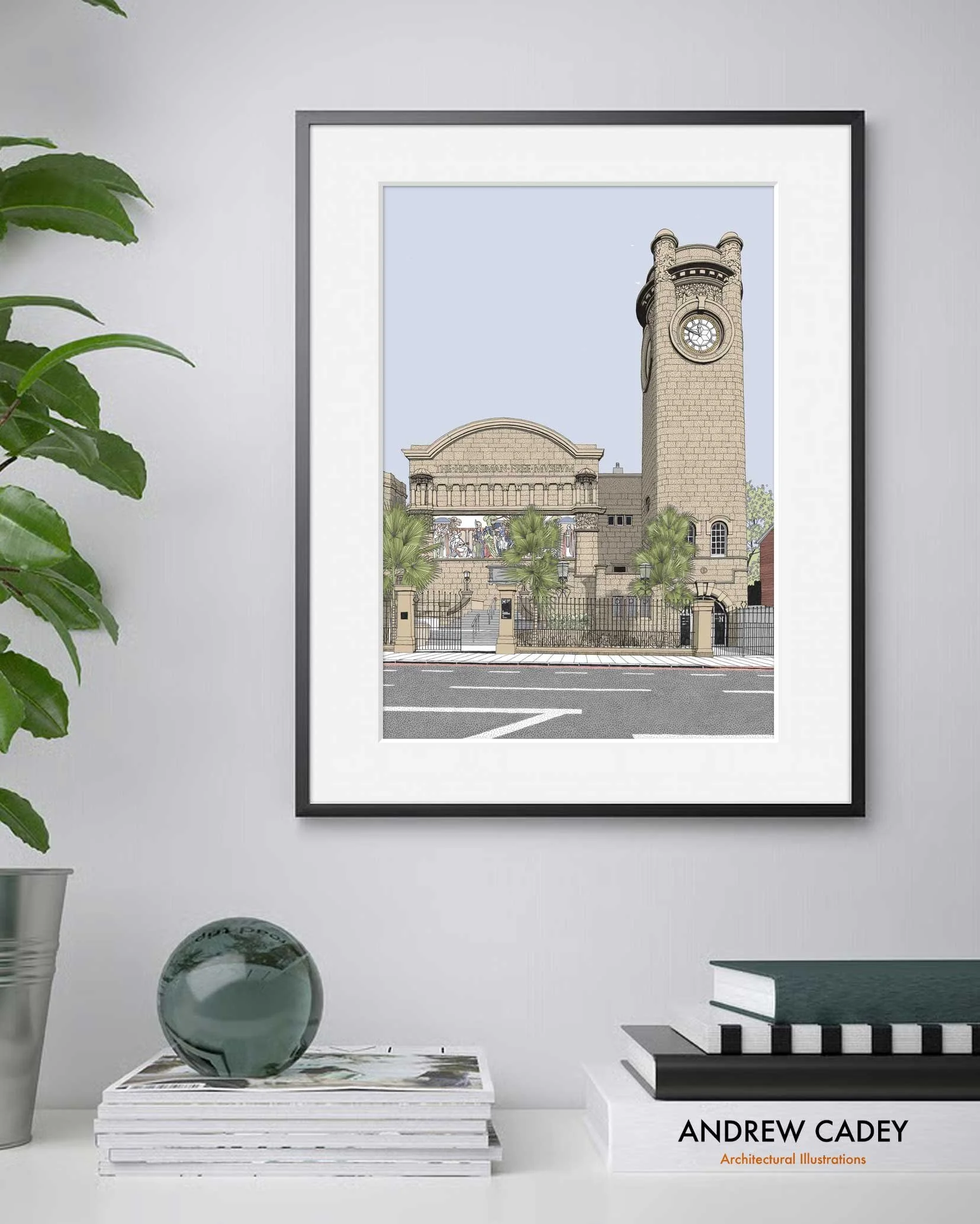
Print: Printed on 240gsm Alpha Cellulose paper with a clean white base and a smooth matt surface and acid free. (Titled, signed and numbered in pencil on the reverse)

Mount: High quality ‘ice white’ picture mount with precision cut bevelled edge and a card backing board with printed label. All card is acid free, conservation quality white core, ph neutral board 1.4mm thick