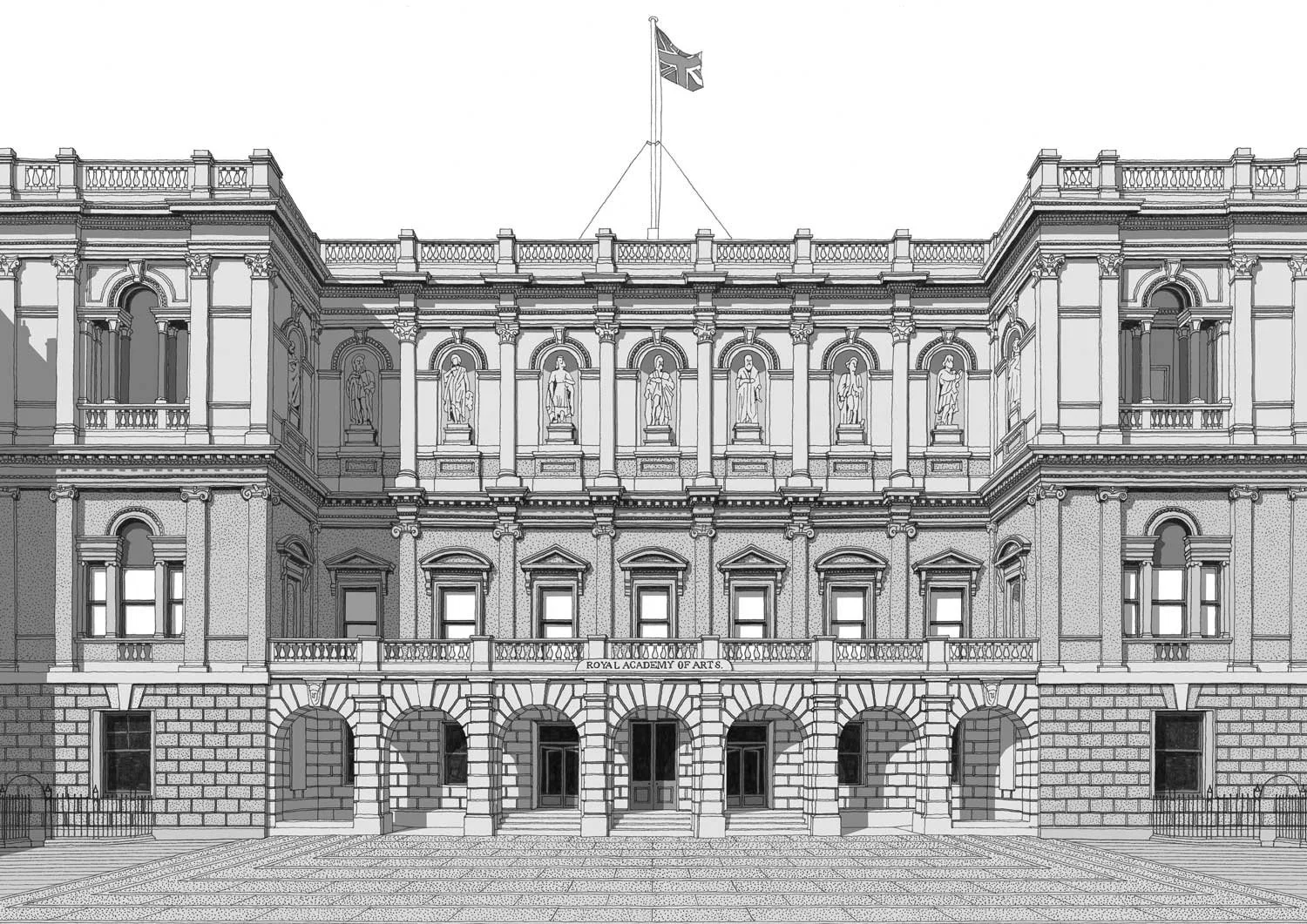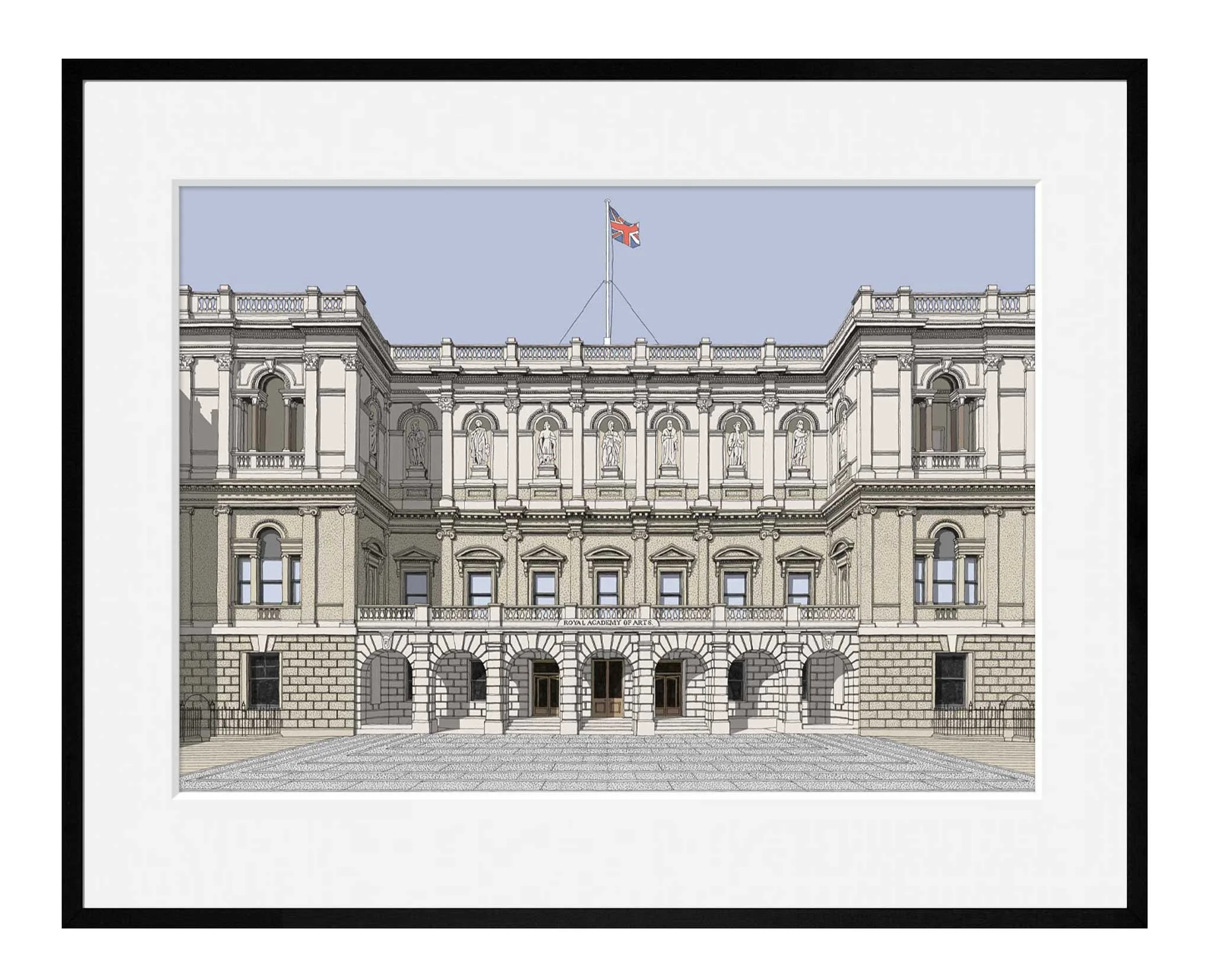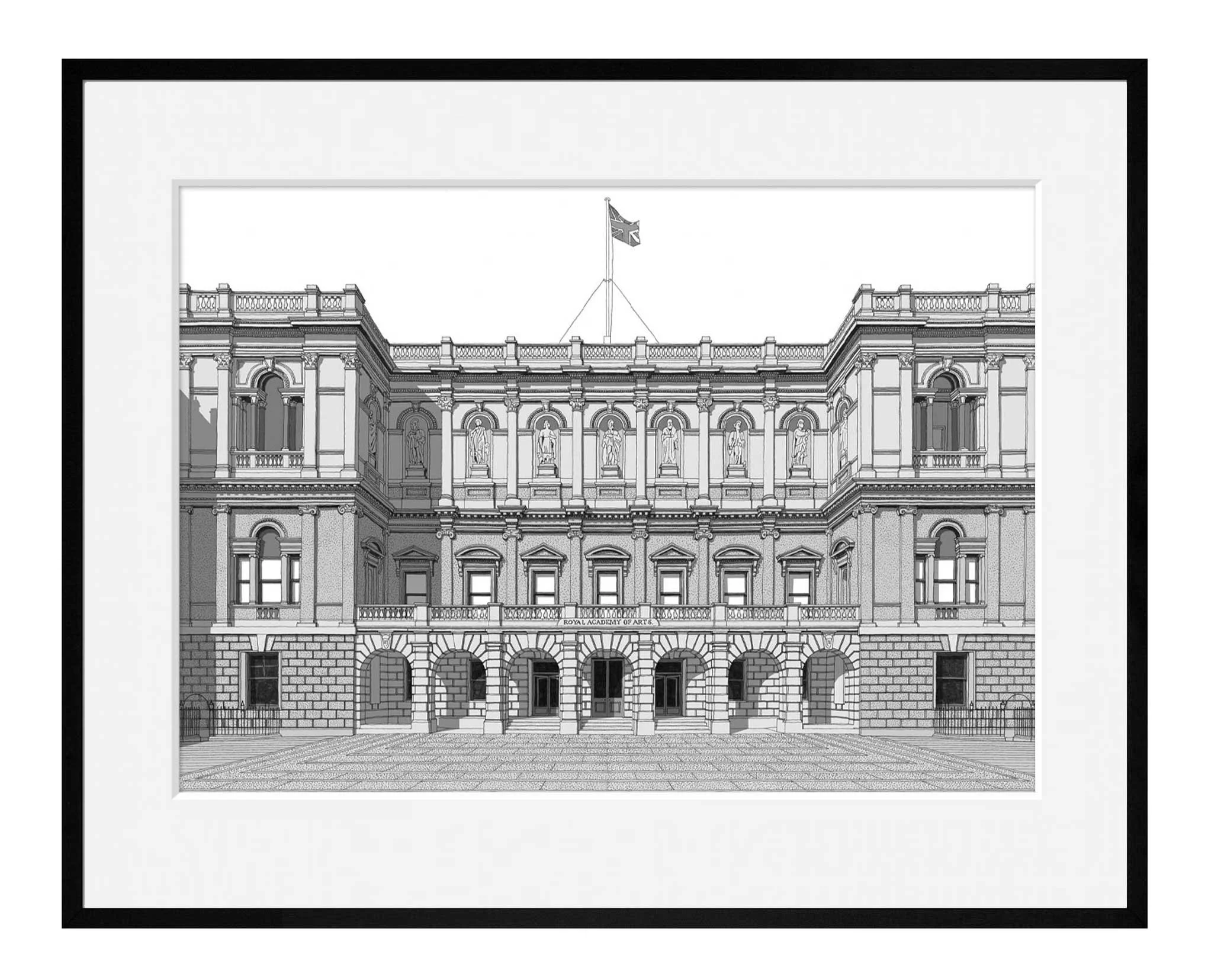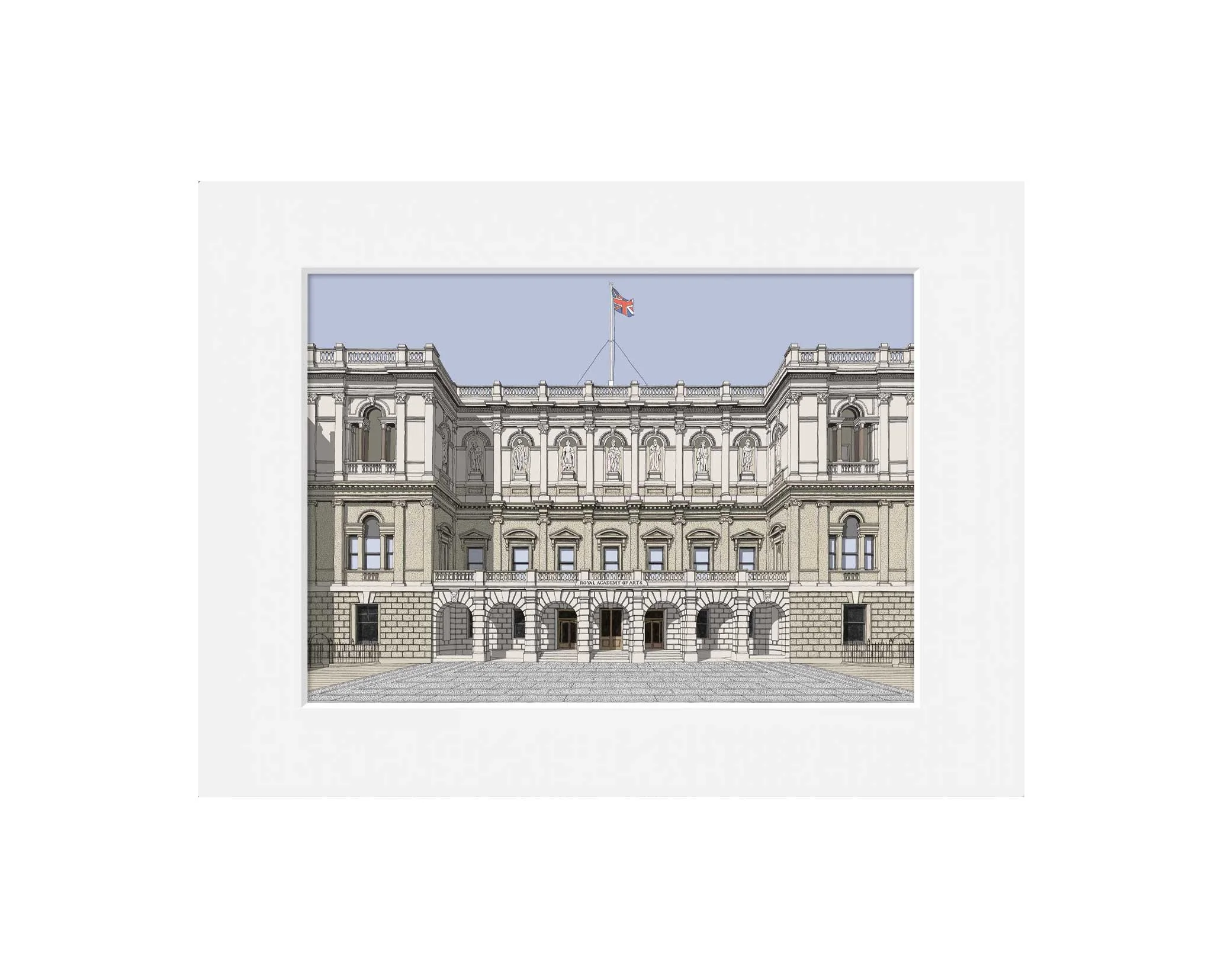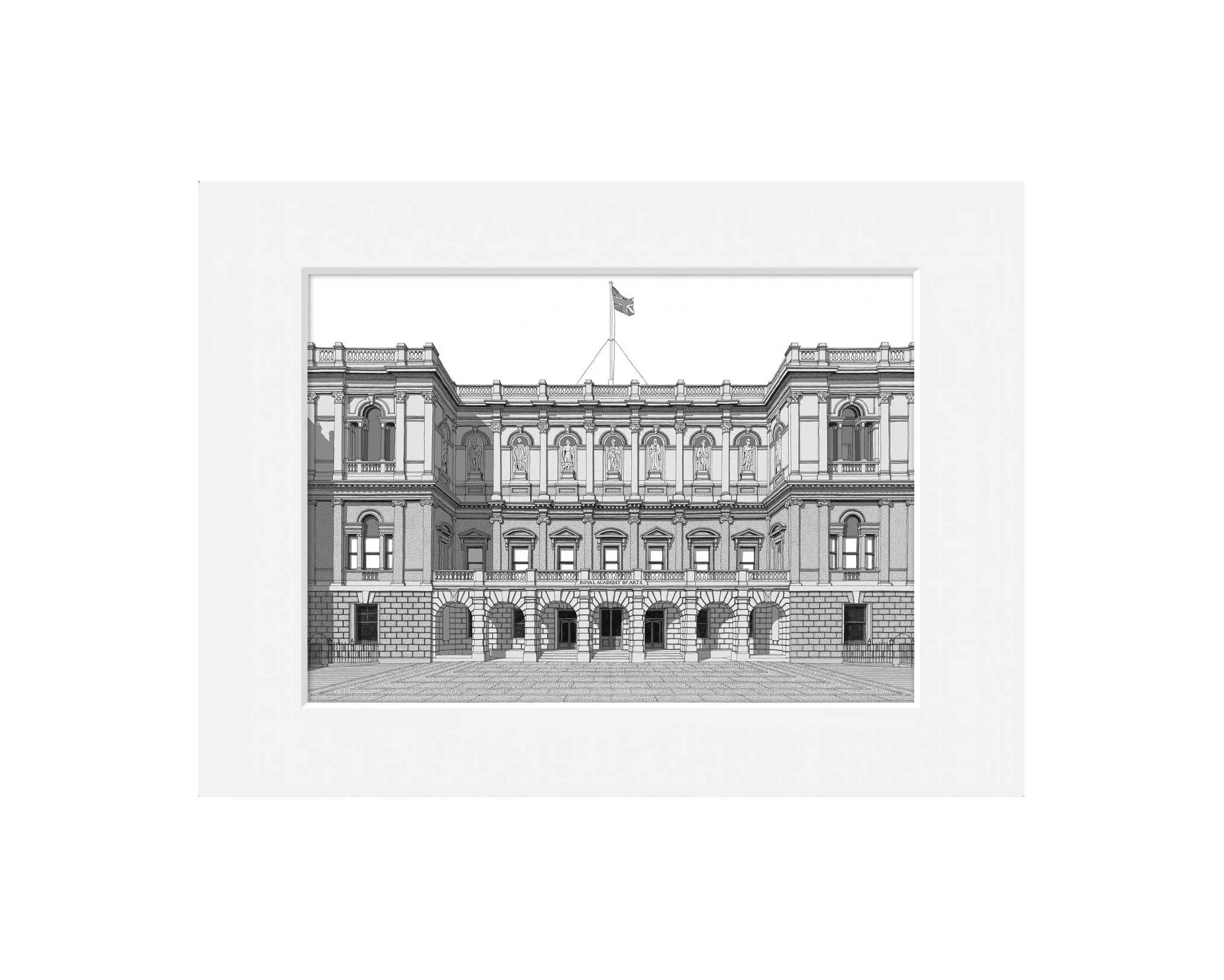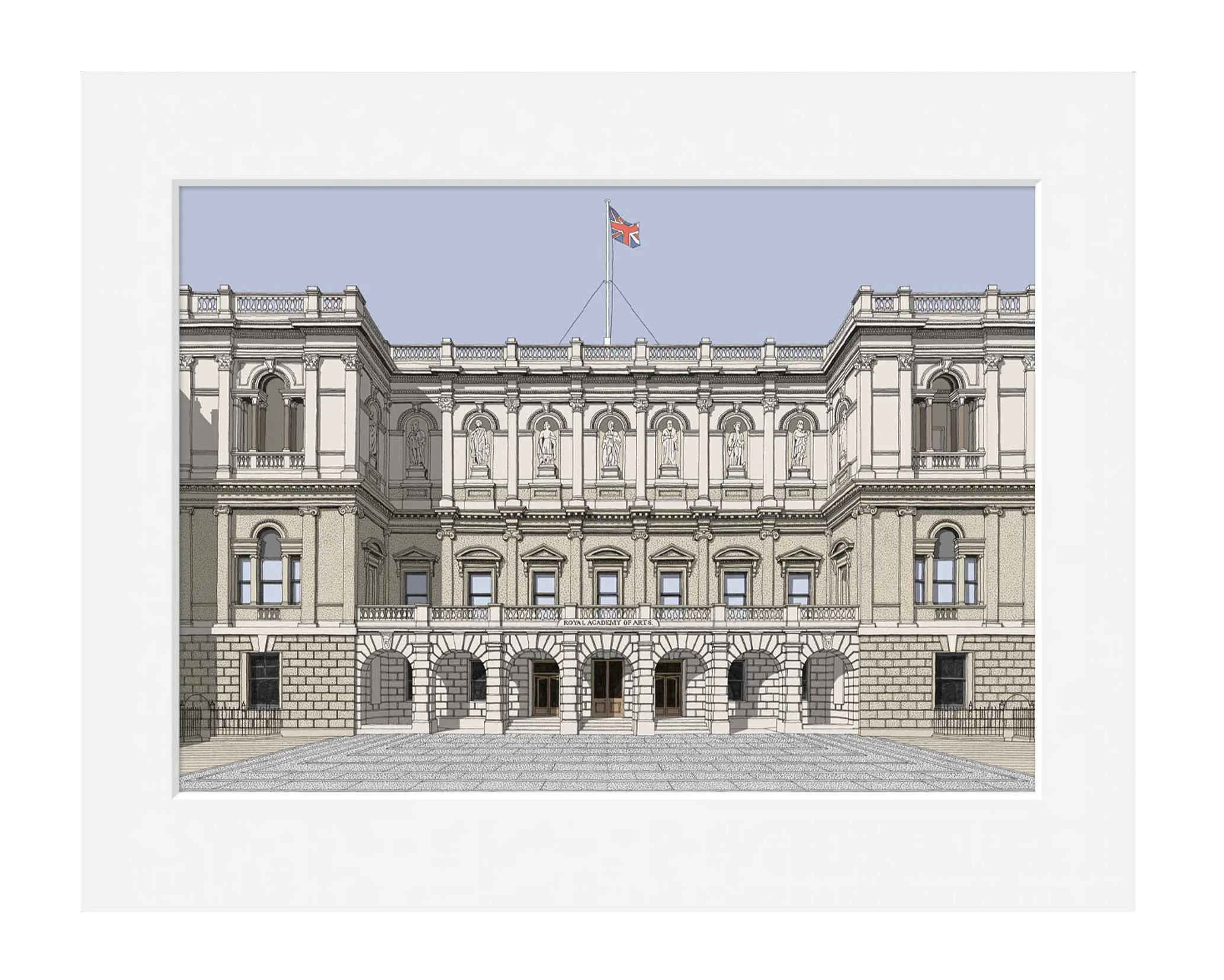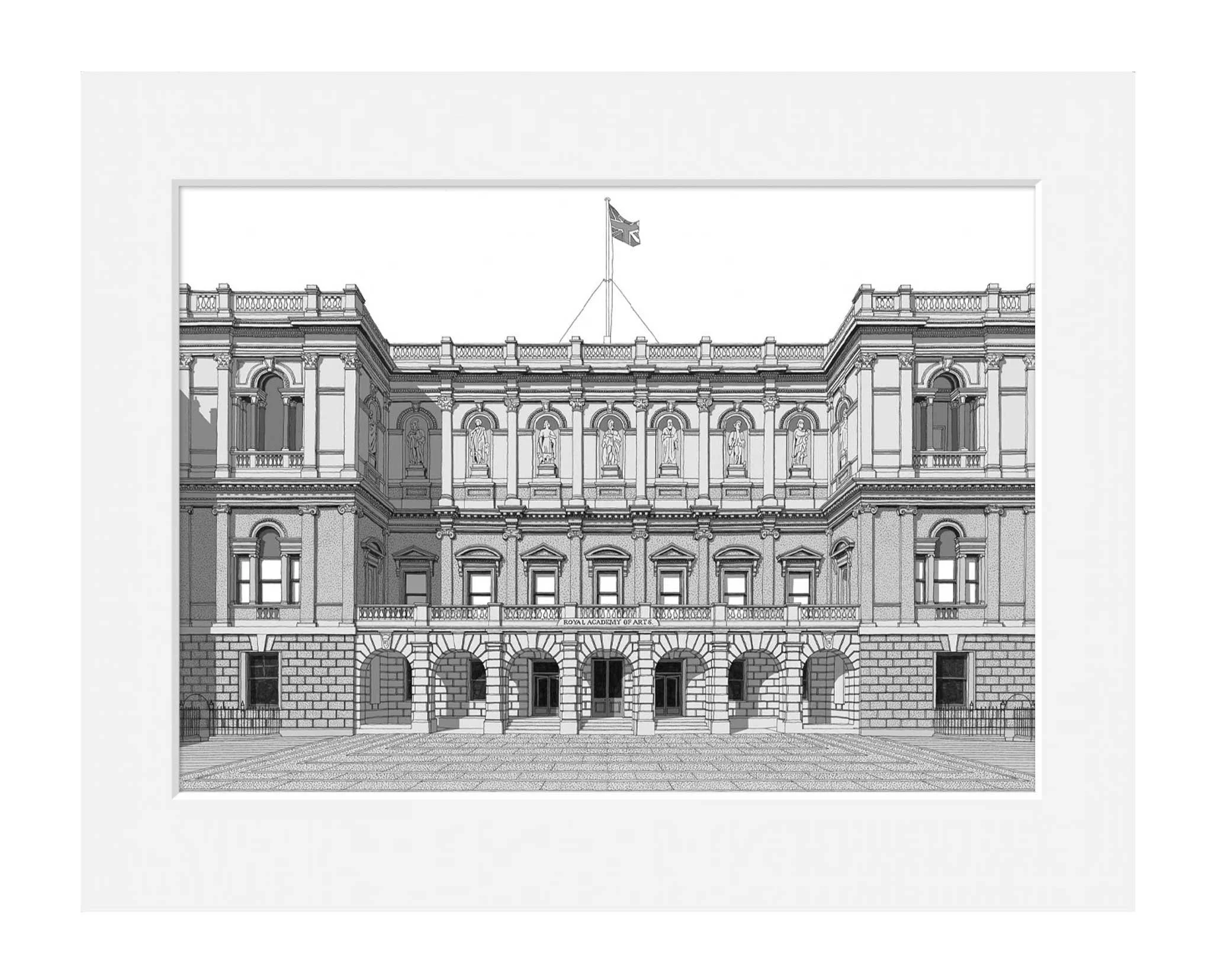
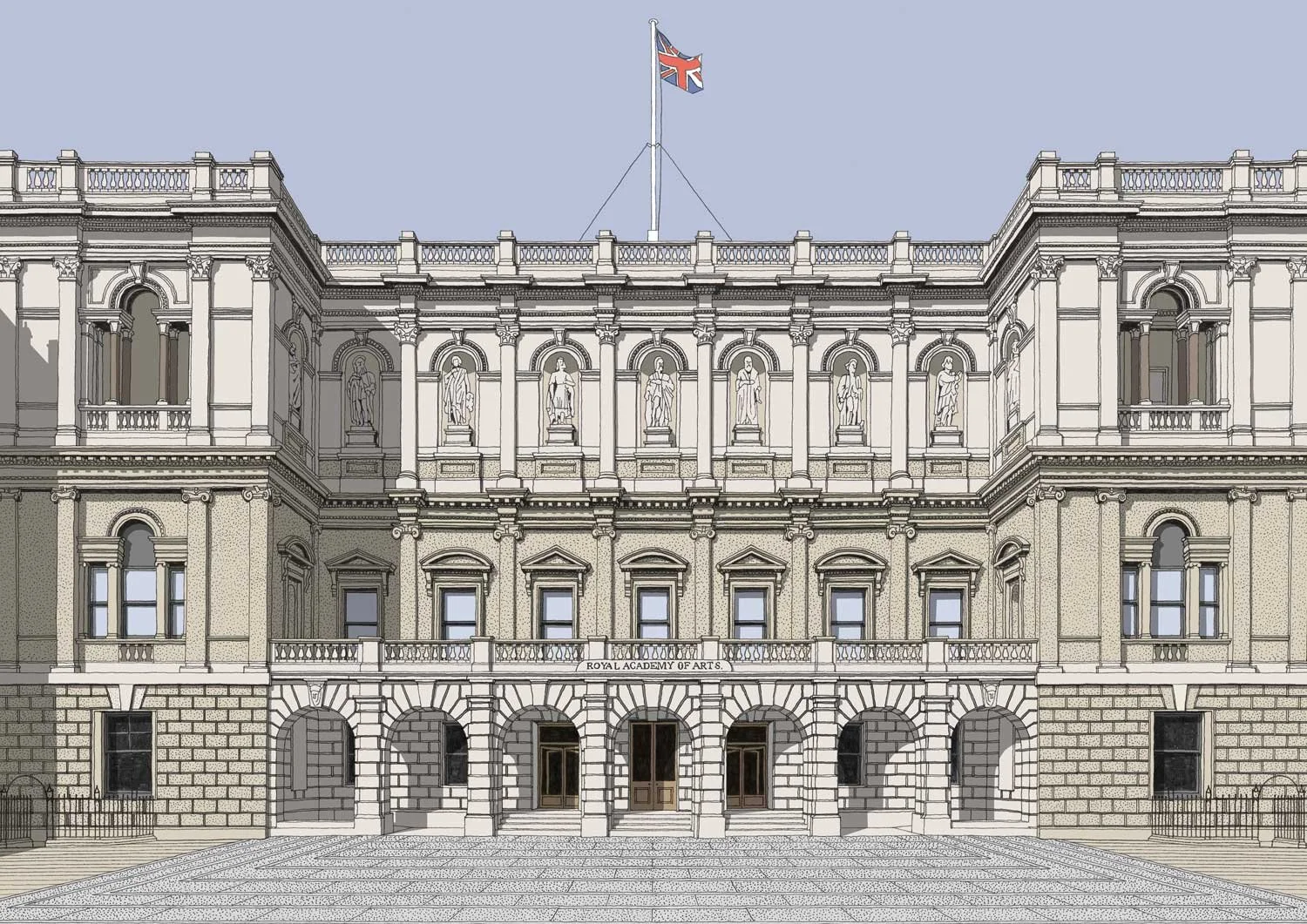
Royal Academy of Arts, Burlington House, Piccadilly, London W1J 0BD

from £65.00
Size:

Illustration by Andrew Cadey

The South Front elevation of Burlington House reflects a synthesis of Palladian proportions and Neoclassical remodelling. The core Palladian facade was famously refaced between 1715 and 1722 by the Third Earl of Burlington and his architect, Colen Campbell. They established the commanding arrangement of a rusticated ground floor supporting a piano nobile. This second level is articulated by a rhythmic sequence of seven windows framed by engaged Ionic columns and pediments, directly referencing the architecture of Andrea Palladio and Inigo Jones.

Later transformations in the 19th century profoundly shaped the elevation as it appears today. Between 1815 and 1818, the architect Samuel Ware carried out extensive remodeling and extensions for Lord George Cavendish, culminating in his design record drawings of the south front (c.1816–1820). Subsequently, in the 1860s and 1870s, the elevation underwent major additions when Sydney Smirke raised the central block with a third-storey attic level and added the grand classical portico and flanking wings to house the Royal Academy’s galleries and schools.

Limited first edition print run of 75

Illustration by Andrew Cadey

The South Front elevation of Burlington House reflects a synthesis of Palladian proportions and Neoclassical remodelling. The core Palladian facade was famously refaced between 1715 and 1722 by the Third Earl of Burlington and his architect, Colen Campbell. They established the commanding arrangement of a rusticated ground floor supporting a piano nobile. This second level is articulated by a rhythmic sequence of seven windows framed by engaged Ionic columns and pediments, directly referencing the architecture of Andrea Palladio and Inigo Jones.

Later transformations in the 19th century profoundly shaped the elevation as it appears today. Between 1815 and 1818, the architect Samuel Ware carried out extensive remodeling and extensions for Lord George Cavendish, culminating in his design record drawings of the south front (c.1816–1820). Subsequently, in the 1860s and 1870s, the elevation underwent major additions when Sydney Smirke raised the central block with a third-storey attic level and added the grand classical portico and flanking wings to house the Royal Academy’s galleries and schools.

Limited first edition print run of 75

Product Details

Print: Printed on 240gsm Alpha Cellulose paper with a clean white base and a smooth matt surface and acid free. (Titled, signed and numbered in pencil on the reverse)

Mount: High quality ‘ice white’ picture mount with precision cut bevelled edge and a card backing board with printed label. All card is acid free, conservation quality white core, ph neutral board 1.4mm thick